Project 104 Living Hope Church
Contemporary Community Church Visualization
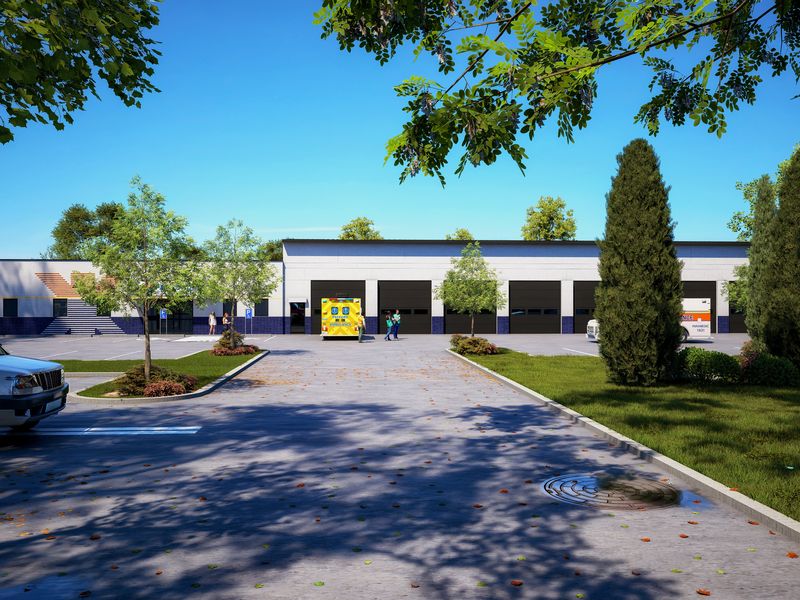
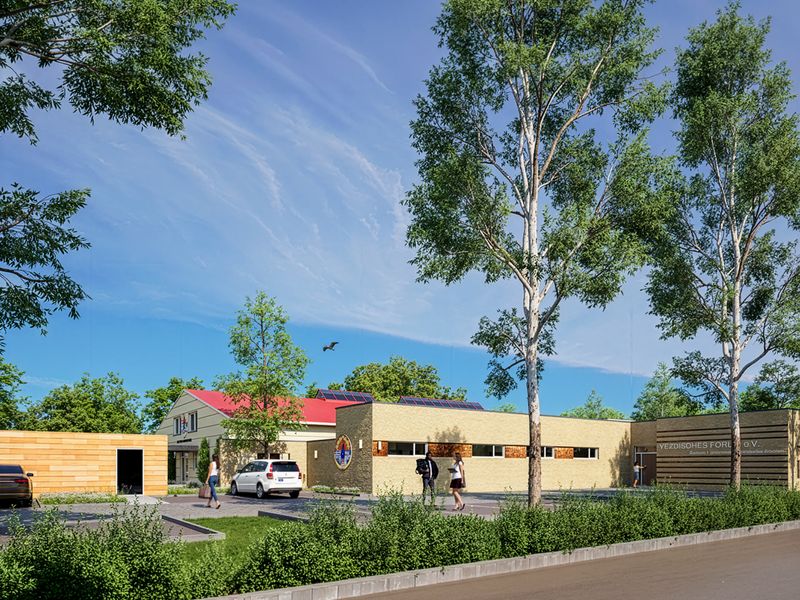
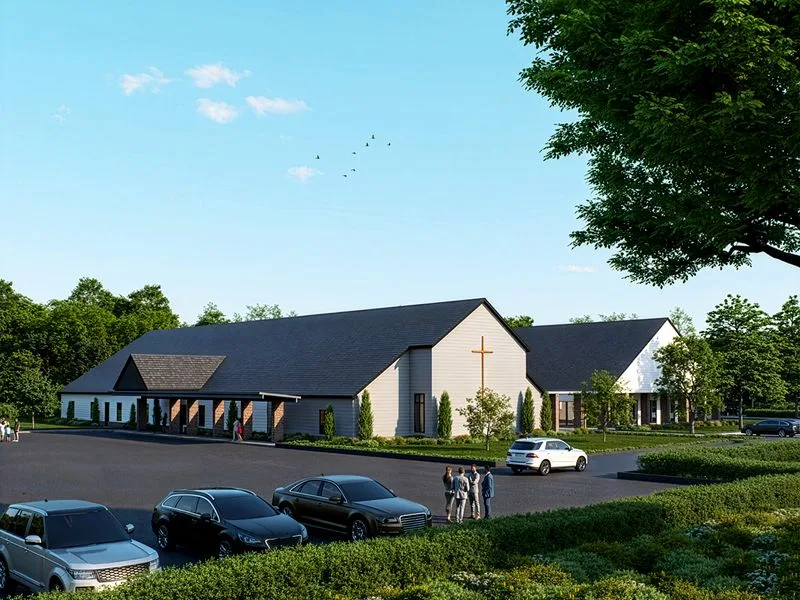
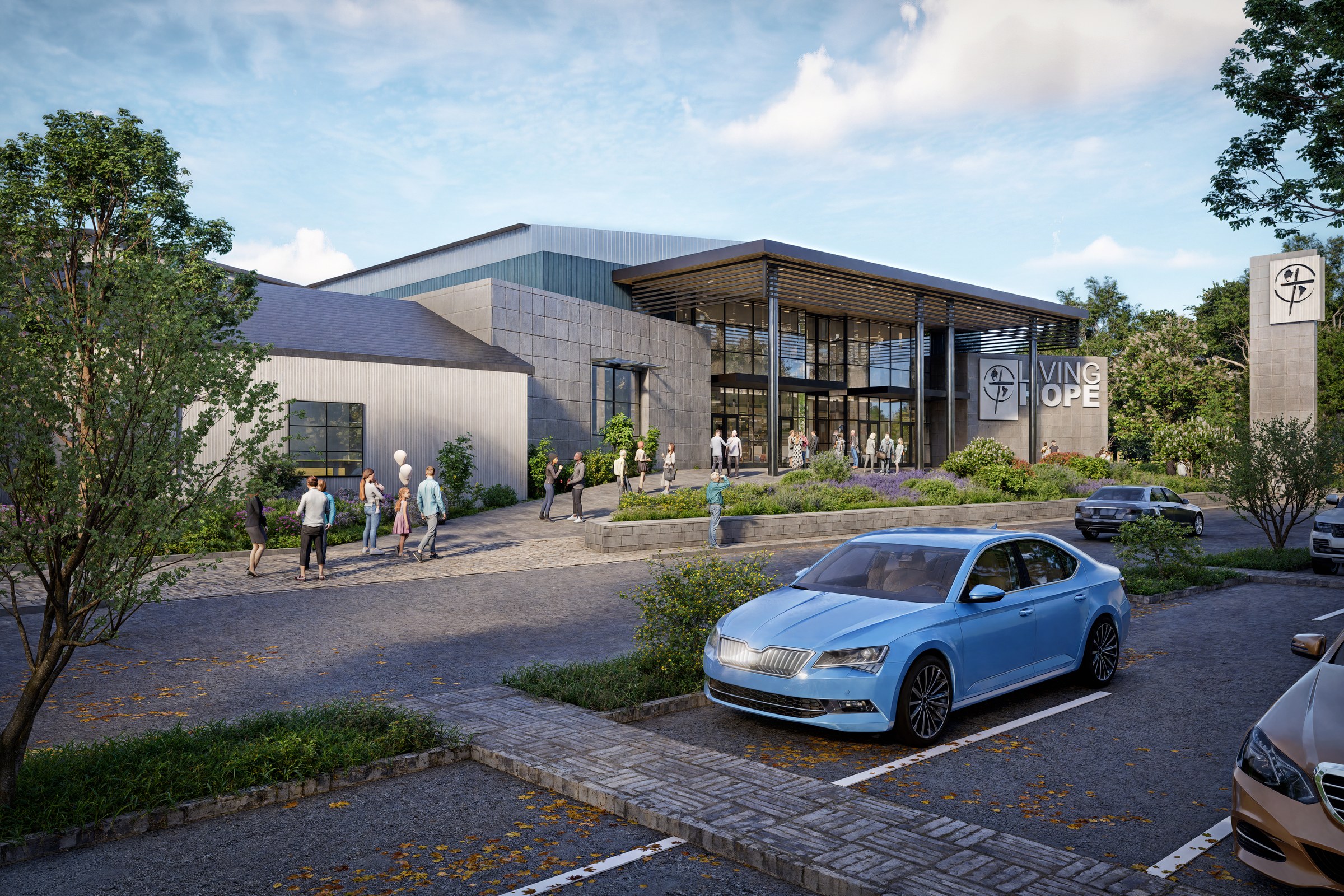
Modern community church with large glass entrance, metal cladding, prominent 'Living Hope' signage with cross logo. Parking lot in foreground with blue car. Well-landscaped entrance with people gathering.
Project Overview
Project 104 Living Hope Church started with a conversation about what this institutional project in Charleston, SC needed to communicate. The answer was 4 carefully planned views, each telling a different part of the design story.
Modern community church with large glass entrance, metal cladding, prominent ‘Living Hope’ signage with cross logo.
The Challenge
At 4 deliverables, there’s a real risk of redundancy — views that look too similar or don’t add new information. We planned the camera positions deliberately so every image earned its place in the set.
The timeline was compressed. The healthcare organization had a launch date that wasn’t moving, which meant our production schedule had zero slack for extended revision cycles.
Getting the materials right was non-negotiable. The healthcare organization had specific finishes in mind, and anything that read as ‘generic CG’ would undermine the credibility of the entire package.
Our Approach
We leaned on physically-based rendering throughout. Every material — glass, stone, metal, timber — was defined by real-world optical properties. That’s what makes the difference between a render that looks ‘nice’ and one that looks true.
Landscape and entourage came last but mattered enormously. Trees, people, vehicles, sky — these contextual elements are what make a render feel like a photograph instead of a diagram.
Lighting development ran parallel to the modelling. We tested multiple Daylight, Dusk / Twilight setups early — before the geometry was even finished — so we could lock in the mood and atmosphere without burning production time later.
The rendering pipeline was set up to handle 4 outputs efficiently. Shared lighting rigs, consistent material libraries, and a standardised colour pipeline meant every image maintained the same visual standard.
Camera positions were planned, not improvised. We mapped out eye-level angles based on the project’s strongest design moments, then refined framing through a series of grey-shaded test renders before committing to final production.
The Result
The 4 renders were handed over within 2-3 weeks — each optimised for its intended use, from large-format print to responsive web display.
Thinking about visualization for your next project? Reach out — we respond within 24 hours. Or keep exploring.