28 Classical Hotel Interiors
Classical Elevator Lobby Visualization
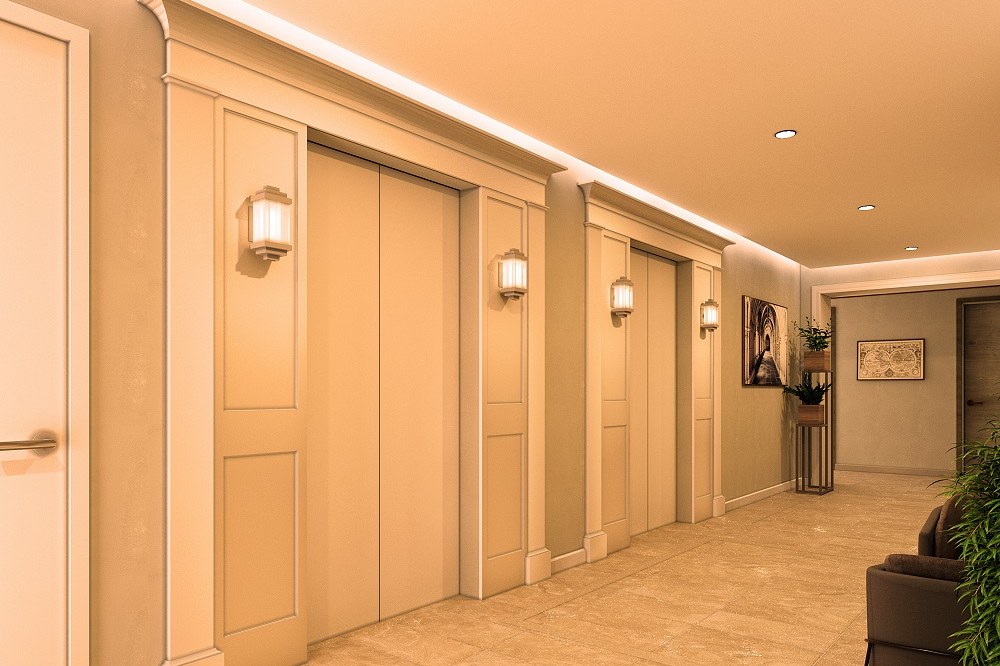
Classical hotel elevator lobby with three elevator doors flanked by decorative pilasters and crown molding. Warm beige/gold palette, art deco-style wall sconce lights between doors, travertine tile flooring, dark leather armchair, framed artwork and decorative console table at corridor end. Elegant, traditional hospitality aesthetic.
In our latest project, we had the privilege of collaborating with a prestigious hotel chain to create stunning classical hotel interiors that would elevate their brand presence. The client sought photorealistic 3D renders to showcase their vision for a luxurious and timeless atmosphere, essential for attracting discerning guests and securing investor interest. With their ambitious plans for expansion into new markets, our role was to bring their design concepts to life in a way that would resonate with both stakeholders and potential customers.
Our approach to this project was rooted in a deep understanding of classical design principles, combined with cutting-edge technology. We meticulously analyzed the client’s design intent, focusing on the intricate details that define classical architecture, such as ornate moldings, rich textures, and elegant color palettes. By leveraging our expertise in architectural visualization, we crafted renders that not only highlighted the beauty of the interiors but also conveyed the ambiance and experience the hotel aimed to provide.
To achieve the desired level of realism, we utilized advanced software such as 3ds Max and V-Ray, allowing us to simulate natural lighting and create dynamic shadows that enhance the depth of each scene. We paid special attention to the selection of materials, opting for high-quality textures that mimic the look and feel of luxurious fabrics and finishes. The interplay of light and shadow, combined with our careful material choices, resulted in renders that were both inviting and sophisticated.
The final outcome exceeded the client’s expectations, providing them with a powerful marketing tool that played a crucial role in their investor pitch. The photorealistic visuals not only facilitated planning approvals but also helped in generating excitement among potential guests, ultimately positioning the hotel as a premier destination in the competitive hospitality market. Our collaboration reaffirmed the importance of high-quality architectural visualization in bringing ambitious projects to fruition.
Project Overview
Every project has a story. For 28 Classical Hotel Interiors, we told it across 2 renders — from the signature hero shot that anchors the branding down to the granular views that satisfy technical reviewers.
Classical hotel elevator lobby with three elevator doors flanked by decorative pilasters and crown molding.
The Challenge
Each viewpoint served a different audience. The hero shot needed marketing punch. The detail views needed technical precision. The aerial needed context. Making all of them feel cohesive while serving different purposes was the real puzzle.
Stakeholder alignment was part of the challenge. Multiple decision-makers had different priorities for what the renders should emphasise, and we had to find compositions that satisfied all of them without diluting any single perspective.
Our Approach
Feedback cycles were structured. We presented renders in context — placed into the marketing layout or presentation deck — so the interior design firm could evaluate them as their audience would see them, not as isolated files on a white background.
The rendering pipeline was set up to handle 2 outputs efficiently. Shared lighting rigs, consistent material libraries, and a standardised colour pipeline meant every image maintained the same visual standard.
We started where we always start: with the drawings. Every wall thickness, every material notation, every site boundary got translated into the 3D model before we touched a single texture or light.
The Result
Production closed within 1-2 weeks. The hero image is now the signature visual for 28 Classical Hotel Interiors, and the supporting gallery views have been deployed across the interior design firm’s marketing channels.
Thinking about visualization for your next project? Reach out — we respond within 24 hours. Or keep exploring.