2 Church Sanctuary — hospitality 3D rendering by Praxis Studio
Hospitality

2 Church Sanctuary

Traditional Contemporary Sanctuary Visualization

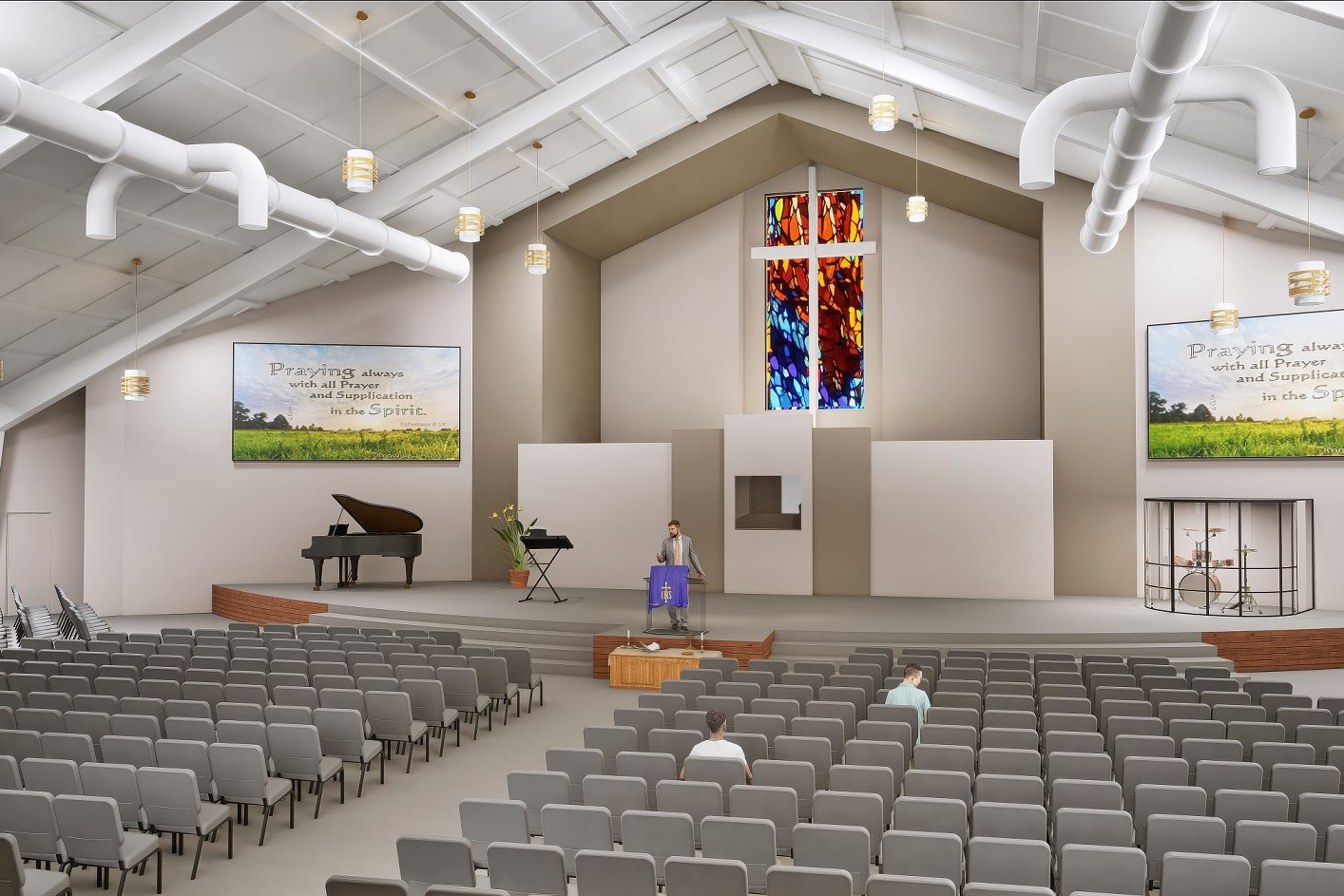
Church sanctuary interior viewed from rear seating area. Vaulted white ceiling with exposed HVAC ductwork, stained glass cross window at altar wall, grand piano on stage left, drum kit behind plexiglass screen on stage right. Two large projection screens displaying scripture quote. Grey upholstered seating rows, wood pulpit. Traditional worship space with modern A/V systems.

Project Overview

We picked up 2 Church Sanctuary as a focused engagement: one hero image for a hospitality interior project in Winnipeg, MB. Short timeline, high bar for quality.

Church sanctuary interior viewed from rear seating area.

The Result

Delivered within 3-5 days, the render slotted straight into the hospitality design firm’s pitch deck and has been their lead visual for the project.

If this is the kind of quality you’re after, start a conversation with us. Or explore the full portfolio.
Frequently Asked Questions

How do you accurately render the interplay of natural light through stained glass against artificial stage lighting in a worship space?

We build separate lighting rigs for each source—daylight transmission through colored glass, overhead house lights, and stage spot/wash fixtures—then composite them to show how these layers interact during a typical service, giving the design team confidence in their lighting plan.

Why is 3D visualization particularly valuable for church sanctuary renovations that blend traditional architecture with modern A/V systems?

Congregations and building committees need to see that projection screens, plexiglass sound shields, and exposed HVAC ductwork won't compromise the reverence of a vaulted ceiling and stained glass—photorealistic renders let stakeholders approve the modern integration before any installation begins.

What is the typical turnaround for a hospitality-interior visualization like a sanctuary with this level of detail?

A sanctuary scene with multiple seating rows, stage equipment, and featured elements like stained glass and exposed mechanical systems is typically delivered within 10–12 business days from receipt of finalized drawings and material specifications.

How do hospitality design firms use these worship-space renders in their client presentations?

Firms present these renders during congregational approval meetings and capital campaign fundraisers, where showing realistic seating sight-lines to projection screens and the altar wall helps secure both design sign-off and donor commitment.

What makes visualizing hospitality interiors like worship spaces different from standard commercial interior rendering?

Worship spaces demand attention to emotional atmosphere—the warmth of upholstered seating rows, the scale of a vaulted ceiling, and the symbolic weight of elements like a pulpit or cross window—where the feeling of the space matters as much as the material accuracy.

Like what you see?

Let's create something extraordinary for your next project.