Bk Scandinavian Tiny Cabin
Scandinavian Modern Container House Visualization
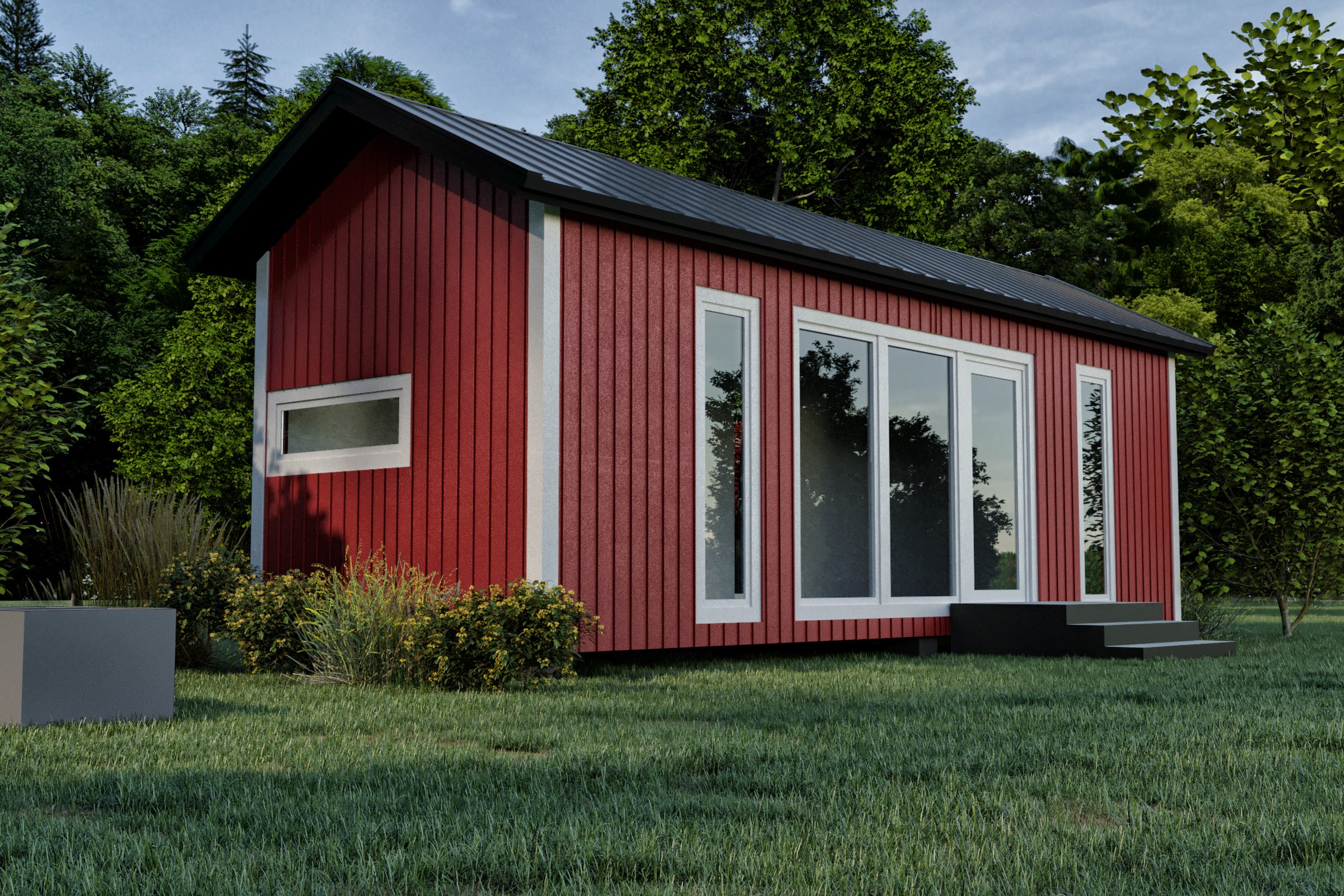
3D rendering of a compact Scandinavian tiny cabin with a red-painted exterior, pitched roof, and large glass patio doors, set on a manicured lawn.
Project Overview
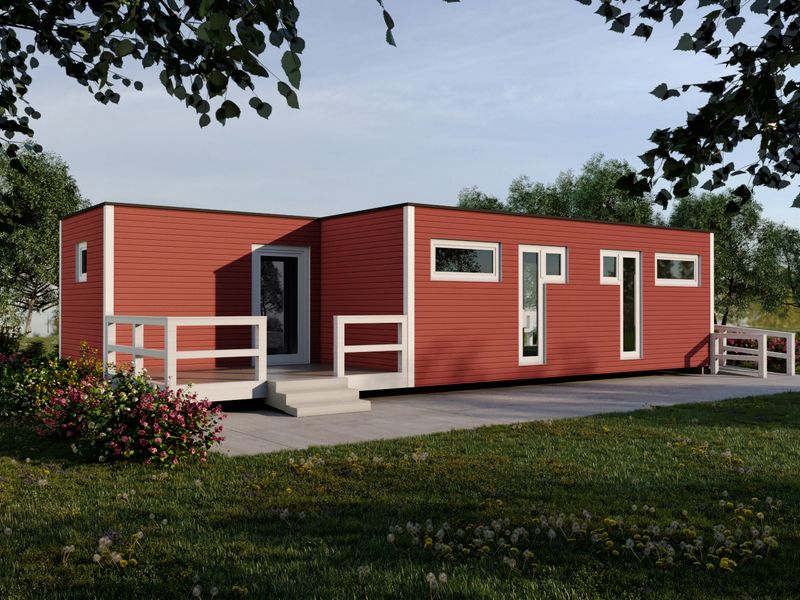
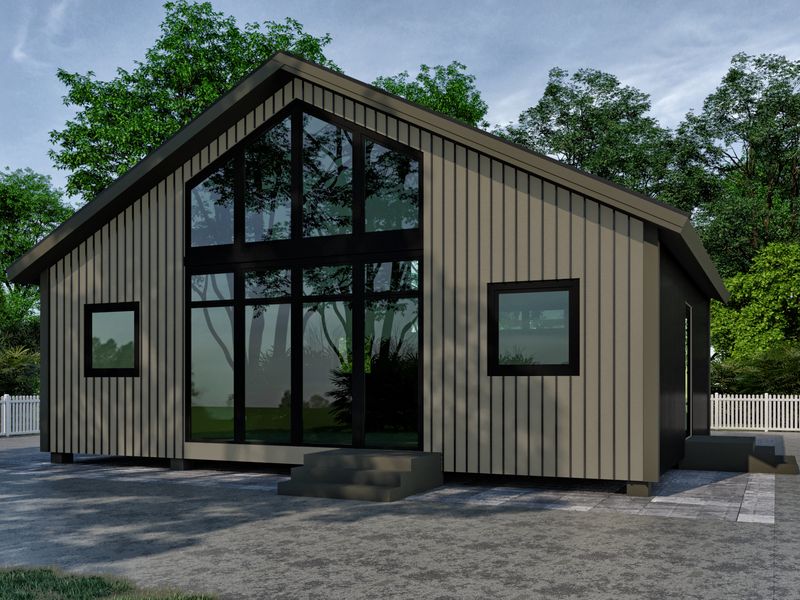
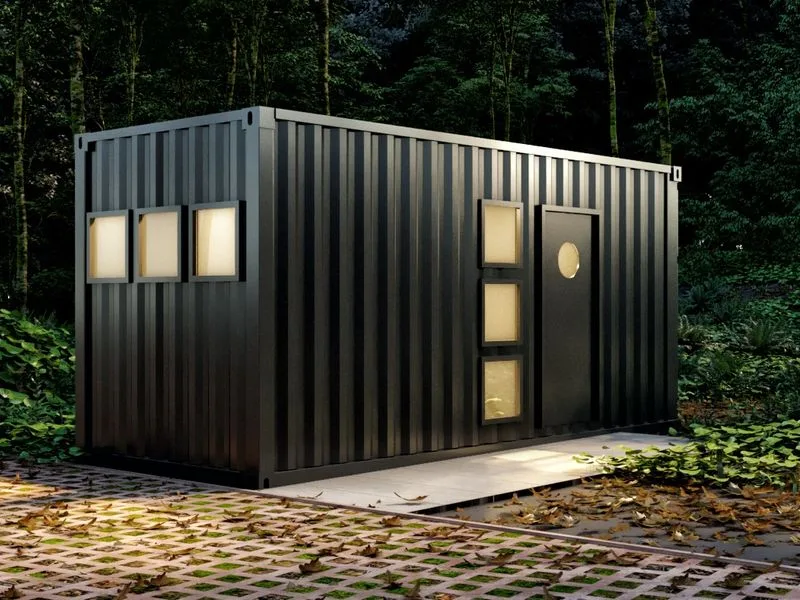
Every project has a story. For Bk Scandinavian Tiny Cabin, we told it across 4 perspective views — from the signature hero shot that anchors the branding down to the granular views that satisfy technical reviewers.
3D render of a compact red-painted tiny cabin with pitched roof, large white-framed glass patio doors on the front facade, small horizontal window on the side wall, set on a manicured green lawn with shrubs and mature trees in the background.
The Challenge
One of the trickier aspects was environmental context. A building doesn’t exist in a vacuum, and placing this modular home design convincingly into its Malibu, CA surroundings required careful attention to vegetation, street furniture, lighting conditions, and neighbouring structures.
The design language was distinctive — a mix of forms and materials that doesn’t photograph itself. Translating that into a render that feels lived-in rather than clinical took several rounds of material and lighting refinement.
Getting the materials right was non-negotiable. The modular home builder had specific finishes in mind, and anything that read as ‘generic CG’ would undermine the credibility of the entire package.
Our Approach
We shared work-in-progress renders with the modular home builder at two key milestones: after initial composition lock and after material refinement. Both rounds stayed tight — targeted feedback, fast turnarounds.
Camera positions were planned, not improvised. We mapped out eye-level angles based on the project’s strongest design moments, then refined framing through a series of grey-shaded test renders before committing to final production.
We started where we always start: with the drawings. Every wall thickness, every material notation, every site boundary got translated into the 3D model before we touched a single texture or light.
The modelling phase was methodical. We built the geometry from the architectural plans, cross-referencing elevations and sections to catch anything that might read differently in three dimensions than it does on paper.
Lighting development ran parallel to the modelling. We tested multiple Overcast Daylight setups early — before the geometry was even finished — so we could lock in the mood and atmosphere without burning production time later.
The Result
The 4 renders were handed over within 2-3 weeks — each optimised for its intended use, from large-format print to responsive web display.
Working on something similar? Let’s talk about your project — or browse more of our work.