Hp Montessori School — commercial 3D rendering by Praxis Studio
Commercial

Hp Montessori School

Rustic Contemporary Montessori Classroom Library Visualization

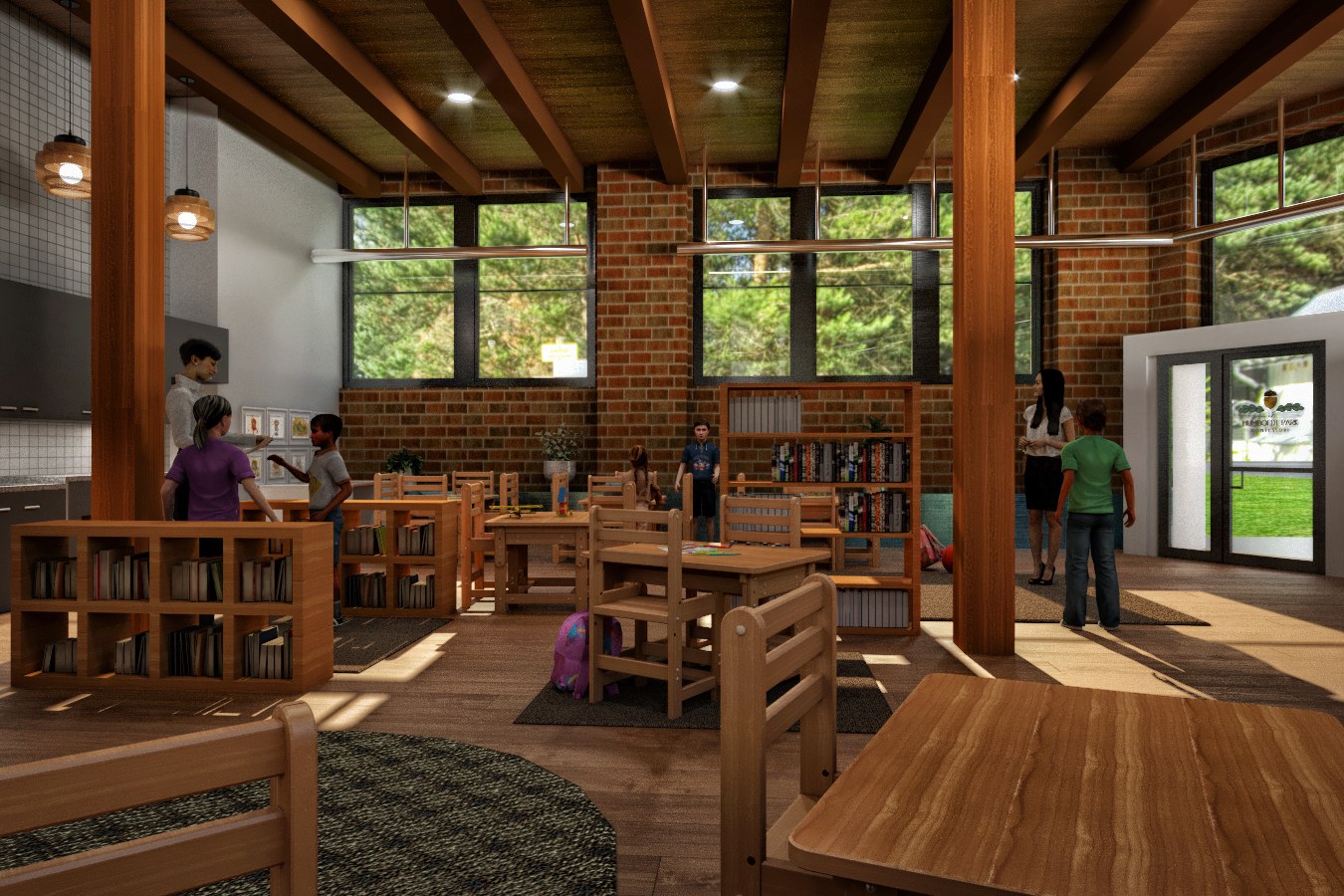
3D rendering of the HP Montessori School interior featuring exposed brick walls, timber beams, wooden bookshelves, and large clerestory windows.

Project Overview

Sometimes a single image is all it takes to make a design click. That was the brief for Hp Montessori School — one hero render that would carry the weight of the entire presentation.

Montessori school interior with exposed brick walls, heavy timber post-and-beam structure, wooden bookshelves and child-sized furniture, large clerestory windows with forest views, warm natural lighting, and children engaged in learning activities.

The Result

The final render was delivered within 3-5 days — on time, on brief, ready for immediate use in the corporate client’s marketing and approval workflow.

Working on something similar? Let’s talk about your project — or browse more of our work.
Frequently Asked Questions

How do you capture the warmth of natural materials like exposed brick and heavy timber in a school interior rendering?

We use physically accurate material shaders and carefully calibrated warm-tone lighting to replicate how natural light interacts with brick, timber, and wood surfaces, ensuring the rendering conveys the tactile warmth that defines a Montessori learning environment.

Why is 3D visualization especially valuable for educational interior projects like a Montessori school?

Montessori environments have strict spatial requirements—child-scaled furniture zones, open floor plans, and sensory-rich material palettes—and photorealistic renders let school administrators and stakeholders evaluate whether the design supports the pedagogical philosophy before construction begins.

What is the typical turnaround for a commercial interior visualization package of this scope?

A project like Hp Montessori School, involving multiple interior views with detailed furnishings and natural lighting studies, is typically delivered within 10–14 business days from receipt of finalized drawings and material selections.

How do architects use these commercial interior renders when presenting to school boards or institutional clients?

Architects embed these renders directly into client presentations and planning submissions to demonstrate how clerestory lighting, furniture layouts, and material choices will function together—bridging the gap between technical drawings and the lived experience of the space.

What makes visualizing commercial interiors different from exterior architectural rendering?

Commercial interiors demand precise control over artificial and natural light blending, accurate depiction of finishes at close viewing distances, and careful staging of human-scale elements like child-sized furniture, all of which require a level of detail that exterior views rarely call for.

Like what you see?

Let's create something extraordinary for your next project.