No render made. Just an honest read. Send the one you’re least sure about.
The elevation or plan you’re not confident will read well once it’s a photoreal image. Reply with it and we’ll tell you honestly what will hold up, what won’t, and why — no render, no obligation.
Why not just render it?
Almost every offer we’ve made says the same thing: send us a scheme, we’ll render it, free. This one doesn’t.
Because the render usually isn’t the thing you’re unsure about — the DESIGN is. A camera and a
sun are unforgiving in a way a drawing set never has to be, and knowing which condition on your elevation is
genuinely at risk, before anything gets committed to a frame, is a read we can give you without making a
single image.
What we’re actually looking for Three ways an elevation reads wrong — and it’s rarely the design.
 01
01 The roofline
When massing reads as noise, not form
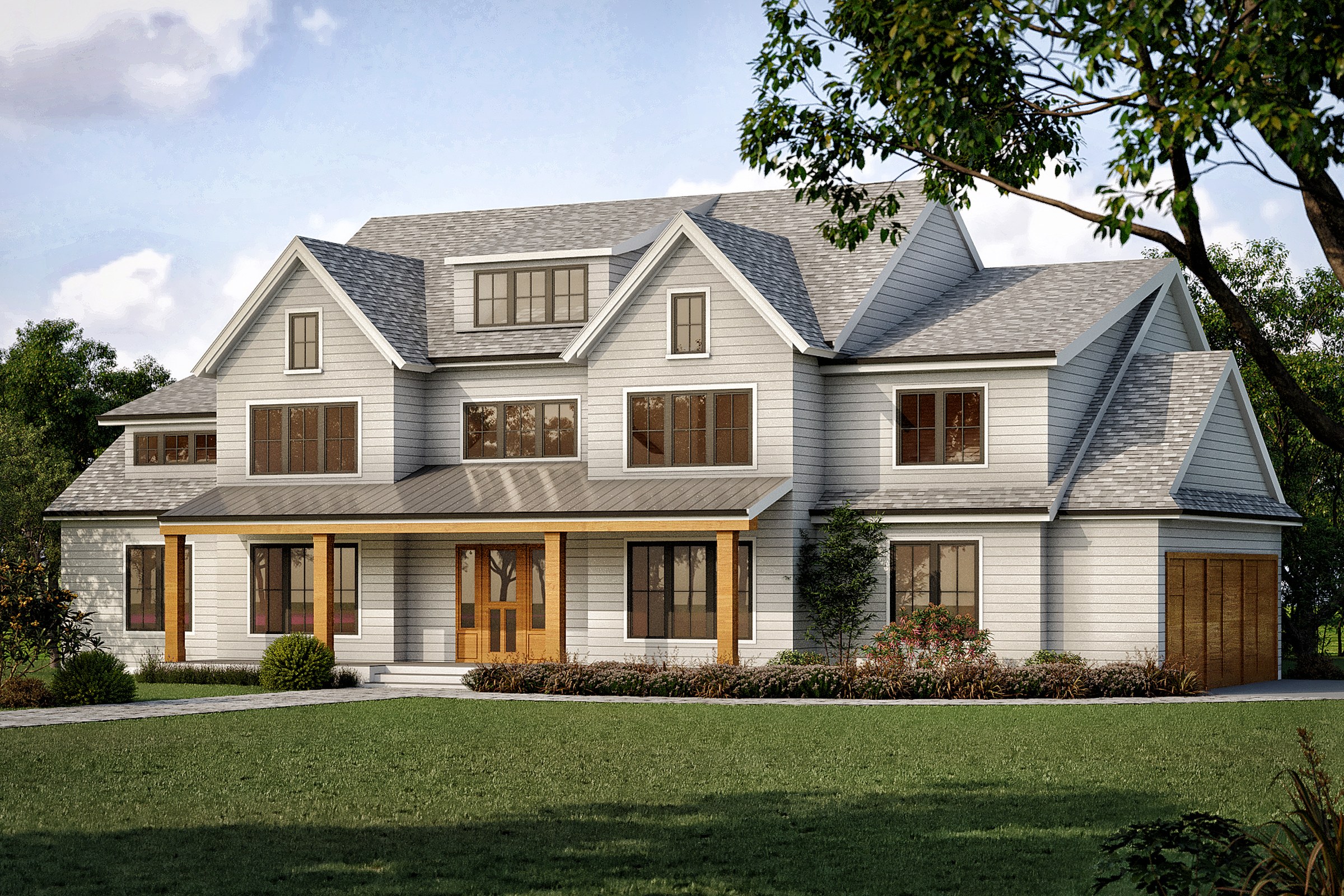
Three or more intersecting gables can work perfectly on a drawing — every ridge, valley and dormer legible because you already know which one is which. Put the same roof in a photoreal frame from one camera and the eye can lose the hierarchy: which form is primary, which is a secondary volume stepping back, which is just a dormer earning its keep. It is not a flaw in the design. It is a flaw in the ONE angle chosen to show it.
 02
02 The reveal
When brick and shadow flatten the depth
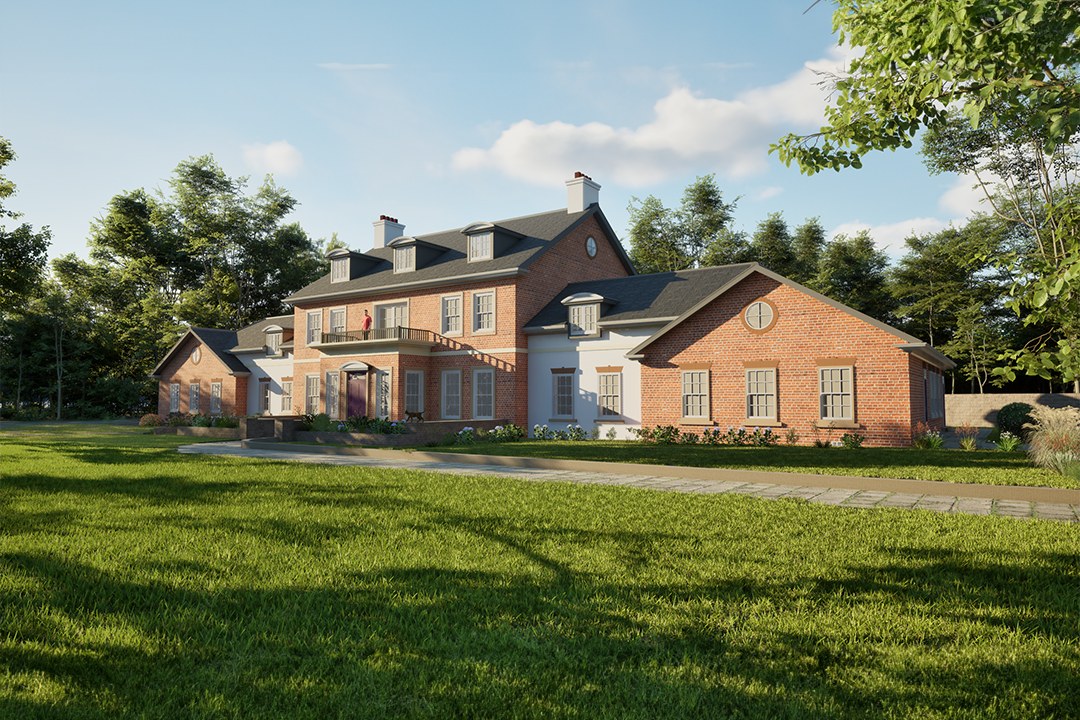
A deep reveal, a projecting bay, a stepped-back wing — on site, or in a section, the depth is obvious. In a render, at the wrong sun angle or the wrong time of day, the shadow that should be reading that depth can go soft or disappear altogether, and a genuinely three-dimensional facade prints as a flat elevation drawing with brick texture on it.
 03
03 The palette
When everything sits at the same tone
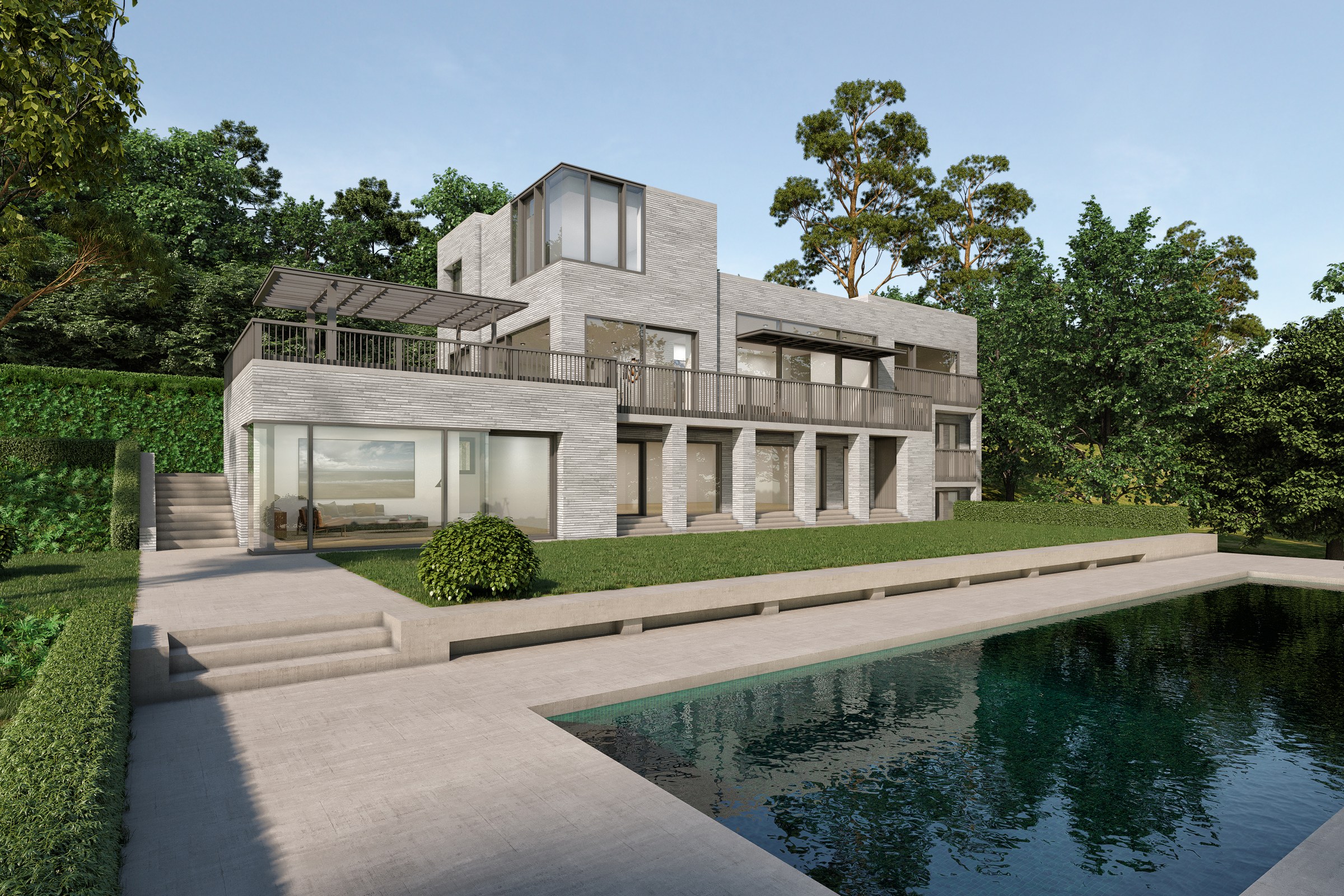
A restrained, almost single-material palette is a real design decision — and the hardest one to protect in a render. Two pale stones, a grey render, a bronze frame: on a moodboard the differences are obvious. Under one flat sky, at the wrong exposure, they can collapse into one tone, and the discipline that made the scheme quiet in the first place is the same thing that makes it unreadable at a glance.
Set plainly, before you reply What this offer is — and isn’t.
We’d rather you know exactly what you’re asking for than send something and be surprised by the answer.
No render, no exception
We don’t make a test render, a sketch pass or a "quick preview" to show you what we mean. The read is written — what we’d watch for, and why — based on what you send.
No files have to leave the practice
A photo of a sketch, a screenshot of a model, a description in your own words — any of it is enough for an honest read. A CAD set isn’t required to start the conversation.
No obligation either way
If the read is useful and it turns into a job later, good. If it doesn’t, you still keep the read. Nothing about the reply commits you to anything.
The whole ask Reply with the one you’re unsure about.
Attach it, screenshot it, or just describe the condition in your own words. We’ll come back with an honest,
specific read — not a form answer, and not a render.
Reply now Questions, answered straight What exactly do I send?
The one elevation, plan, or view you’re genuinely unsure will hold up once it’s a photoreal image — a photo of a sketch, a screenshot, a PDF page, or just a description of the condition you’re worried about. Nothing needs to be render-ready.
Will you actually render it to answer?
No. That’s the point — the read is a written diagnosis (what will likely read clearly, what tends to get lost, and why), not a rendered image. If you’d rather see it than read about it, our regular free-render offers cover that.
How fast is the reply?
A specific, honest read — not a form response — usually inside a couple of working days. If your view needs more context to answer honestly, we’ll say so and ask.
Is this only for one type of drawing?
No. Elevation, section, plan, or a single 3D view from your own model — the read is about how it will hold up under a camera and a sun, whatever form it arrives in.
What if the read says it won’t work?
Then that’s the answer, said plainly, before either of us spends time on a render that would have needed reshooting. That’s a more useful outcome than finding out after.
Does this commit me to hiring you?
No. The read is yours regardless. If it turns into a project, we’ll talk about that separately — nothing here is priced or upsold.
Know which one you're unsure about?
Reply with it — we'll send back an honest read, no render made and nothing owed either way.