
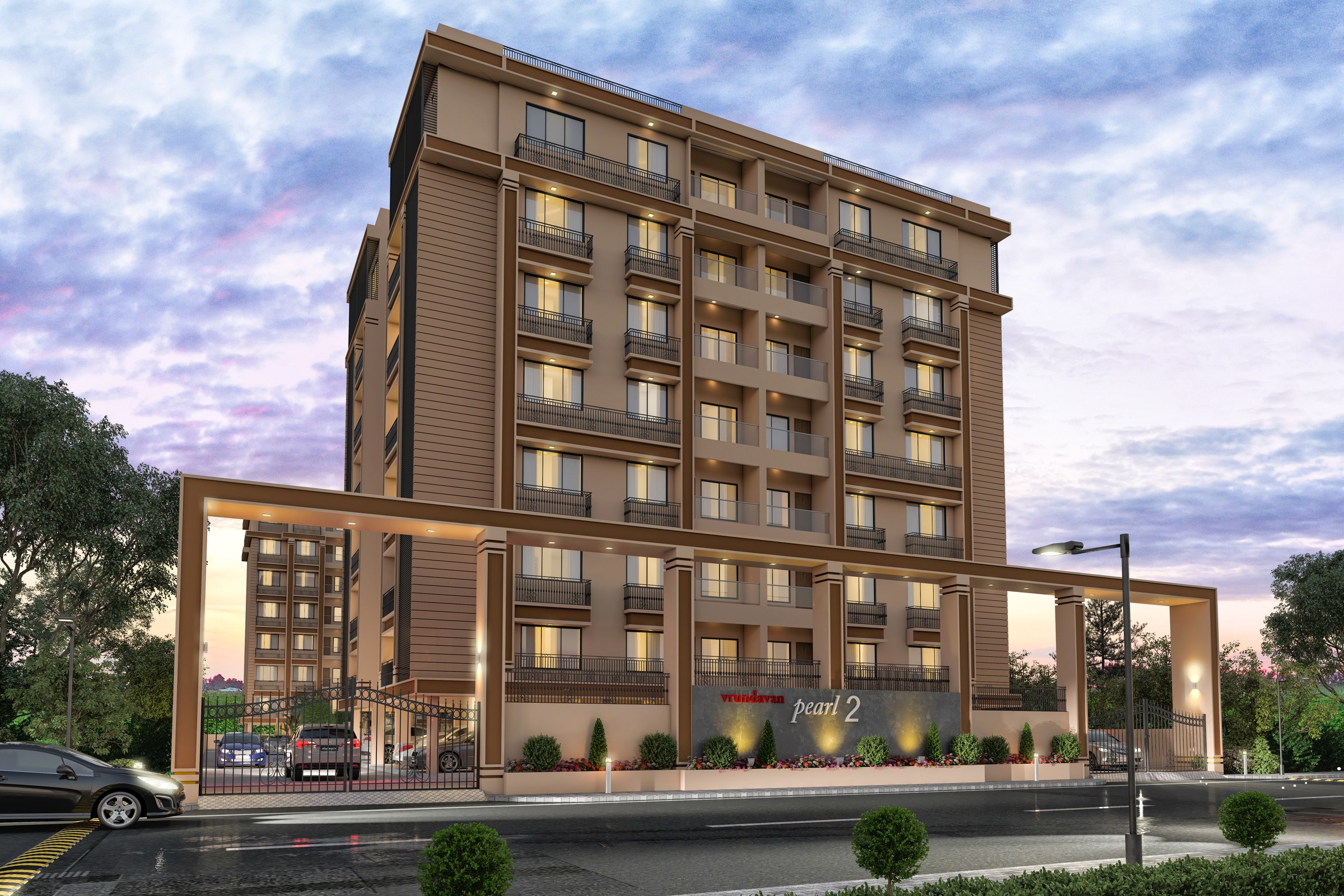
What two minutes with a stills set actually proves
Not whether the render looks expensive. Whether the building in it is still the one you drew. Three things worth checking, five real stills to check them against — and one thing no single image can show you.
An enquiry usually stalls in the same place: somewhere around the exterior question, once the conversation runs out of things to say that a reply can settle. More words rarely move it. A still might — not because it’s persuasive, but because it’s checkable, in about the time it takes to read this sentence twice.
So here is what we’d actually look at if the roles were reversed and a studio was trying to earn our attention with one image: not the finish, not the sky — whether the design underneath the render is still recognisably the one that was drawn.
Three checks, not one impression
None of these need any rendering knowledge. They need the same two minutes you’d already spend looking, aimed at three specific things instead of one general reaction.
- 01
Proportions before finish
Finish is easy to fake. Proportion isn’t.
Gloss, sky and a good hour of light will make almost any massing look considered for a second. What they can’t disguise is whether the bay rhythm, the roof pitch, the void-to-mass ratio is actually what got drawn — or whether it drifted toward “generic pretty” somewhere on the way to the finished frame. Cover the materials in your head for a moment and look only at the shape. If the proportions still read as the scheme you approved, the studio held the thing that actually mattered.
- 02
The seam
Where two materials meet is where a studio’s attention shows up — or doesn’t.
Anyone can render a wall. The junction — stone to stucco, brick to metal, roof to parapet — is where a lazy pass blurs into one soft texture and a careful one holds a clean, deliberate line. It is a small thing to check and a hard thing to fake, because getting it right takes actually understanding how the detail was drawn to be built, not just how it should look from thirty feet.
- 03
What the light is doing to it
Mood should reveal the design. It shouldn’t replace it.
A dusk glow or a soft golden hour is the easiest lever a render has, and the easiest one to lean on when the model underneath isn’t carrying its weight. The test is simple: squint past the sky and the warm windows — can you still read the massing, the plan logic, the thing that makes the building yours? If the atmosphere is doing the persuading and the architecture is doing the standing-still, that’s worth noticing before you write back.
Five real stills, checked against the three
Representative work, by category — none of it staged for this page, none of it reused from any prior showcase. Each one is captioned against the check it actually demonstrates.
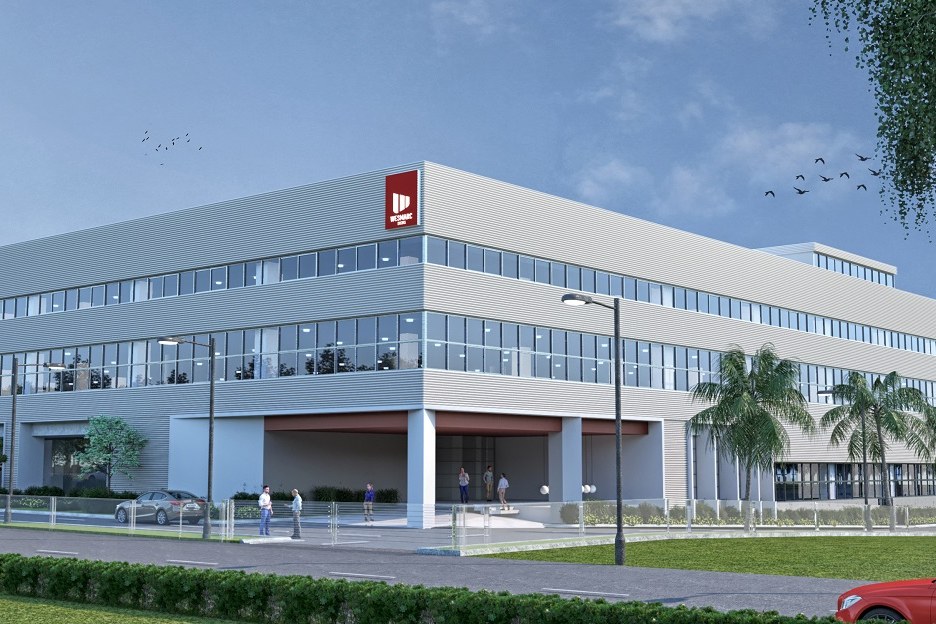
The commercial scale
A repeating bay rhythm that carries the full run without softening at the corner.
Three storeys of panel cladding, a glazed ground floor and a canopy sized to the entrance it actually marks — nothing here is dressed up, so there is nowhere for the proportions to hide. The window bays hold their spacing corner to corner, the canopy reads as scaled to the door beneath it rather than the building above it, and the signage volume sits inside the massing instead of bolted on top of it.
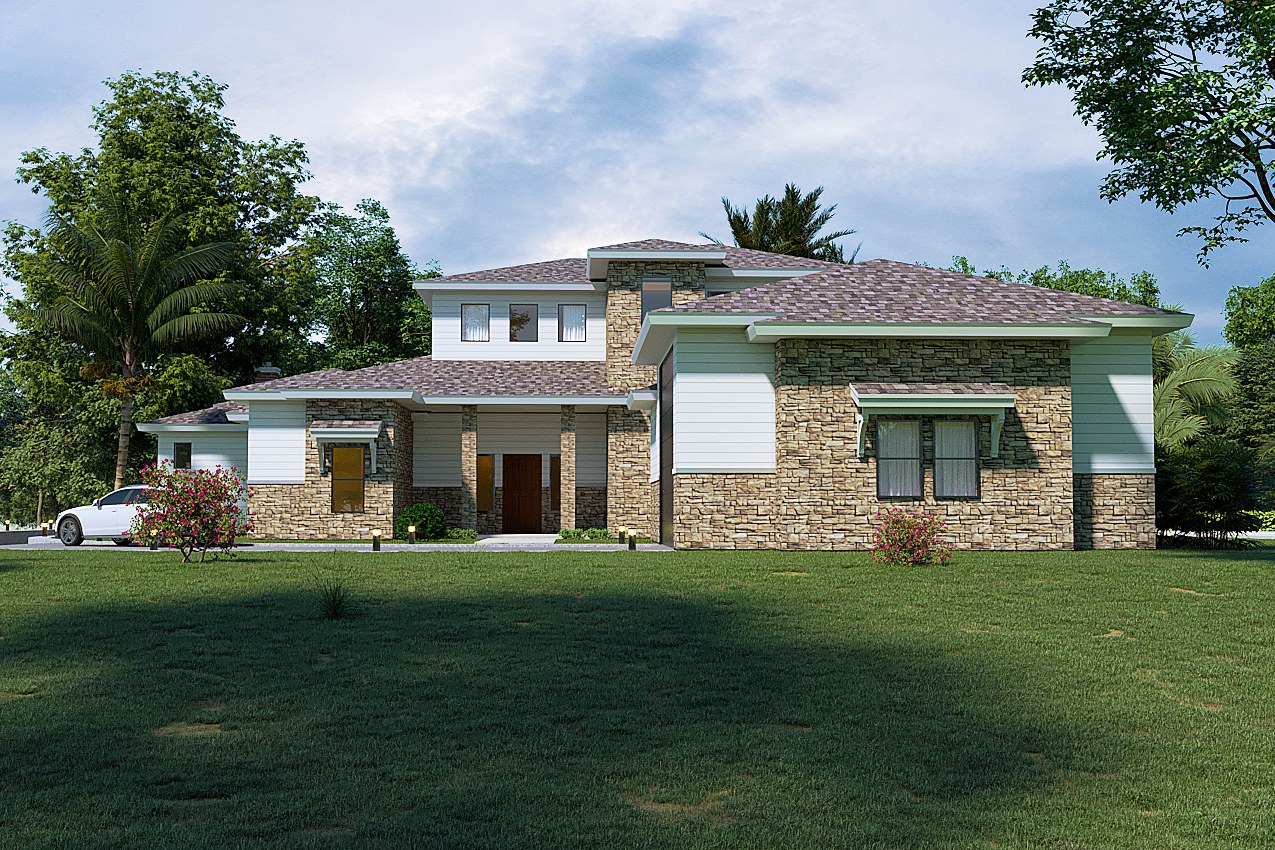
The ordinary scale
Most work isn’t a landmark. The same test applies at the scale you actually build at.
A two-storey home with a stone-clad projecting bay under a simple hipped roof, a single-storey wing stepping off it — nothing dramatic, which is exactly the point. The proportions between the two volumes, the bay window and the roof pitch above it, are what a firm actually lives or dies on in most weeks. A studio that holds this cleanly at an ordinary scale is more evidence than one glamour shot at an extraordinary one.
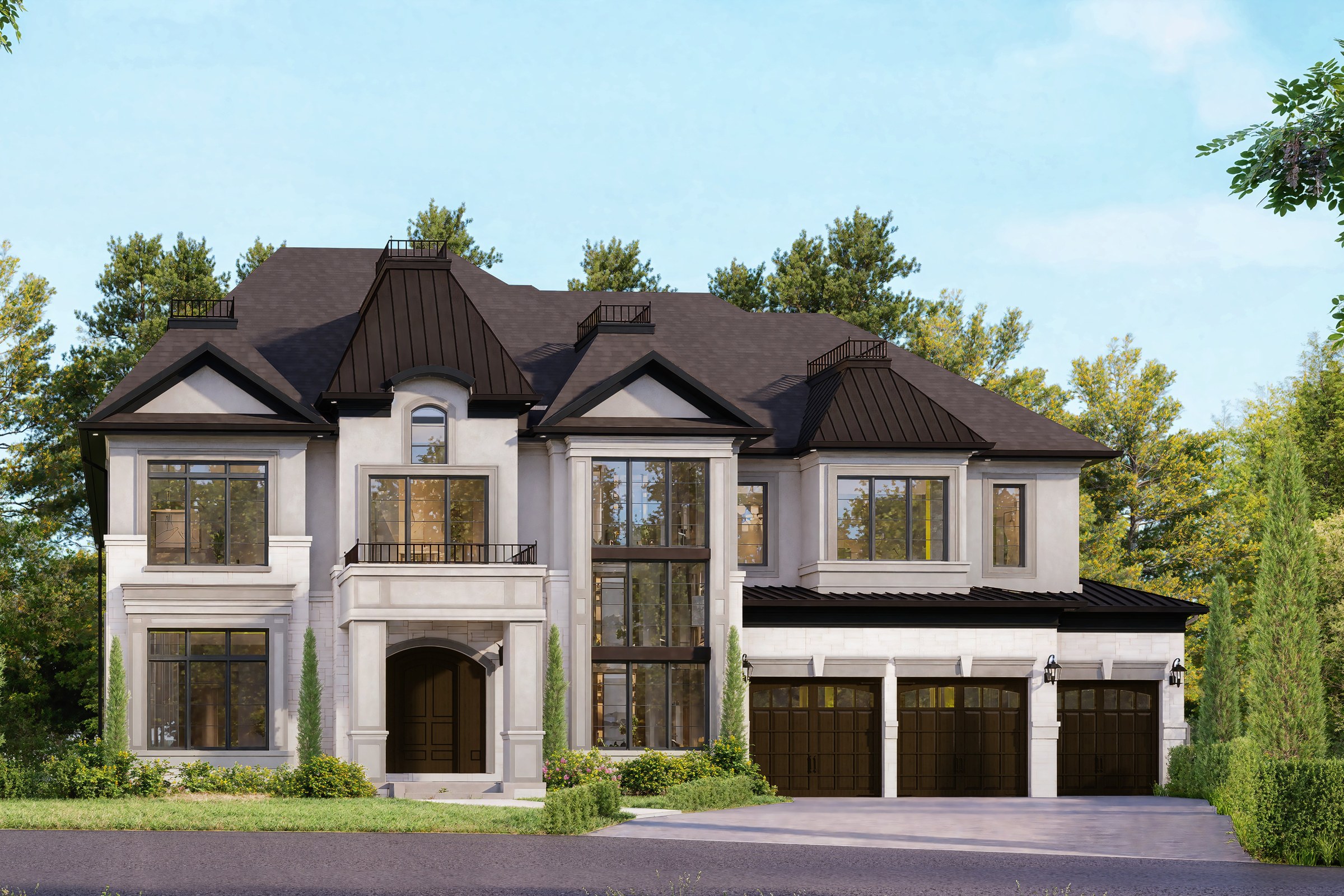
Three materials, three honest joints
A stone plinth, a stucco upper storey and a dark standing-seam roof — held at every gable and dormer.
This is the harder version of the seam test, because there are more junctions to get wrong: stone to stucco at the base, stucco to metal at the eave, and a central glazed bay that has to resolve against both. Every gable, chimney and dormer here holds its line rather than letting one material bleed into the next — the kind of discipline that is invisible until you go looking for it, and obvious once you have.
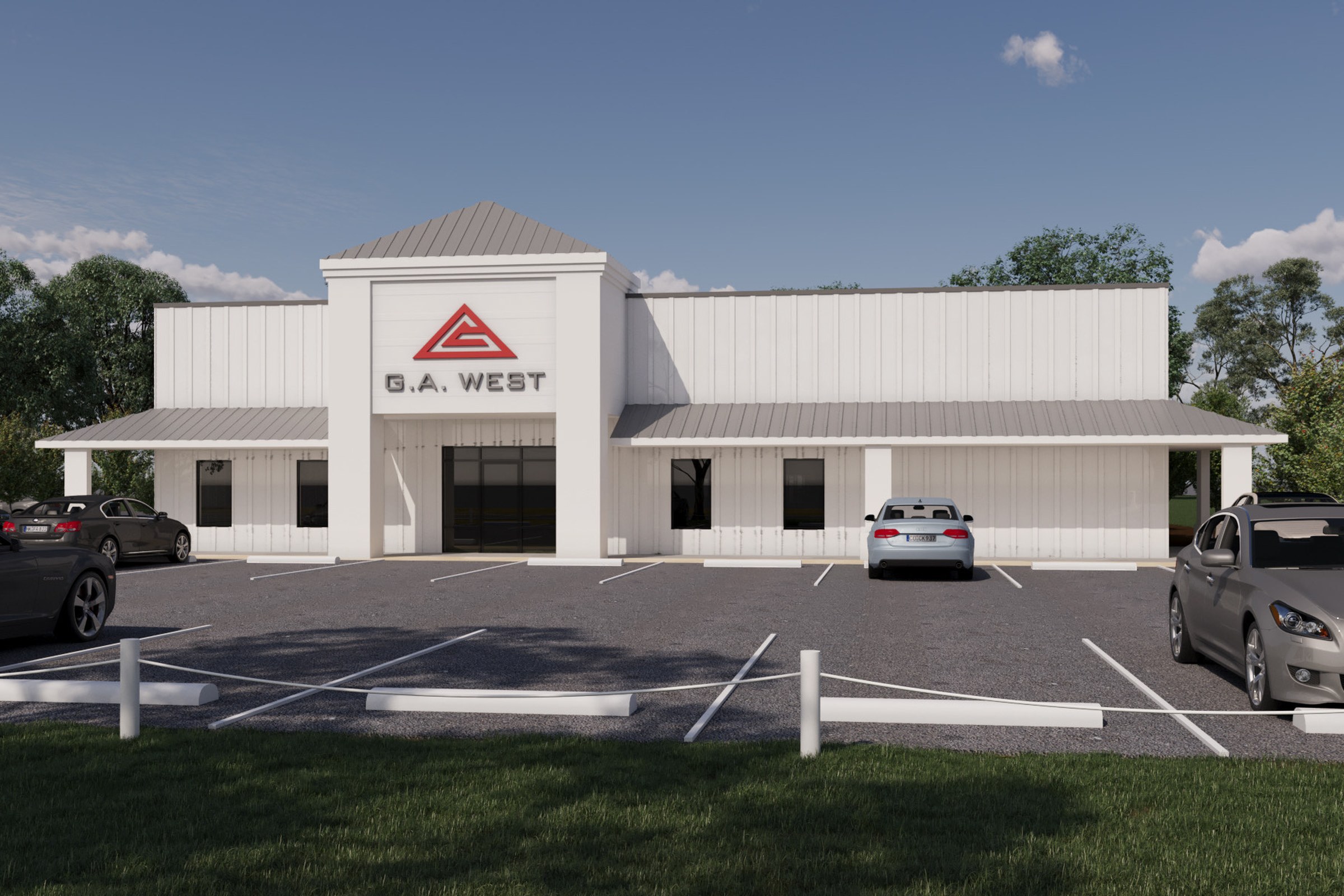
Flat midday light, nothing to hide behind
No dusk glow, no golden hour — just the building and the parking lot in front of it.
This is the honest-light version of a still: a clear midday sky, no atmosphere doing any favours for the composition. What is left to look at is the building itself — the panel joints, the signage volume set into the gable, the proportion of the entrance tower to the flanking wings — and the ordinary, un-glamorous ground plane of a real site: painted bays, a protective rail, parked cars. If a render still reads as considered under light this flat, the design was doing the work, not the sky.

Warm light that still reveals the plan
Dusk and golden hour aren’t the problem. Using them to cover for the model is.
Low sun through mature trees, a green planted-roof canopy on slender columns and a small group actually using the forecourt — every lever an atmospheric render has is present here, and none of it is standing in for the architecture. The glazed pavilion, the canopy line and the taller building set behind it through the trees are all still legible; the light is illustrating a plan you can trace, not distracting from one you can’t.
Whether a note survives the loop
Proportions, seams and light are all visible in a single frame. The fourth thing that actually decides whether a working relationship holds — whether a revision note comes back as a conversation or as a fight — isn’t. You can only see it by sending one.
Which is the honest reason this page ends with an offer instead of a fourth checklist item: the only way to test the thing you actually care about is to hand over a real note and watch what comes back.
A reply can be written in thirty seconds. A still that holds up to two minutes of looking takes rather longer to fake.


