
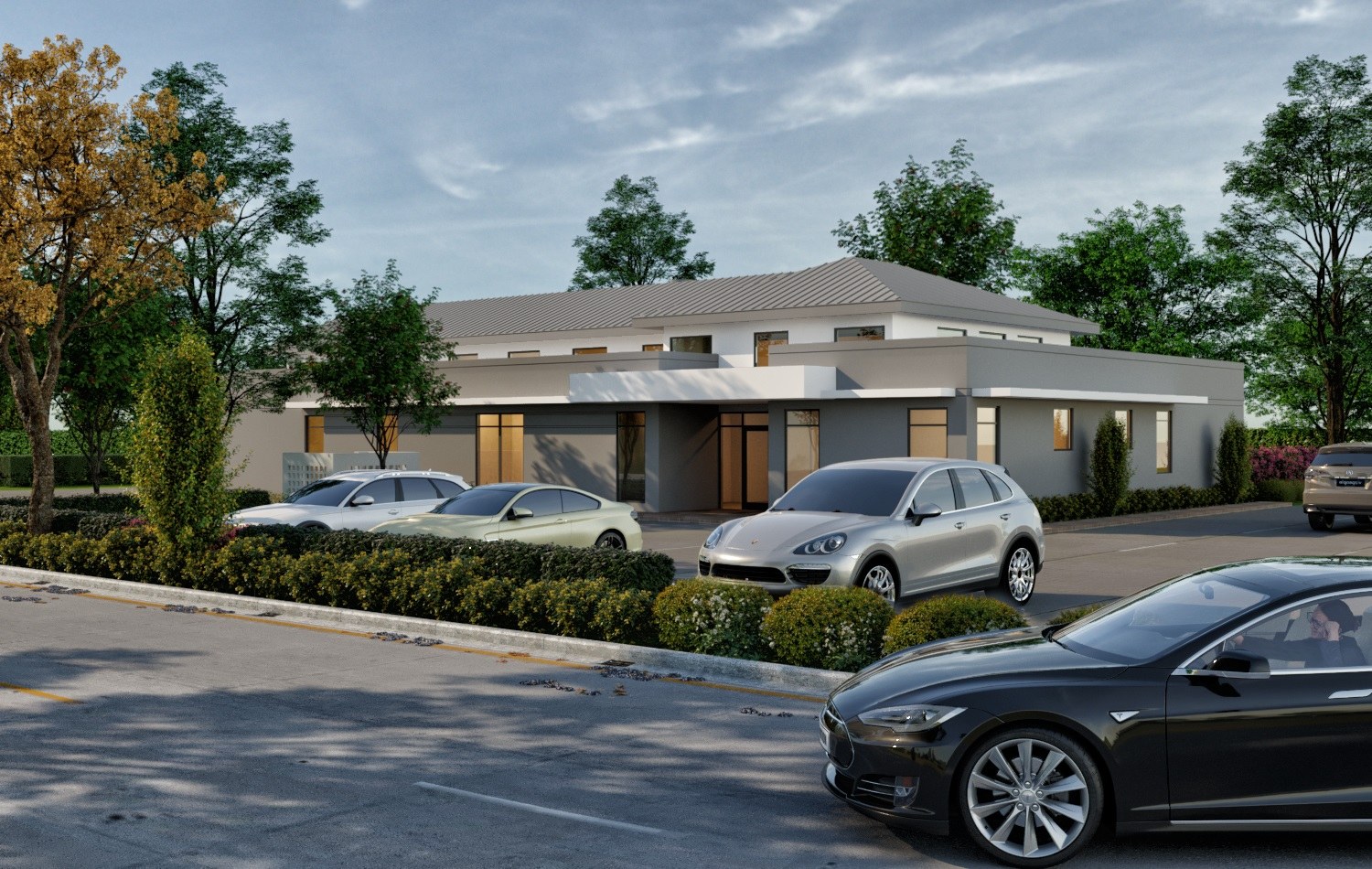
The whole program is the proof
A firm that comes back for the next phase isn’t being sentimental. It’s testing whether the last judgment call still holds.
Now and then a practice we’d gone quiet with comes back — not for one more image, but for the whole exterior program on a new phase. It’s tempting to read that as nostalgia, or loyalty, or just convenience. It isn’t, really. A firm asking for a program is asking a sharper question than a firm asking for a render: not "can you make this look good," but "does the same judgment still hold when nobody’s watching frame six as closely as frame one." That’s a different, harder thing to prove — and it’s worth being honest about what it actually takes.
What changes between a commission and a program
Neither of these is a harder building to model. One of them is a harder thing to keep consistent.
One render is a bet on a frame
A single commission only has to be right once.
One hero image has one job: hold up on its own. Massing, material, light and camera all get decided together, in one pass, and if the frame reads well nobody downstream ever has to reconcile it against anything else. That is not a small thing to get right — but it is a different, smaller thing than what a program asks for.
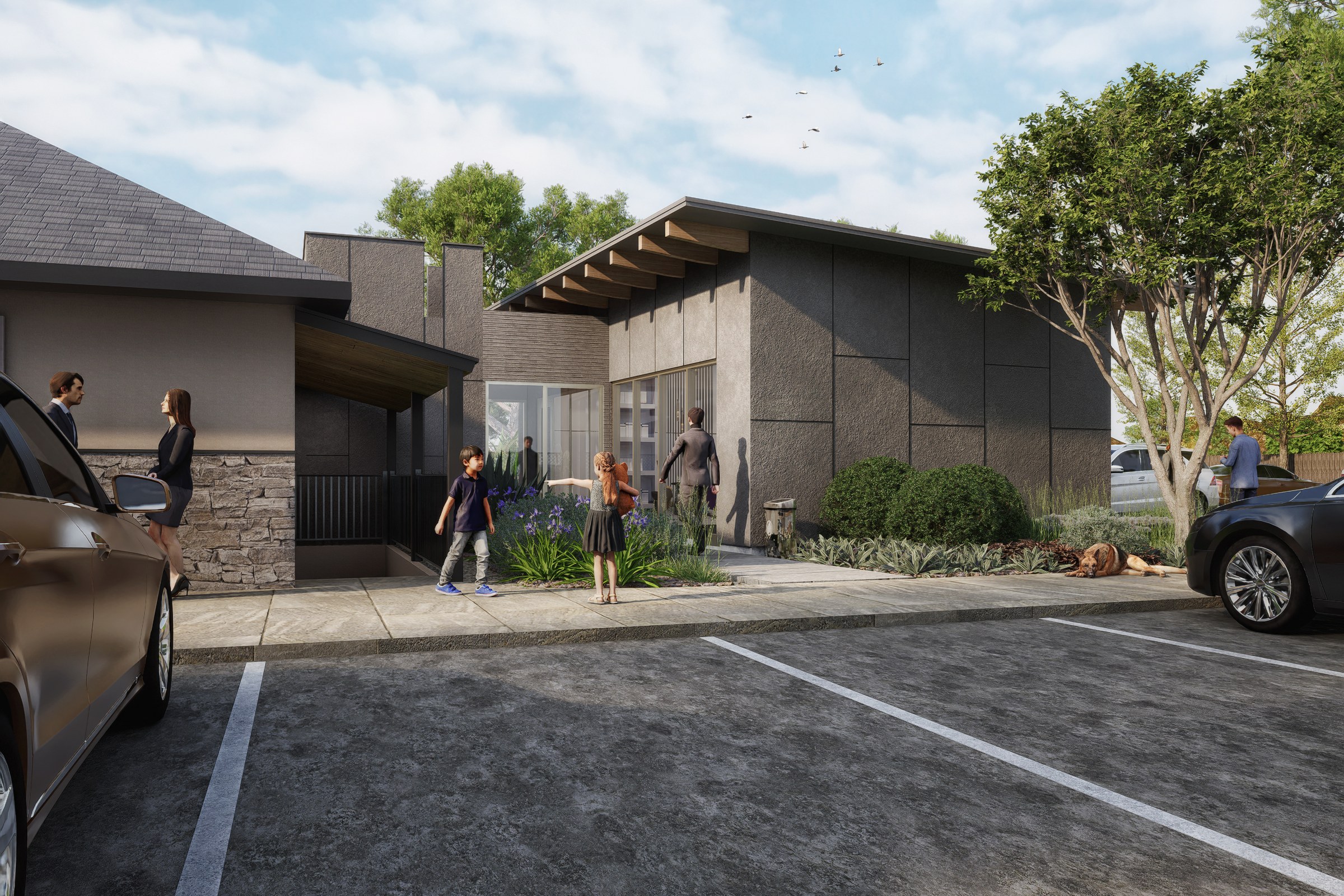
A program is a bet on a method
The arrival elevation and the materials up close have to agree with each other — and with the next building after it.
The moment a return isn’t "one more render" but a program — arrival elevation, entry detail, a second phase, sometimes a third — every one of those frames is quietly being checked against the last one a firm approved. Same daylight logic, same material read at close range, same restraint around the entourage. Nothing here is harder to model. It is harder to keep consistent across a dozen decisions made weeks apart, none of which get to be the special one.
The two tests, side by side
Not a claim about any one client’s history — just what the two situations actually ask for.
- What a first commission tests Can this studio hold one design intent through to a finished frame.
- What a returning program tests Can this studio hold the *same* design intent through a dozen finished frames, on a different phase, months later.
- Why the second one is harder Nobody re-briefs the material palette or the lighting logic on frame six. It either already agrees with frame one, or it doesn’t.
- What we actually track for it A style sheet per client, not per project — camera height, material call-outs, dusk vs daylight, entourage density.
A single render can be lucky. A program can’t.
Which is really why this note exists. Reaching back out after a while is easy to say — the credible version is showing you the same judgment call still holds, not just claiming it does. If it’s been a while since your last exterior with us, that’s the offer: send the next phase, or just the one we already built, and judge the consistency for yourself.


