
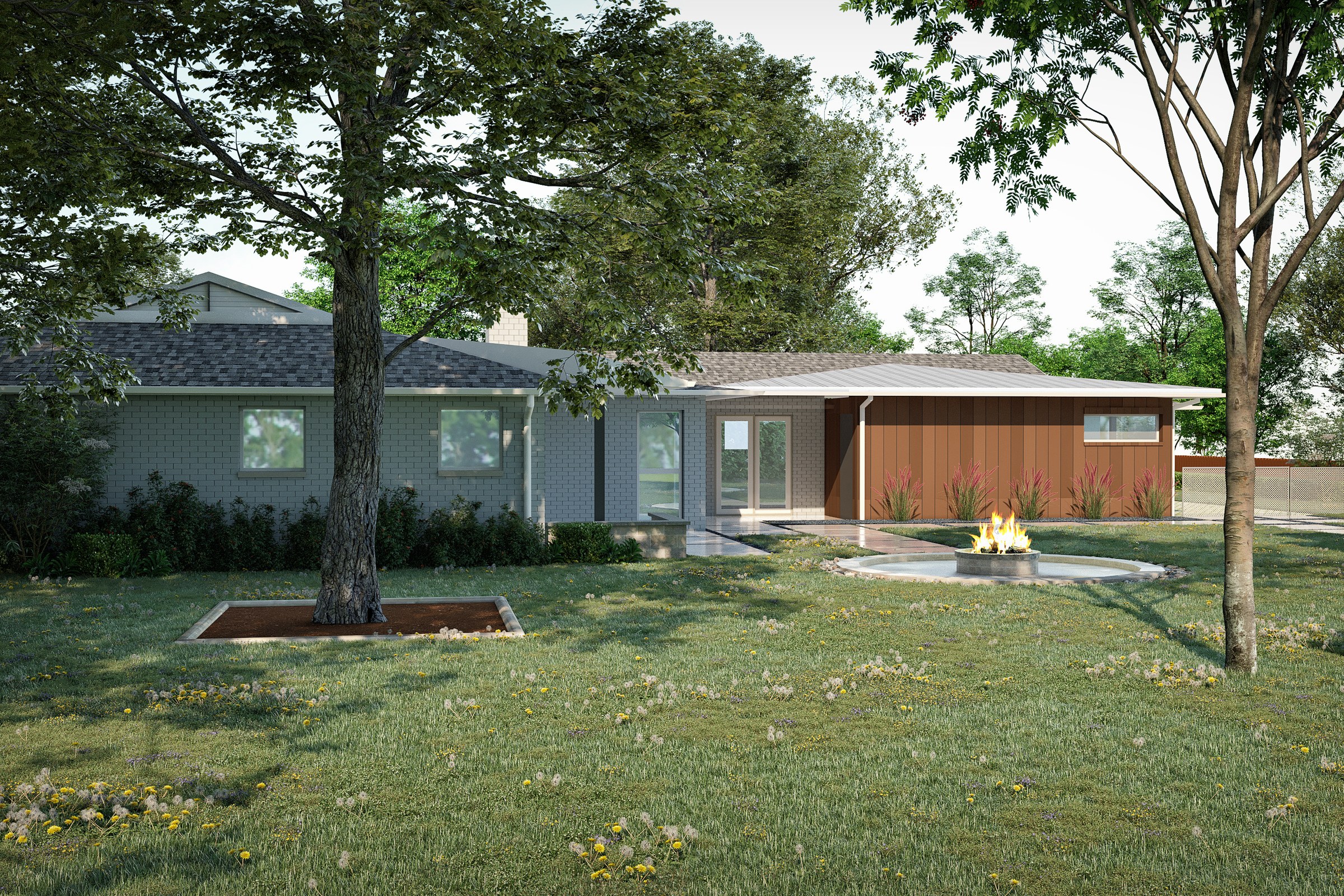
The sheet worth a second look, before it renders
A set gets read by the person who built it, at the end of a long week, one more time than anyone should trust. Here’s what a second reader is actually looking for — and why it’s never the same thing the first one was.
There is a specific kind of blindness that only comes from proximity. Spend three days inside one 3D file and the model stops looking like a house or a street to you — it looks like a hundred small decisions you already made, each one correct at the moment you made it. That is exactly the state a set is usually in the day before it renders, and it is exactly the wrong state to review it in. Every studio has a version of the fix: a second reader, uninvested in any of those decisions, whose only job is to look at the sheet the way a client will — once, cold, without the week of context that made every shortcut feel reasonable. Here are four things that read fine to the person who built them, and don’t survive that second look.
What a second reader is actually checking
Not whether any one element is well modelled. Whether it still holds up once someone with no stake in it looks straight at it.
Whether the new thing believes the old thing
A tie-in only has to be wrong by a few inches to read as pasted on.
The person who modelled the new hardscape has spent days inside its geometry and none inside the client’s actual front lawn. A second reader arrives with no investment in either — they look at the mature tree, the existing roofline, the worn path line the grass has already drawn, and ask only whether the new work believes the old site enough to sit in it. That question is nearly impossible to ask of your own model.

Whether the planting has lived there long enough
A vine that looks intentional at three years looks planted yesterday at three months.
Planting is specified from a nursery catalogue, at a size and a price, months before anyone decides how the render should read. Left unchecked, a pergola gets dressed in exactly the vine density the budget line said and not the one the brief implied — a garden meant to feel established comes back looking freshly installed, and nobody notices until a client who has actually stood in their own garden says so first.
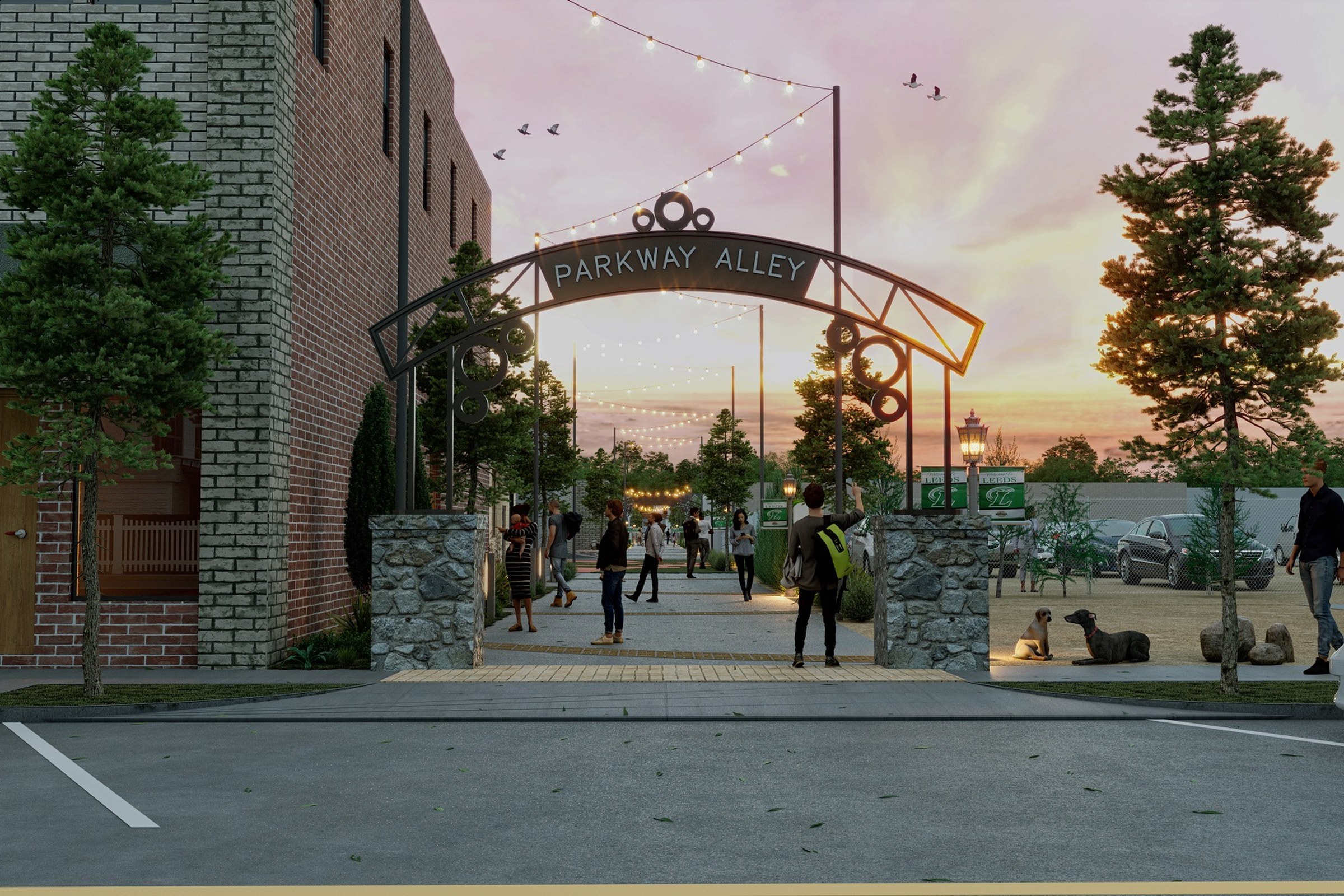
Whether the crowd is a moment or a diorama
Entourage is the fastest way to make a real place look like a toy set.
People, dogs and cars get dropped into a street scene late, usually by whoever has the least time left before the deadline — and a crowd assembled under time pressure defaults to evenly spaced figures all facing camera, which reads as staged the instant a human looks at it. A second pass checks the thing its own modeller stopped being able to see: does this look like a place someone walked into, or a place someone furnished.
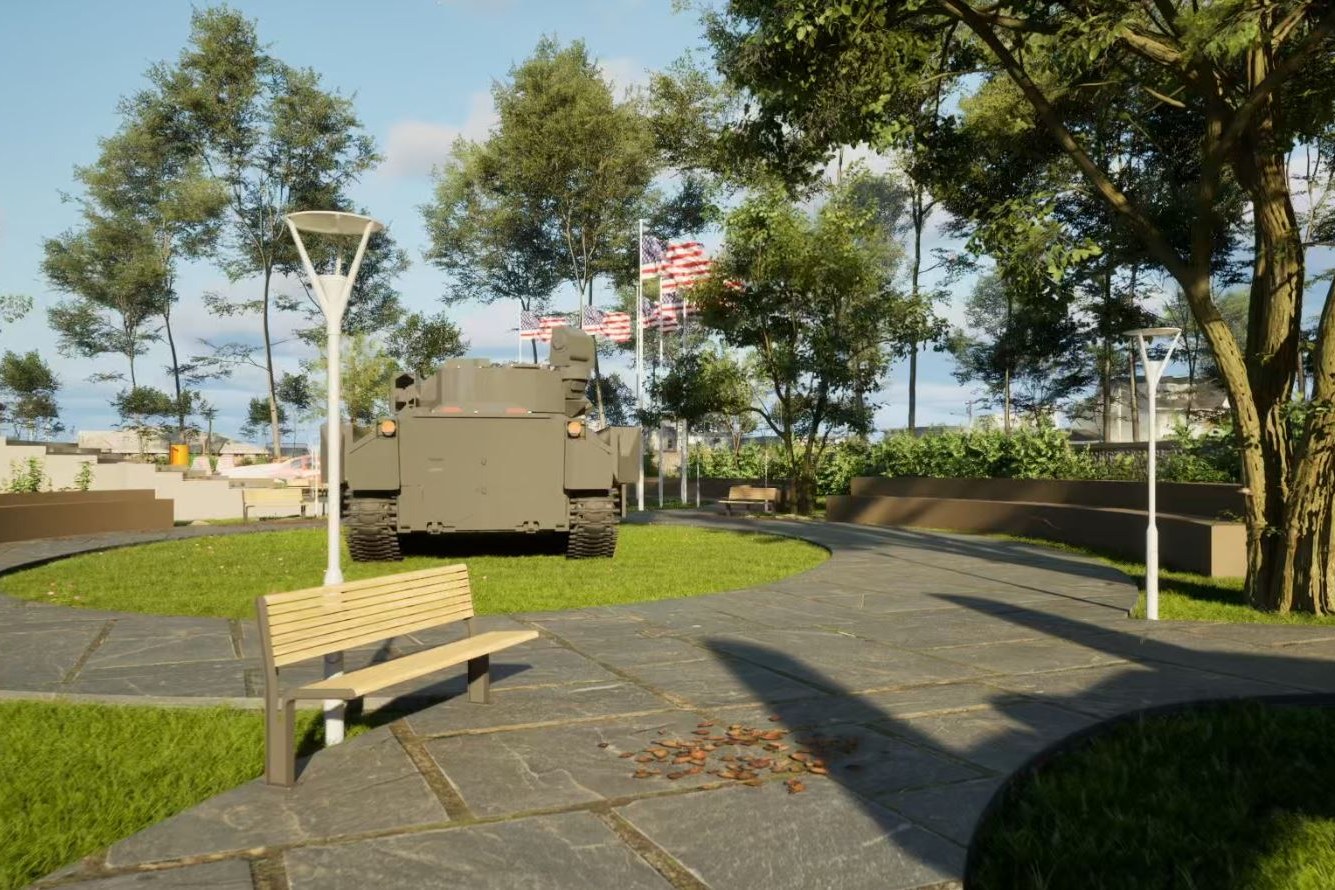
Whether the one object everyone will recognise is right
Somebody in the room will know exactly what that vehicle should look like.
Most objects in a scene are generic enough that no one checks their accuracy too closely. A handful are not — a specific vehicle, a flag, a piece of hardware someone in the audience will recognise on sight — and those are exactly the objects a tired modeller is most likely to wave through because they have been staring at the panel lines too long to see them anymore. A second reader without that fatigue is the whole point of asking for one.
Four questions, asked by someone else
None of them are about whether the modelling is competent. All of them are about whether it still reads true to someone who didn’t spend the week inside it.
- The tie-in Does the new work believe the site it’s sitting in?
- The growth Does the planting match the age the scheme implies?
- The crowd A moment, or figures placed to fill a street?
- The one object Would someone who knows it well believe it?
A file never lies to the person who built it. It just never tells them anything either.


