
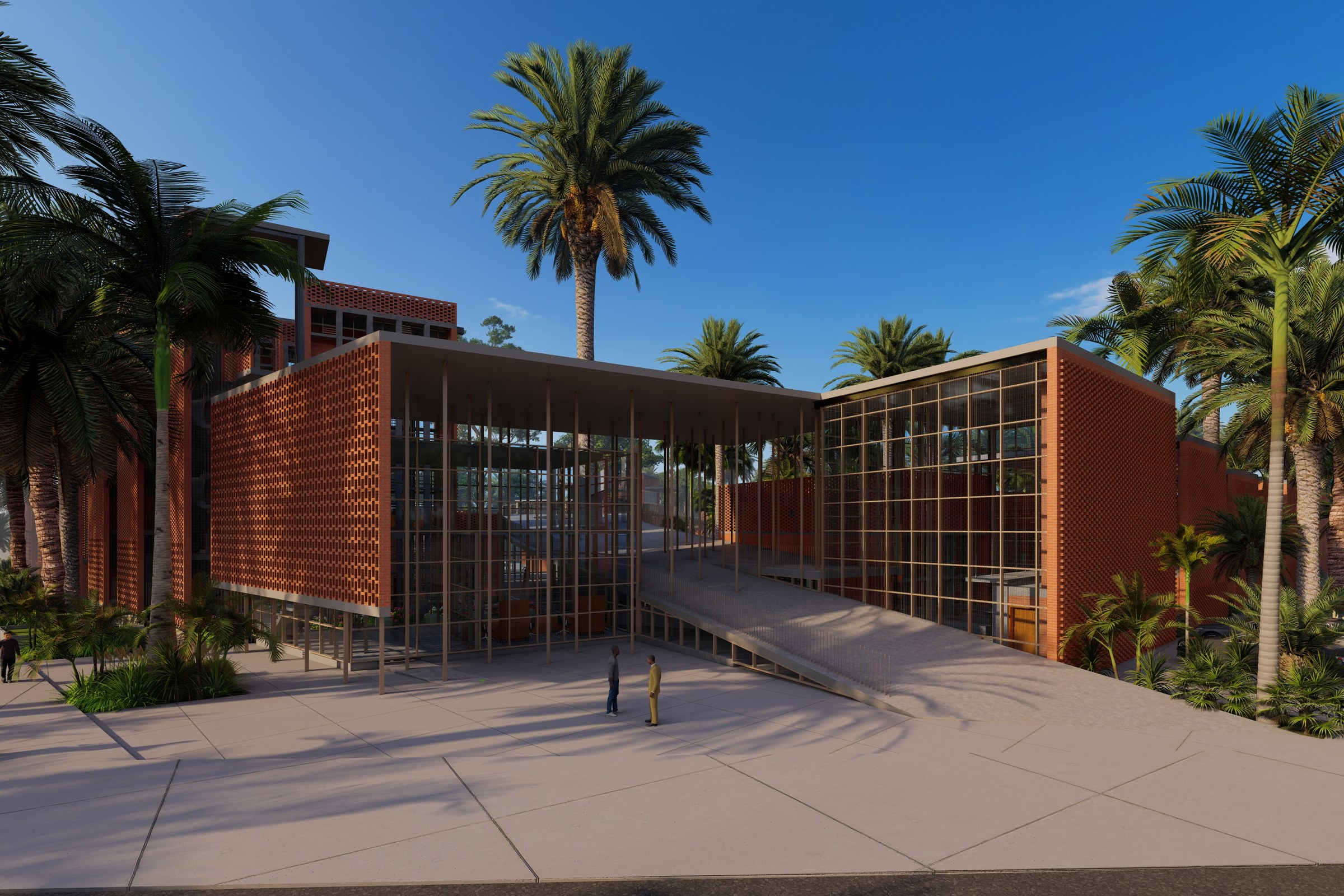
The image a jury actually keeps looking at
Not the loudest board in the room. The one where a juror can tell you, later, what they saw.
Most submission boards get a first pass that lasts about as long as it takes to read this sentence. A jury of five or seven people is working through dozens, sometimes hundreds, of entries in a single sitting — they are not reading your board, they are scanning it, and the ones that survive the scan are the ones that get a second look. What earns the second look is rarely the entry with the most dramatic lighting. It's the one where something specific registers before the eye moves on.
That's a different brief than "make it beautiful." We build a lot of images that are meant to be beautiful and a smaller number that are meant to be shortlisted, and the second kind is built to a different set of rules — closer to how a courtroom exhibit is built than a magazine spread.
Three things a scan actually catches
A decision they can name
A jury member who liked your board has to explain why to three other people in a room. Give them one sentence to repeat — a section that steps with the grade, a screen that does double duty as shade and privacy, a threshold deep enough to actually stand under. Spectacle with nothing to name behind it gets admired and then forgotten by the next board.
A site, not a backdrop
The fastest way to read as a rendering exercise rather than a proposal is a building that could be dropped anywhere. Real grade, a real neighbour, real planting at a real maturity — the things that prove someone actually looked at the site before they drew on it.
A person, not a prop
Figures at true scale do two jobs at once: they tell a juror how big the space really is, and they tell them someone imagined using it. A render with nobody in it reads as a diagram wearing a render's clothes.
A board that impresses in isolation and a board that survives a jury's first pass are not the same test. The second one rewards restraint.
Context does more work than composition
A building floating in an empty render field asks a juror to take the site on faith. One that visibly sits on real grade, next to a real neighbour, with planting at a believable maturity, answers a question before it's asked — and a juror who isn't fighting to believe the setting has more attention left for the design itself.
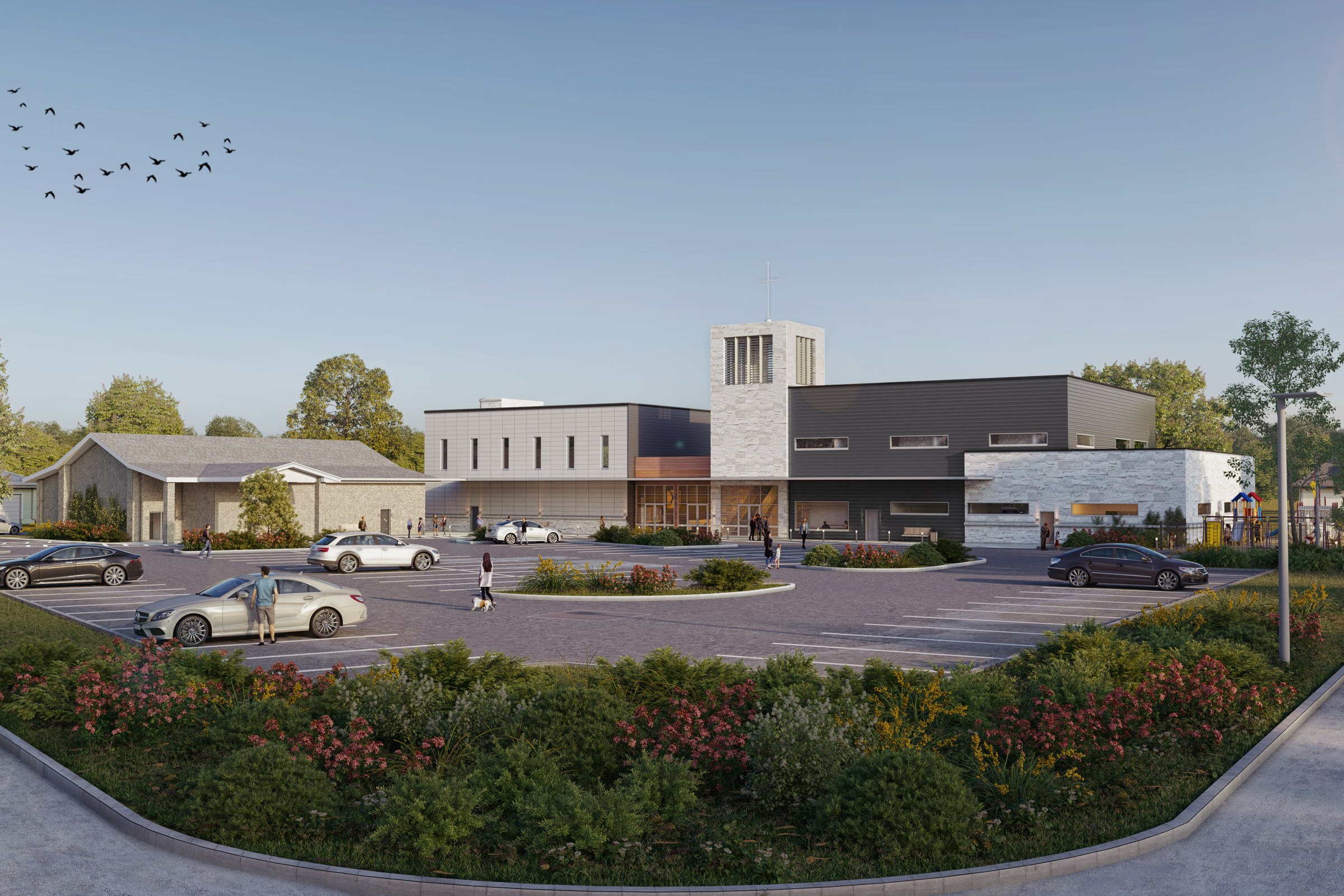
We won't tell you a render wins an award
No render has ever won anything on its own — the design does that, and a jury that can't tell the difference between a good idea and a good atmosphere isn't a jury worth entering for. What we will say plainly: an idea a jury can't see clearly enough to remember doesn't get the vote it deserves, and we've watched entries lose ground to a competitor with a weaker scheme and a more legible board. If your submission has a real decision in it — the section move, the material logic, the thing that makes this scheme yours — that's the image worth spending the render budget on. Everything else in the set can be simpler.
The rest of what "legible enough for a jury" looks like is easier to show than to describe. Our full portfolio is open — building by building, not staged for a pitch.


