
The asset your launch month actually calls for
A design's resolution follows a clock. Buyer expectation follows the same clock. Most launches never check that the two agree.
A photoreal, furnished portal set eight months before launch is not a safe over-delivery — it's a promise about finishes, layout and light that the design hasn't made yet. When one of those changes, and something usually does, the render doesn't get revised, it gets re-shot. A teaser still six weeks before launch has the opposite problem: it's honest about what was decided, but by then buyers are expecting to see the rooms they'll live in, not the shape of the site. The fix isn't more renders. It's matching what gets built to what's actually been decided, at the moment it gets asked for.
What's decided by then is what the render should say
Real renders, three stages of one kind of project — each one honest about exactly how much has actually been resolved.
Teaser still
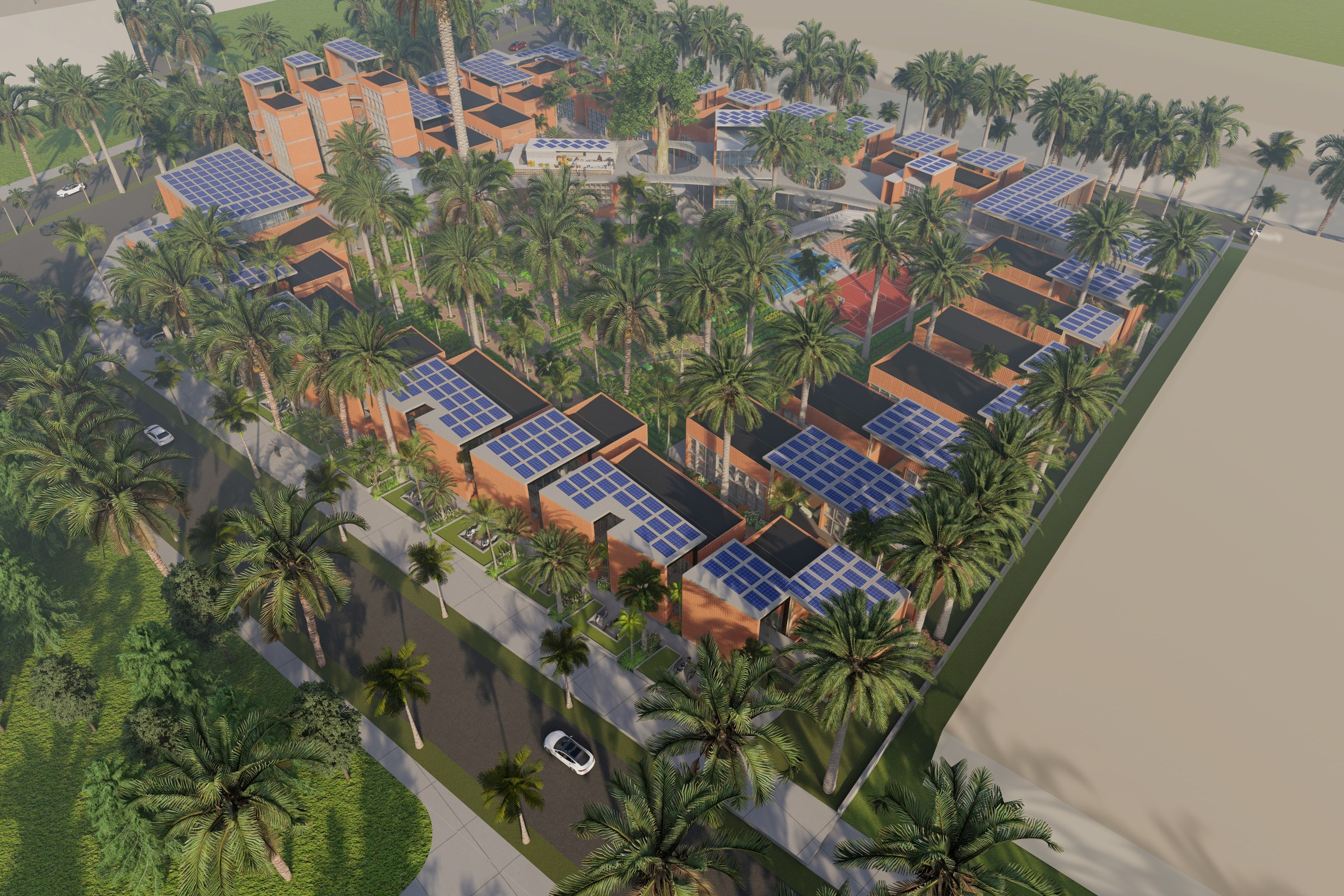
A whole community from above — buildings, planting, roads and shared ground laid out, nothing closer than the site itself. At this distance the only thing genuinely decided is the idea of the place: how it sits on the land, how much is landscape versus roof. A teaser still says exactly that much and no more. Ask for a furnished interior this early and you are asking the render to promise a finish schedule that has not been written.
Walkthrough
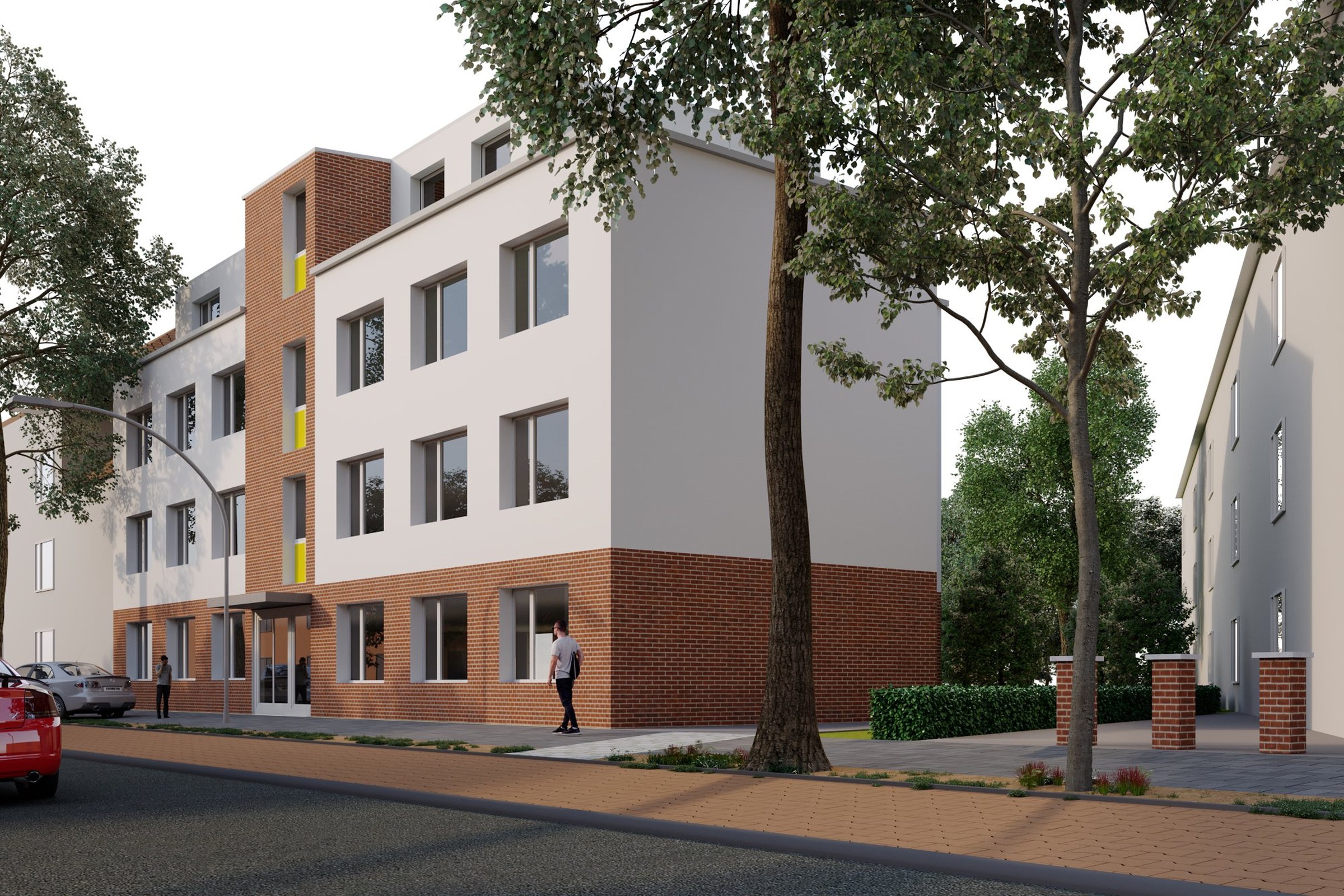
The same project, now at the street: a corner elevation, a real materials palette on the facade, a person walking past for scale. Massing and cladding are decided; unit finishes usually are not. This is the resolution a walkthrough is built around — a sequence that carries someone from the street to the door on a project that already knows what its street looks like, without pretending to know what its kitchens will look like yet.
Portal set
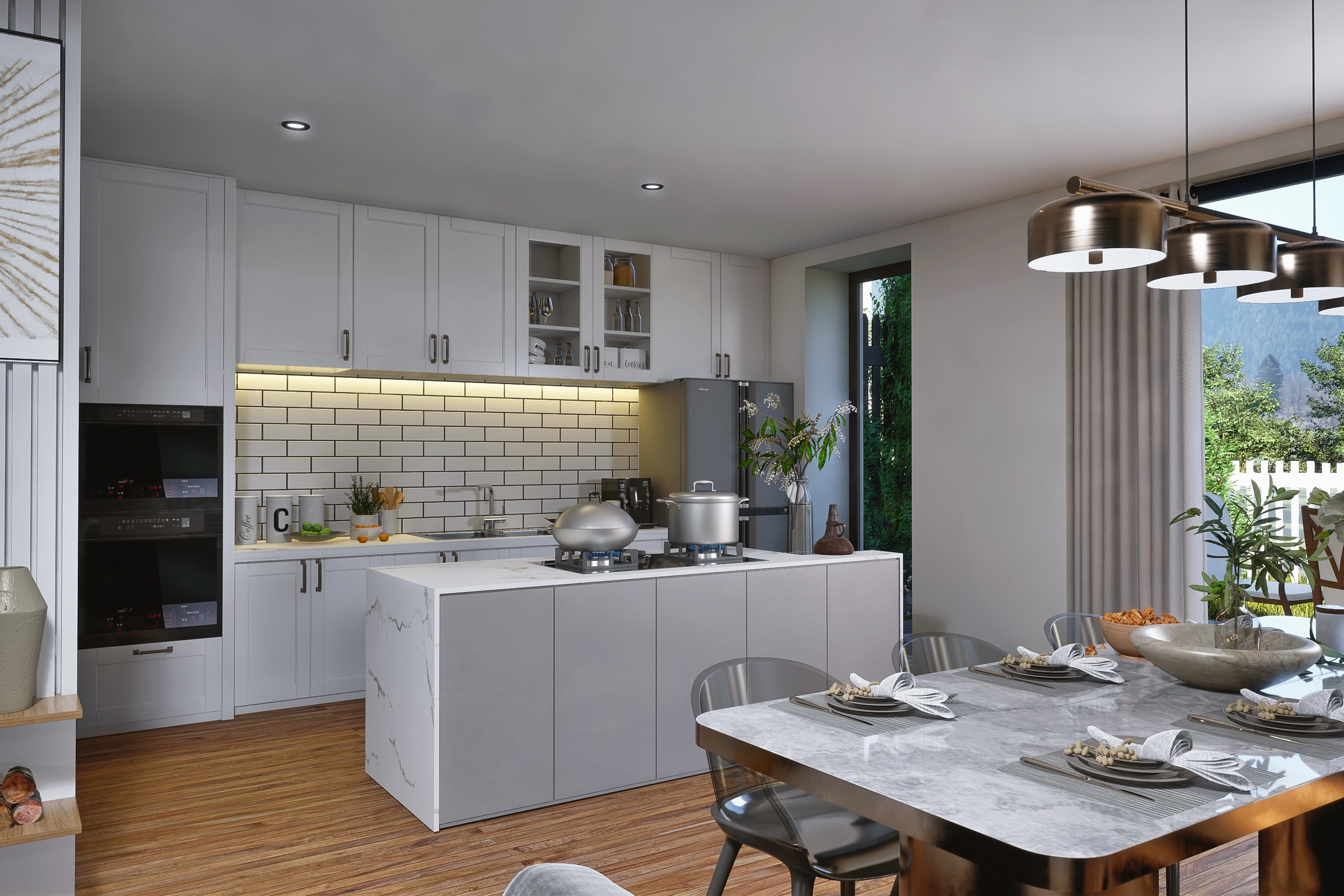
A finished kitchen and dining room — cabinetry, worktop, hardware, table setting, the view out the window. Nothing here is a placeholder; every surface is a decision a buyer will actually stand in front of on move-in day. This is the only stage where a photoreal, furnished still belongs on the portal — because by now it is describing a room that exists, not one that is still being argued about.
The wrong asset at the right effort is still the wrong asset
Neither of these is a bad render. Both are the right image sent at the wrong point on the clock.
- Portal set, requested at month 8 A photoreal answer to a question the design hasn’t finished asking itself.
- Teaser still, requested at week 4 A correct answer that already reads as too little, too late.
A render should say only as much as the design has decided — not as much as the calendar makes tempting.
We're not asking for your render brief first. Reply with your launch month, and we'll send back one line — which of the three stages above your timeline is actually asking for, and roughly what that asset should show — free, no set required to look at, no obligation after.


