
The one image a pre-sales gallery actually runs on
Before the full render set gets built, something has to carry the listing cover, the brochure, the sales-office wall. Most launches never decide which frame that is.
A design team ships a full set — elevations, aerials, an interior or two — and every one of them is correct. But a launch doesn’t run on a set. It runs on one image, first: the frame a listing site crops to a thumbnail, the one printed four feet wide behind the sales desk, the one that goes out as the first ad before the rest exists. Pick it well and the whole gallery has a spine. Skip the decision and the gallery is just a folder someone eventually has to sort through.
A hero shot has to choose which question it’s answering
Real renders, three different developments — each one built to answer one buyer question, not all of them.
The one they’ll recognize
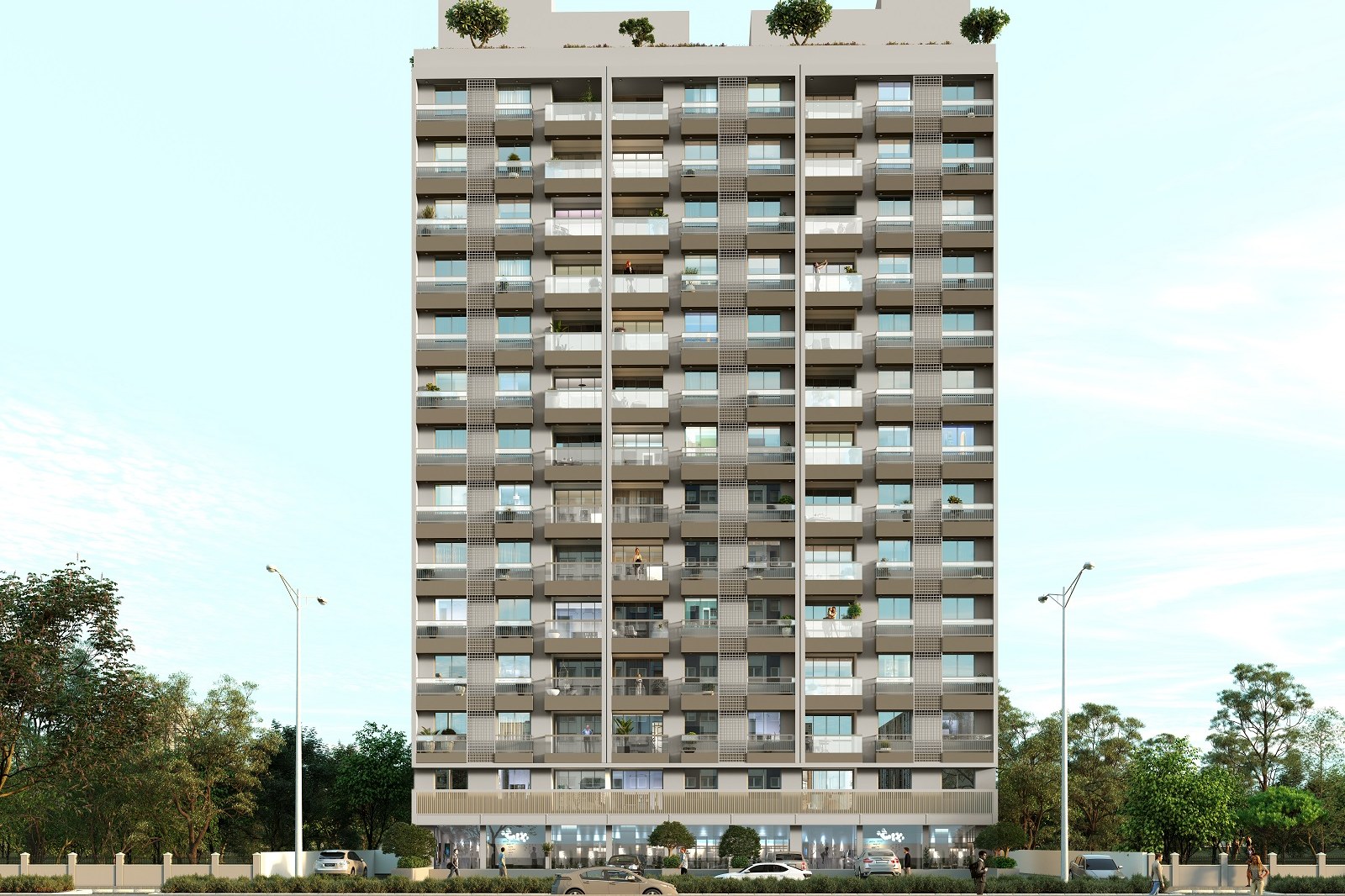
A fourteen-storey tower, seen straight-on from across the street: balconies stacked in a repeating rhythm, ground-floor retail glazed and lit, cars and pedestrians at the curb for scale. This is the frame a buyer matches against the building they actually walk up to on move-in day — not the one on the brochure, the real one. If the hero and the finished tower don’t agree, that gap becomes a review before it becomes a sale.
The one that proves there’s a plan
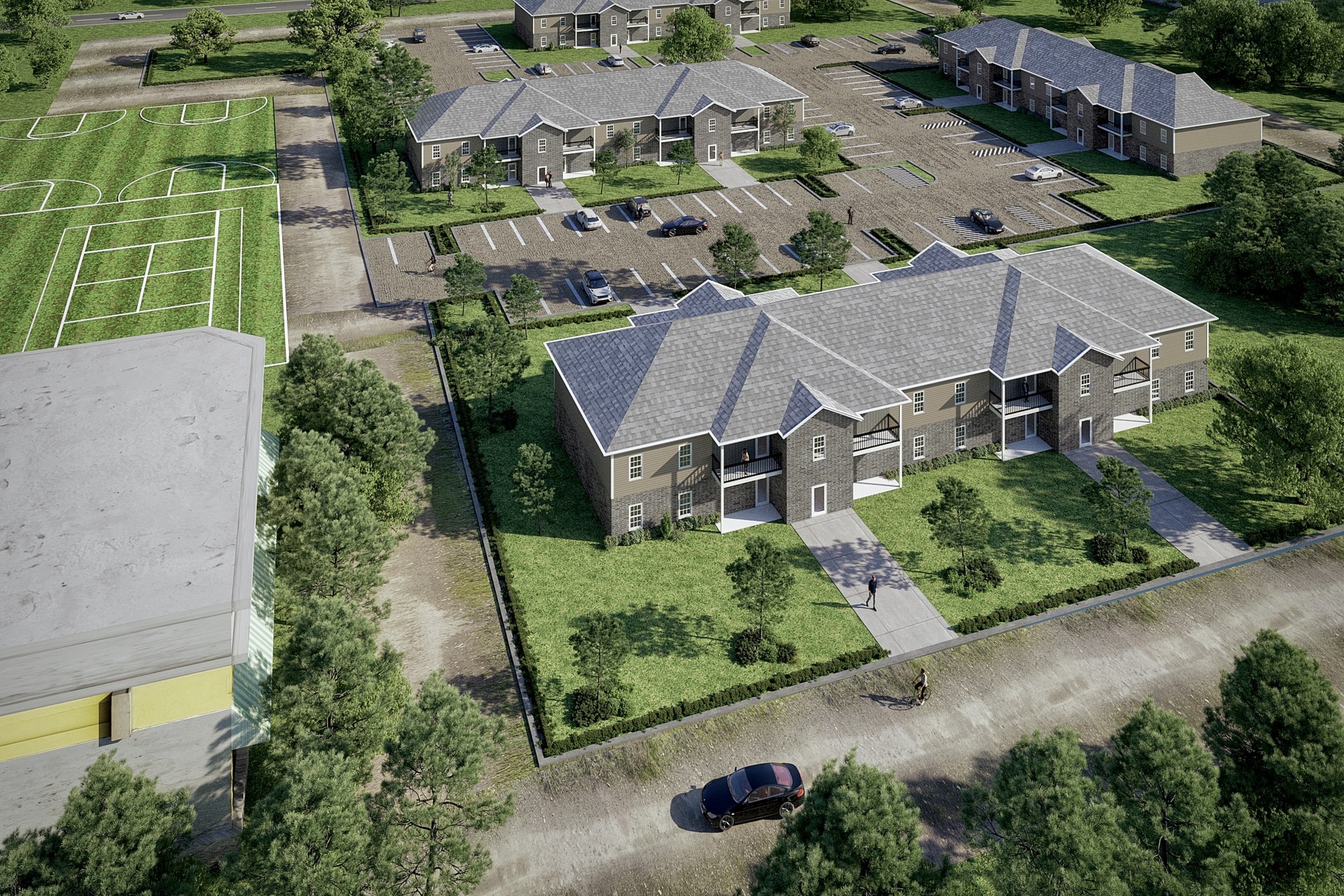
The same kind of development from above: several buildings across one site, a courtyard block set apart near the road, parking laid out, a soccer field and basketball courts already landscaped at the edge of the property. This is the frame that tells an investor — or a buyer weighing whether to commit early — that what they’re looking at is one piece of something larger, not an isolated building with nothing planned around it.
The one that feels like arriving
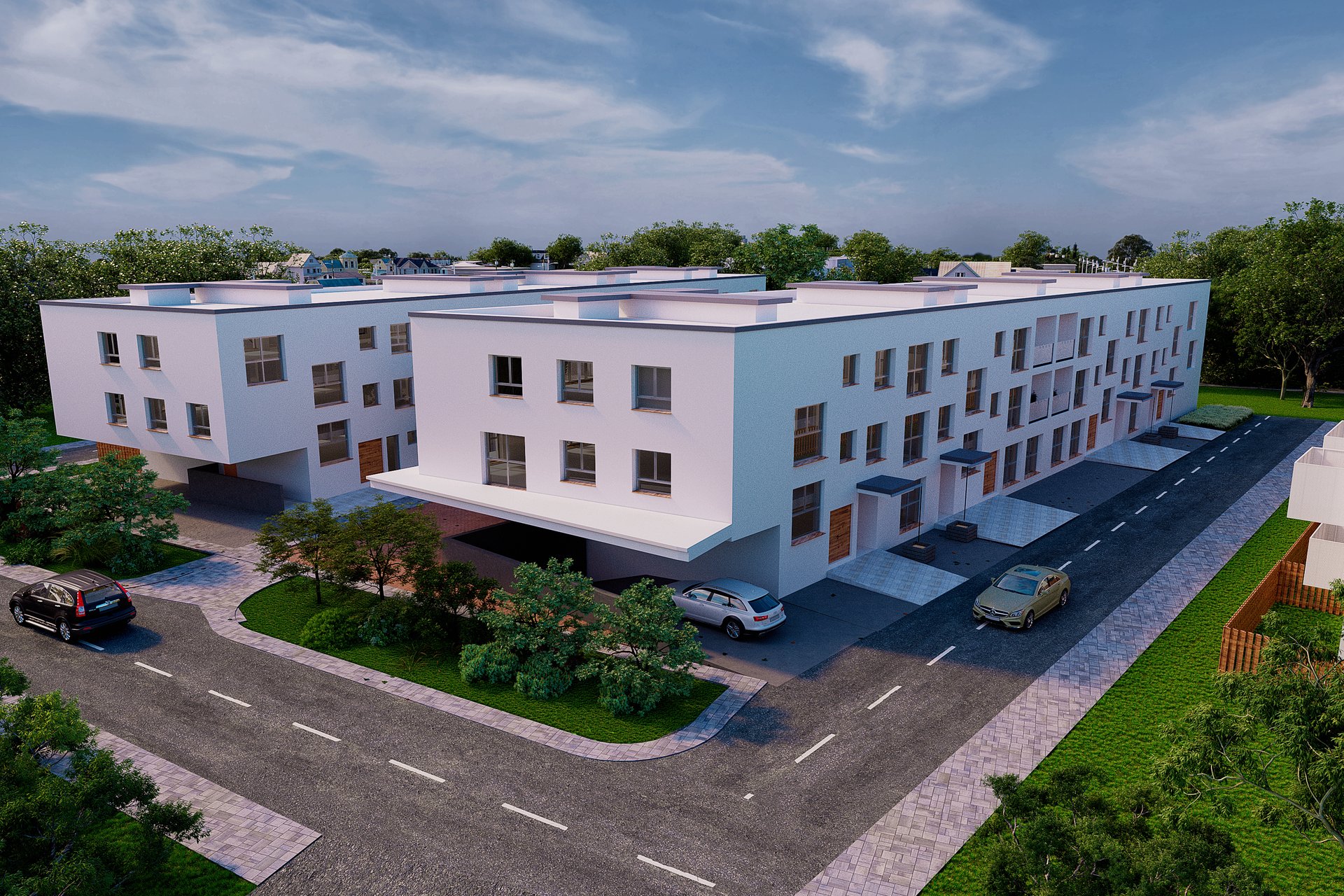
Two low-rise buildings meeting at a corner, seen from the street they actually front: a covered drive-through entry, cars already parked, a curved road with lane markings leading the eye in. This is the frame built to answer the question a listing photo has to answer in one glance — what does it feel like to actually pull up here — which a straight elevation or an aerial can’t.
A render set and a launch asset aren’t the same deliverable
Both can come from the same model. Only one of them has already made the decision a marketing team would otherwise make under deadline.
- The full render set, unsorted A folder of correct images and no argument for which one goes first.
- One hero, chosen on purpose The listing cover, the brochure, the sales-office wall — already decided before anyone asks.
The gallery isn’t the whole set. It’s the one frame the set is arranged around.
We’re not asking to see your renders first. Reply with your project’s name and its launch date, and we’ll send back one hero-angle idea — which of the three jobs above your launch needs first, and roughly what that frame should show — free, no set required to look at, no obligation after.


