
One team, two sectors this month
Is that your bandwidth problem too? At 200+ headcount you are rarely running one project — you are running six, across three sectors, on three different clocks.
Here is what tends to go wrong when a large practice hands its overflow to an outside render partner: the partner has one visual language, and every project gets it. A leasing brochure comes back looking aspirational, which is right. A board submittal comes back looking the same kind of aspirational, which is wrong — and the room notices before anyone finishes the sentence. The fix isn’t a bigger studio. It’s a partner who reads which sector a brief belongs to before touching the lighting rig.
What actually changes between a commercial brief and an institutional one
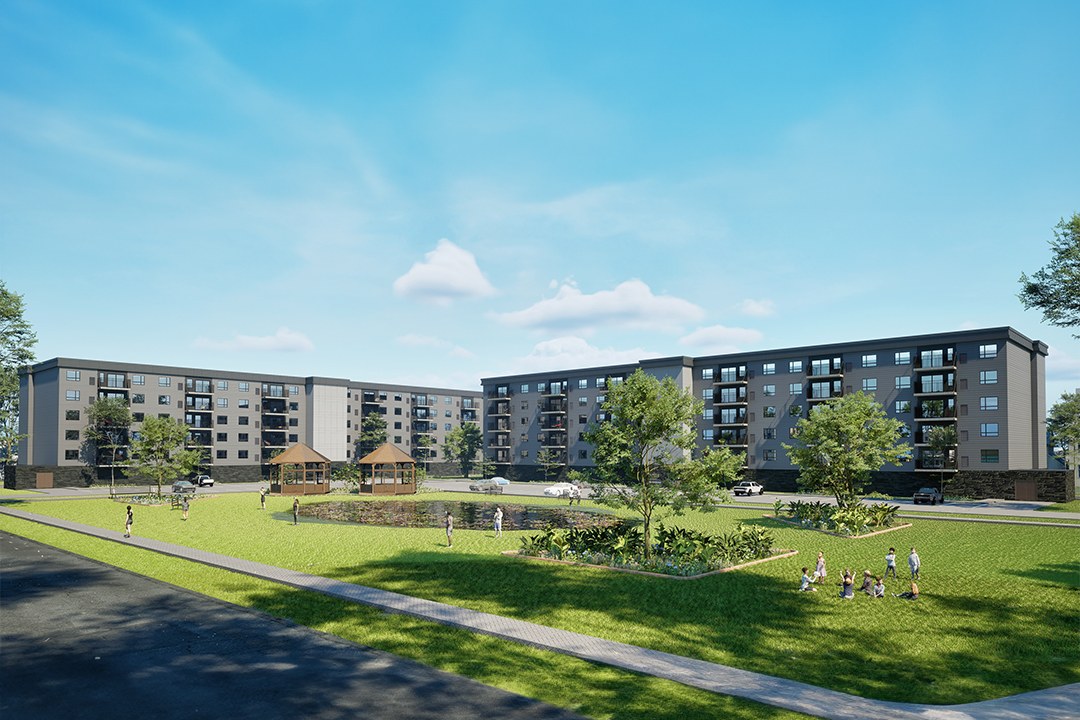
Not one joint project — two real, separate deliveries, shown together to make the sector difference visible rather than describe it.
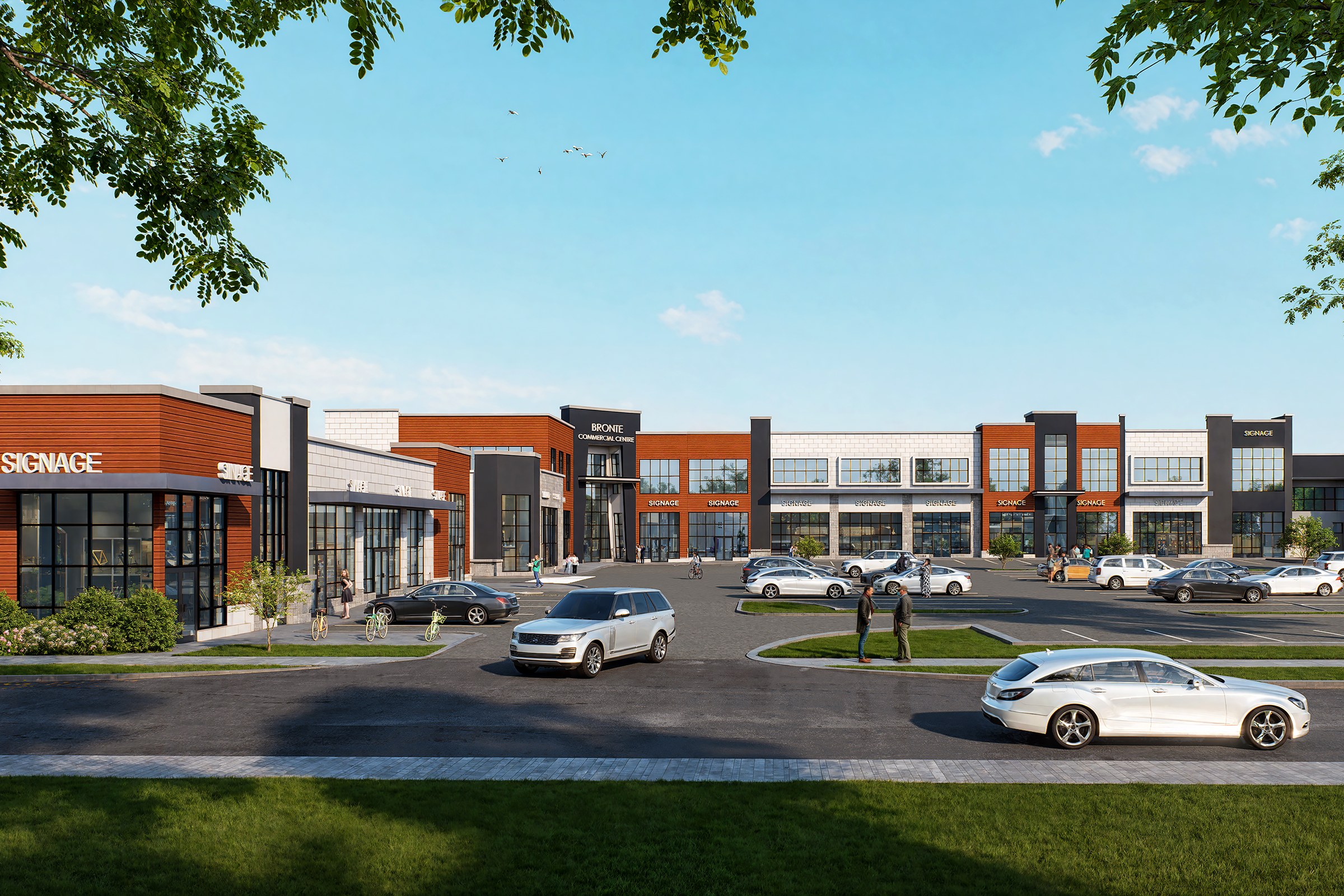
The audience is a leasing decision
The reader is deciding whether to sign, not whether to approve.
A commercial exterior is built to be wanted. The brief runs toward activation — evening light, storefronts that read as occupied, a street with somewhere to be. Materials are pushed toward aspirational rather than literal: this is the render that has to make a leasing team believe the space before a single unit is let. Nothing here is invented — the finishes, glazing and massing are the model’s — but the lighting logic and the moment chosen are deliberately the most persuasive honest version of the building.
The audience is a board, in daylight
The reader is deciding whether this is an accountable use of a public or committee budget.
An institutional building is built to be trusted. The brief runs toward daylight-honest and civic-legible — a flat, even sky, materials read at their real cost, massing you can measure against a site plan without a caption. Nothing evening, nothing aspirational, nothing that could read as oversold to a room that will ask what it actually costs. Same discipline — stay true to the model — aimed at a completely different reader.
What changes by sector — and what never does
This is the range test worth asking any vendor before you split your overflow across three teams.
- Who is actually reading the image Changes every time — a leasing team is not a review board, and the render has to know which one it is talking to.
- The moment: time of day, activation, mood Changes with the sector — evening and occupied for commercial, flat and daylight-honest for institutional.
- Accuracy to the actual model and materials Never changes. The building drawn is the building priced — in every sector, on every clock.
- How much license the render takes Tightens, not loosens, the more public or accountable the audience — a board gets the least persuasive, most literal frame we make.
The sector should be legible in the render before anyone reads the caption.


