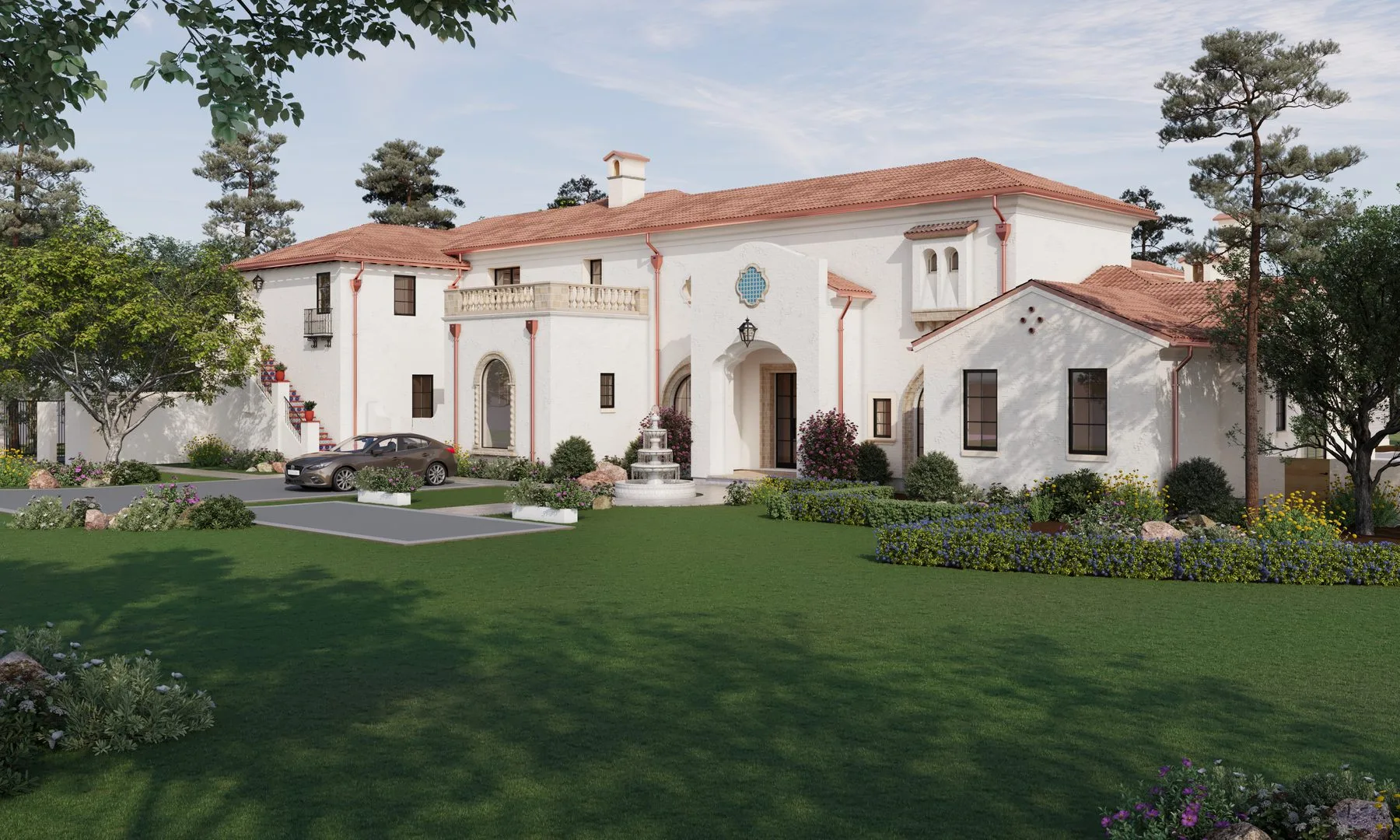
One model,
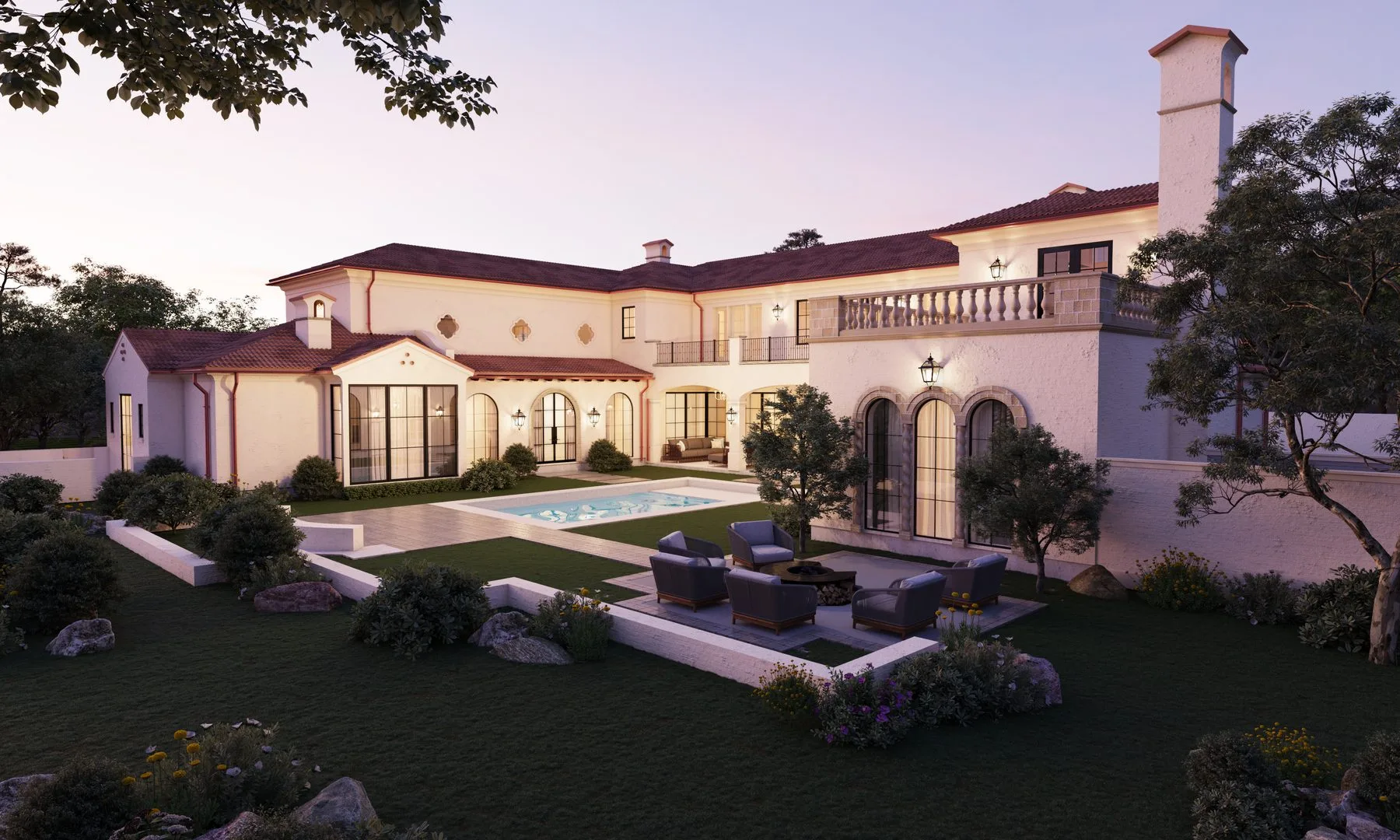
two times of day
Same courtyard. Same camera. Only the light changed — and with it, the entire job the image does.
Midday on one side, dusk on the other — pixel-for-pixel the same scene. Pull the handle across.
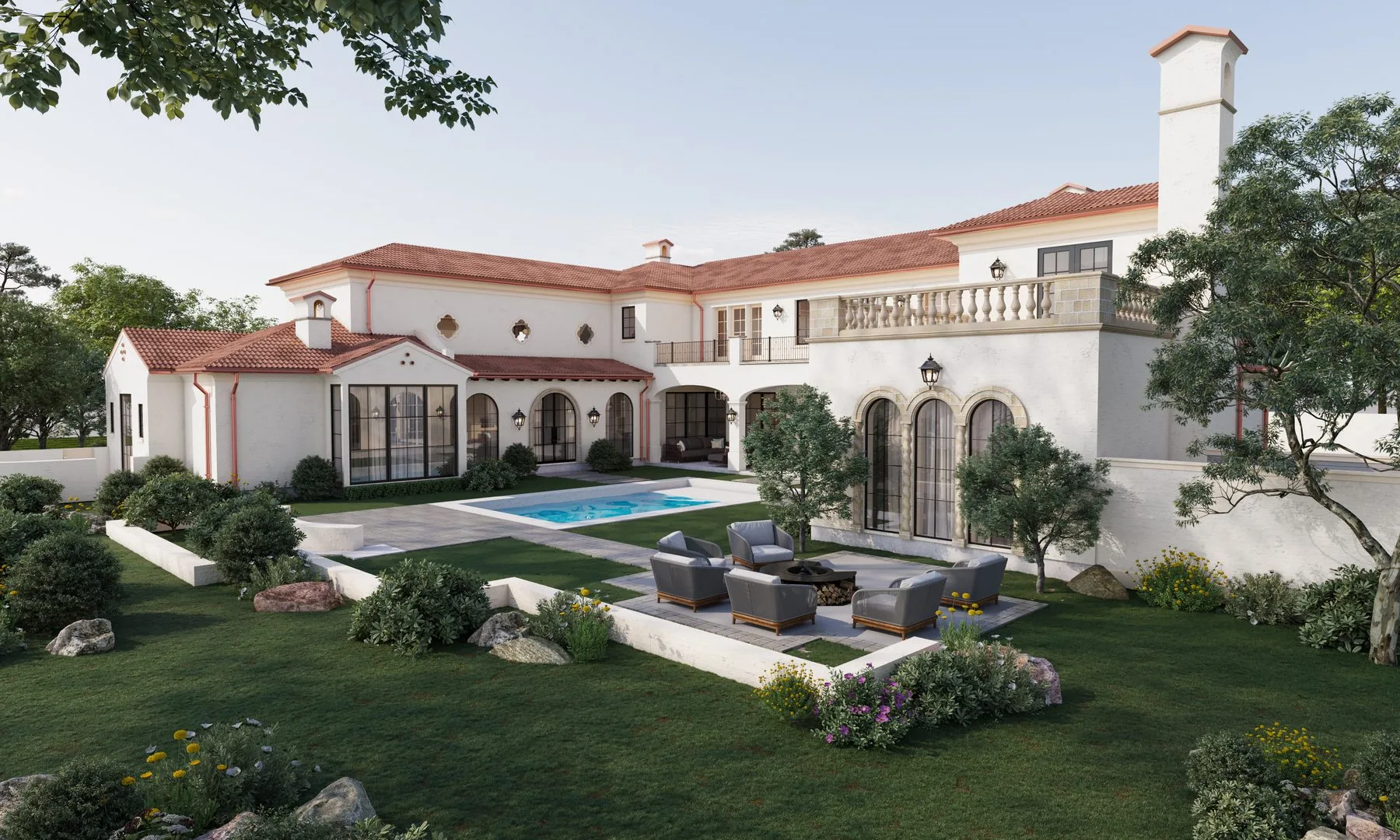
Midday sells clarity
The daytime render is the honest one. Stucco, terracotta, the stone around the arches — every material shown as it is, nothing hidden by shadow. This is the image for a design review or a planning submission. It answers “what is this?”
Dusk sells desire
The interiors glow, the sconces come on, the sky turns — and the same courtyard becomes a place you want to be on a summer evening. This is the image for a listing, a brochure cover, an investor deck. It answers “do you want this?”
The expensive part of a render is everything before the light — the model, the materials, the camera. Once that’s resolved, the second lighting state is nearly free.
Which is why, if a scheme matters, you rarely want just one image — you want the daylight version for approvals and the dusk version for the sell, consistent with each other, from one model.