
Dusk isn’t one lighting decision — it’s three
If the last exterior we built you predates this, it’s worth a fresh look — judge the technique, not the memory.
For a long time, "render it at dusk" meant one move: turn the interior lights on, drop the sun, done. That move still exists, but it is no longer the whole toolkit — and used on the wrong building, it is exactly why a dusk render can look busy instead of believable. What actually changed is that a studio now picks between three separate lighting logics depending on scale and story, not one default applied everywhere. Here they are, each carried by a real render, so you can judge the approach on the current work rather than on whatever you remember from your last project with us.
Three dusk logics — and which building earns each one
None of these need a brighter render. They need the right logic for what the building actually is.
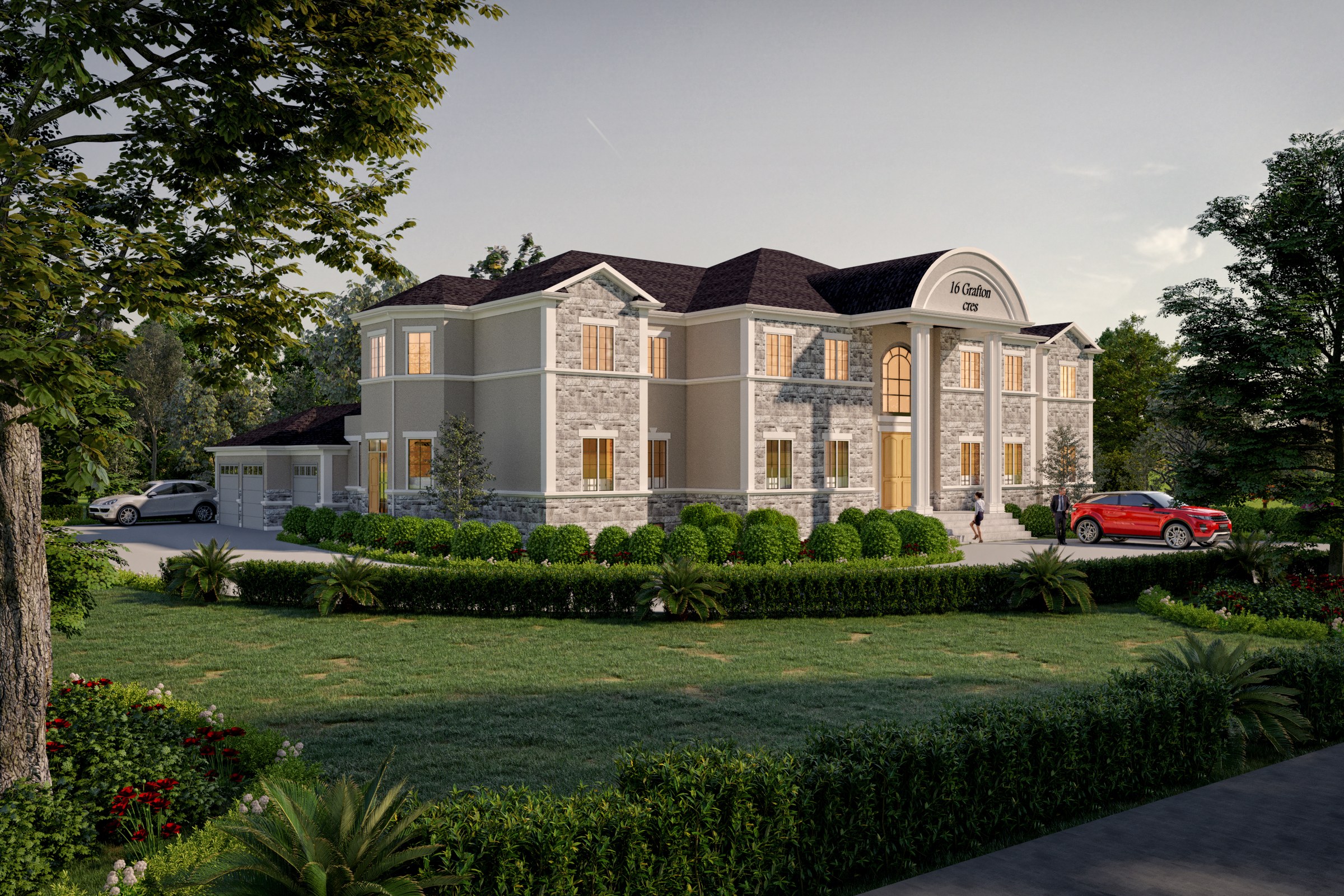
The warm interior glow
Windows as light sources, not just glazing — human-scale, lived-in.
The oldest dusk move, and still the right one at residential scale: every window becomes a small warm light source against a sky that hasn’t gone fully dark. It only works if the interiors behind the glass are actually modelled and lit — a flat emissive plane reads as a lie the moment you look twice. Done properly, the house looks occupied a beat before it looks rendered.
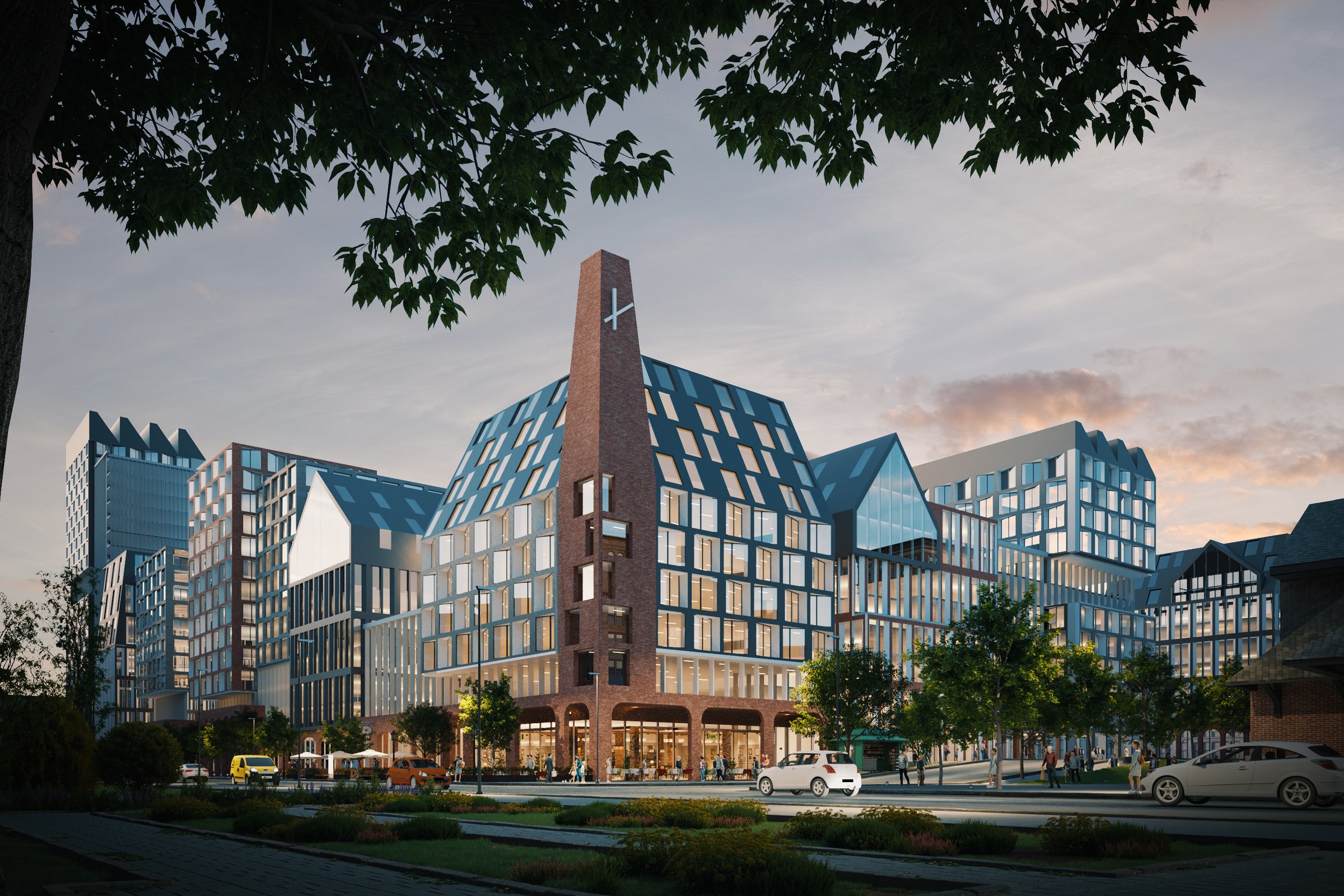
The blue-hour ambient wash
The sky keeps its colour — the building doesn’t fight it, it sits inside it.
Push the same building ten minutes later and the logic changes completely: the sky still holds a real gradient, so the render’s job is restraint. Street lighting and glazing add pools of local warmth without ever competing with that sky. This is the register for a street-level, populated scene — it reads as a photograph taken at a specific, believable minute, not a building lit for effect.
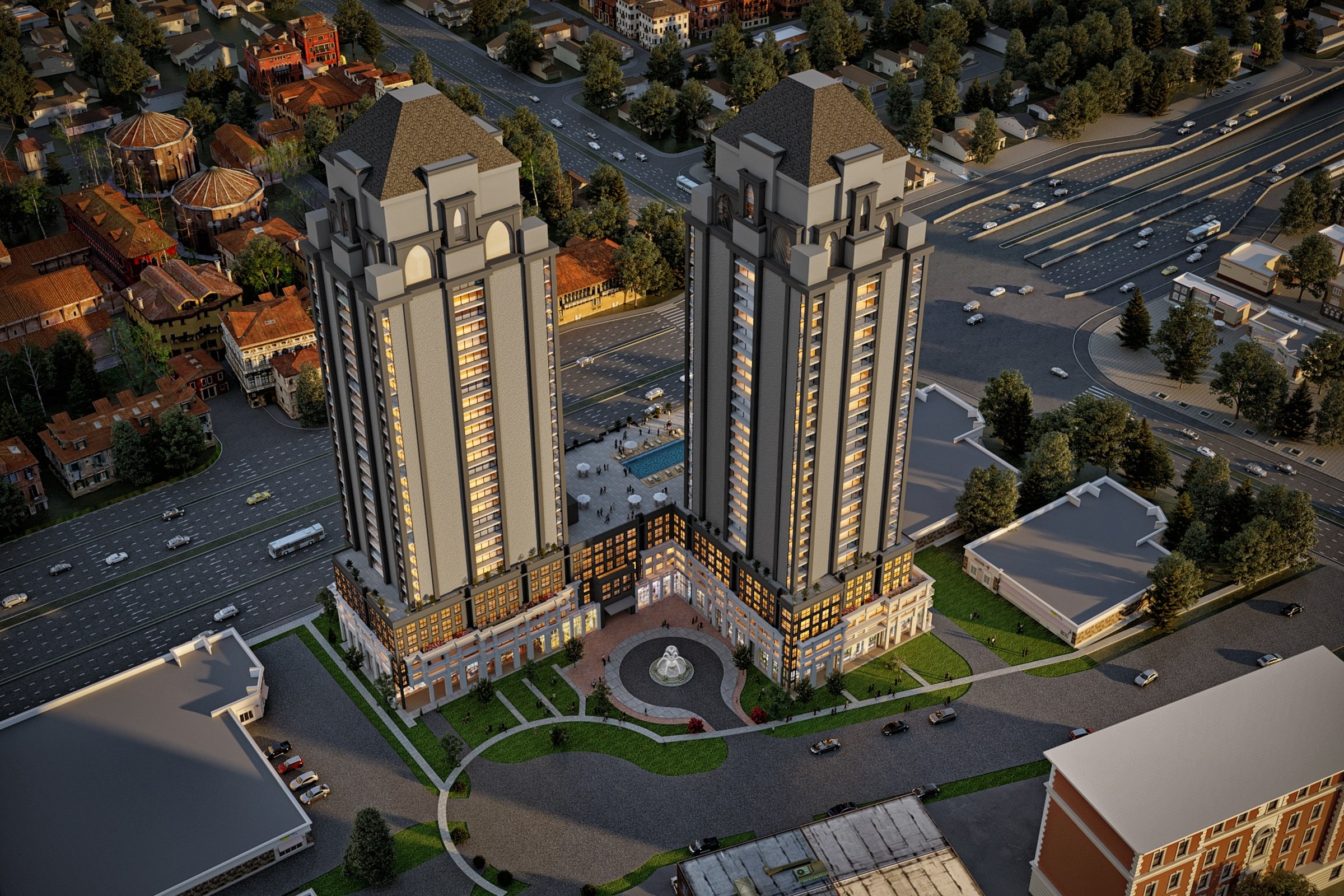
The emissive envelope
At scale, the building has to read as a lit object — not reflective glass.
Take the same logic to a highrise and it breaks unless every floor plate is treated as its own light source. Get it right and the tower stops being a glass box that happens to be dark; it becomes a lit object against a warm sky, texture and depth carried by hundreds of individually lit units rather than one flat glow. This is the version that actually needs the most restraint — one uniform brightness across every floor is the tell that nobody modelled the interiors.
Pick your logic
Match the building in front of you to the dusk logic that already knows which story to tell.
- A single home — the story is a place someone lives Warm interior glow, modelled interiors, restrained wall-wash.
- A street-level scene with people in it Blue-hour ambient wash — let the sky keep its colour.
- A tower or a masterplan seen from height Emissive envelope — every floor plate its own light source.
- You’re not sure which — send the scheme We’ll tell you which logic it needs before we render a frame.
The lights aren’t the decision. Which logic is.


