
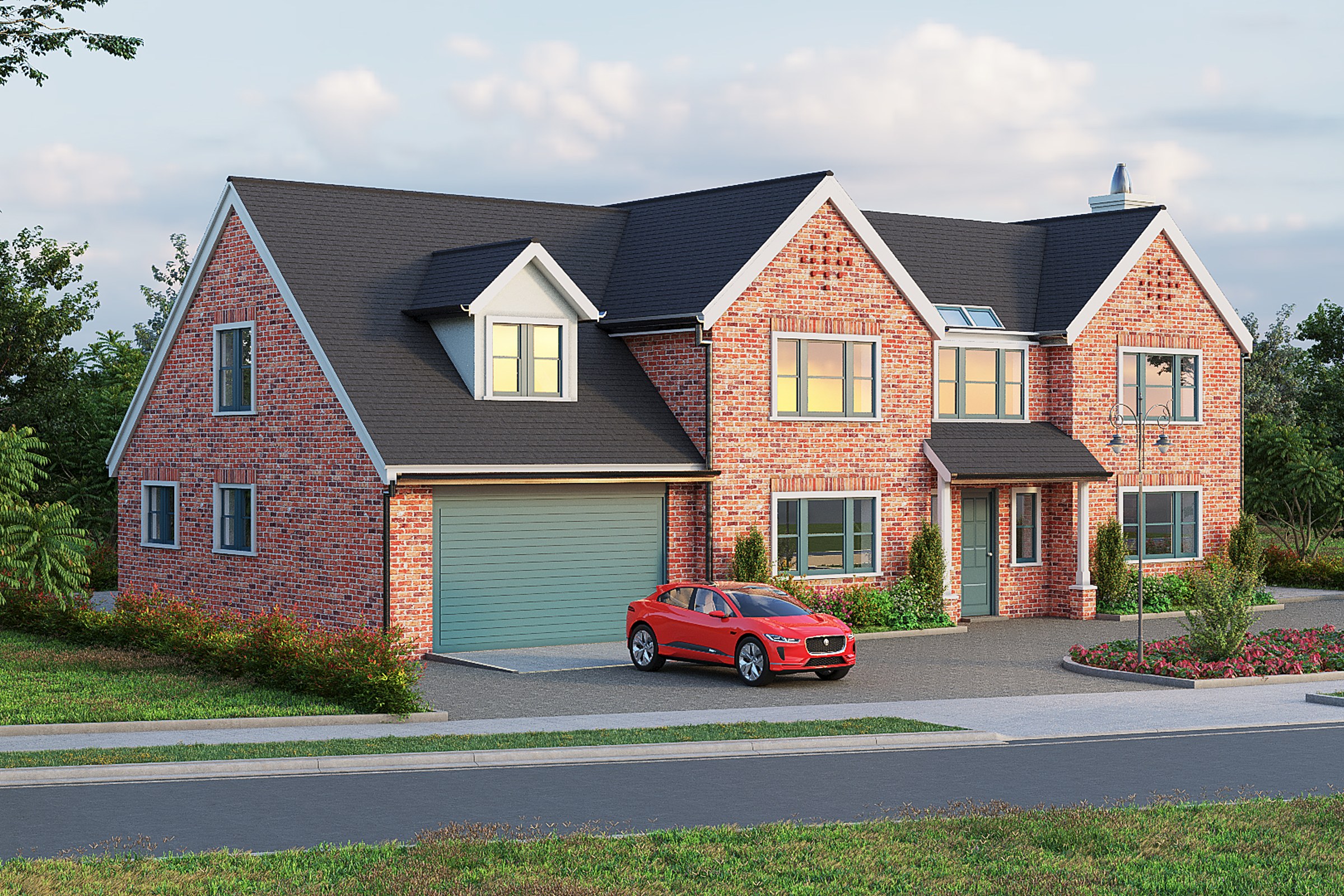
AI renders are flooding competition shortlists
It raised the floor and flattened the middle. Here’s what still makes a board stand out.
Walk any recent competition shortlist and you can feel it: the imagery has gotten glossier, moodier, more cinematic — and, oddly, more similar. AI image tools have put atmospheric, magazine-grade stills within reach of every entrant. The question for an architect isn’t whether AI renders exist. It’s what they do to your board.
AI raised the floor and flattened the middle
The floor came up. A two-person studio can now produce a hero image with the polish that used to require a visualization budget. Nobody gets eliminated anymore for a flat, gray export.
The middle flattened. Because so many entrants pull from the same models, prompts and aesthetics, a lot of AI imagery converges on the same look — the same golden-hour haze, the same serene figures, the same slightly-melting materials. When everyone’s board is beautiful in the same way, beautiful stops being a differentiator.
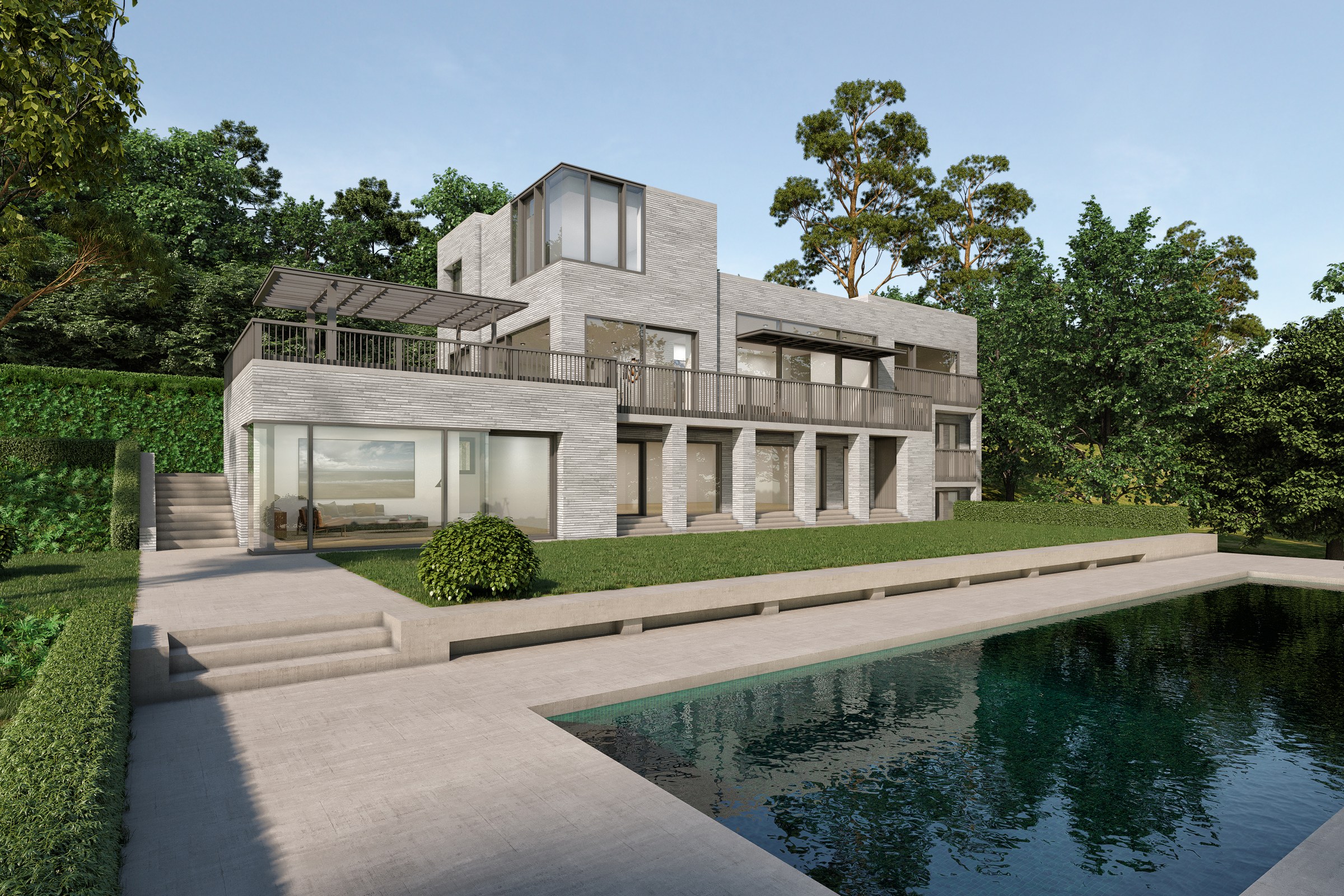
A stunning AI still no longer distinguishes you. It’s table stakes. What distinguishes you is whether the image is telling the truth about a real idea.
Where AI imagery quietly costs you
For a mood board or a competition of pure vision, generative imagery is fine. But competitions increasingly ask for something AI is bad at: fidelity to a specific design.
- It doesn’t respect your geometry. Ask for “your building” and it invents a cousin of it — the window rhythm drifts, the massing softens, a column count changes between images.
- It can’t hold consistency across a board. Six views of one scheme need to read as one place. AI stills tend to read as six adjacent daydreams.
- It won’t survive the next stage. The render that can’t be reconciled with the plan becomes a liability the moment someone asks to see the section.

The move: AI to explore, real rendering for the argument
The studios getting this right aren’t anti-AI. They use it where it’s strong — fast concept exploration, mood, testing a palette — and switch to a true, model-based render for the images that carry the argument: this specific massing, in this real context, with materials that behave.
That’s the board that reads differently on a shortlist: not “another gorgeous AI still,” but “someone who actually resolved this and can show it from any angle.” In a field where everyone can make one beautiful image, the edge is a coherent set of accurate ones.
If you’re building a submission
- Use AI to explore, not to represent. Great for finding the idea; risky as the thing you submit as the idea.
- Make the hero true to the model. The image the jury remembers should be one you can defend against your own drawings.
- Prize consistency over spectacle. A set that clearly shows one real building beats a gallery of unrelated beautiful frames.
The tools changed. The bar didn’t: a competition board still has to convince a room that a specific building is worth choosing. That’s an argument, not a filter — and arguments are won with accuracy.


