Transitional Master Bedroom Dark Panel — Case Study
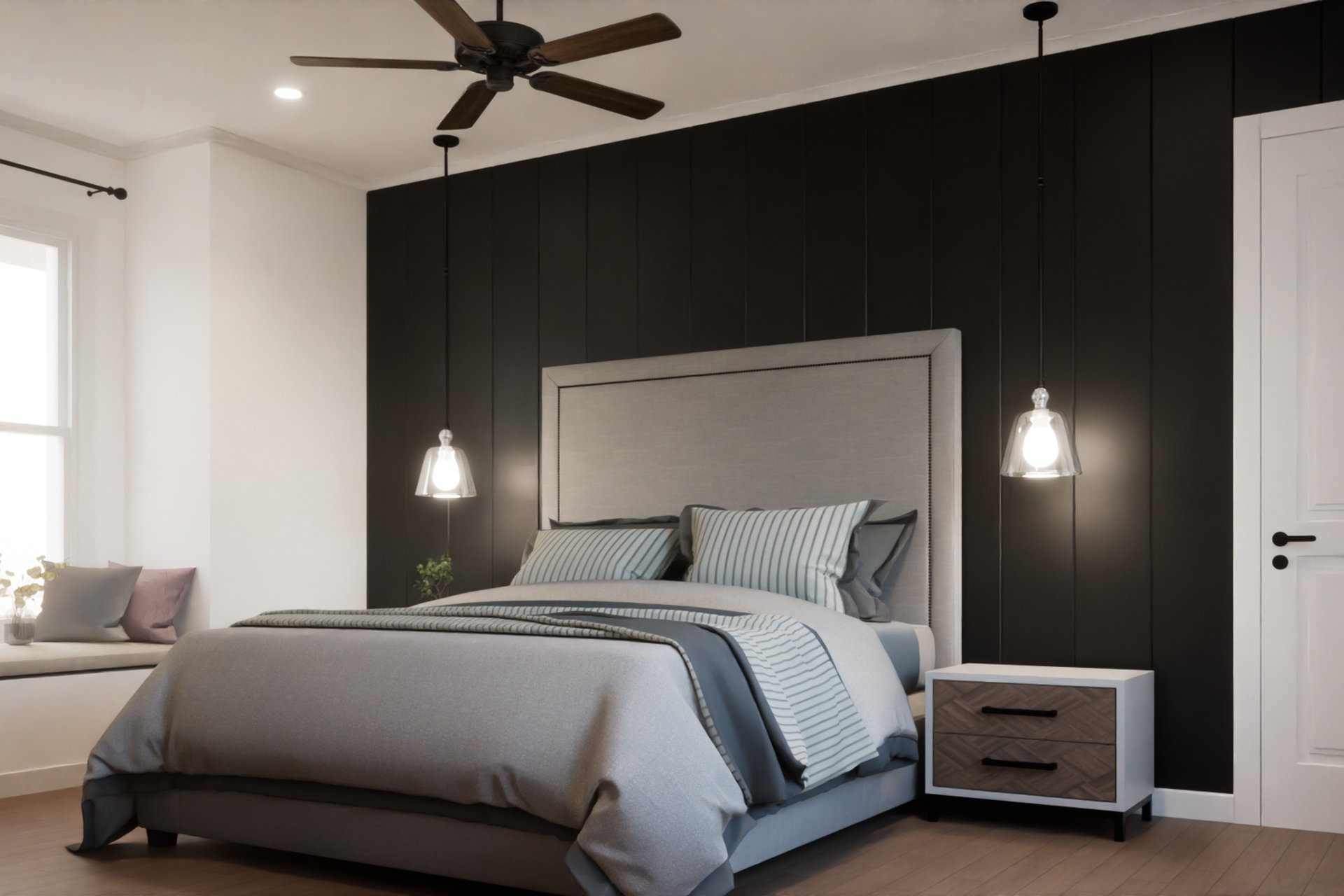
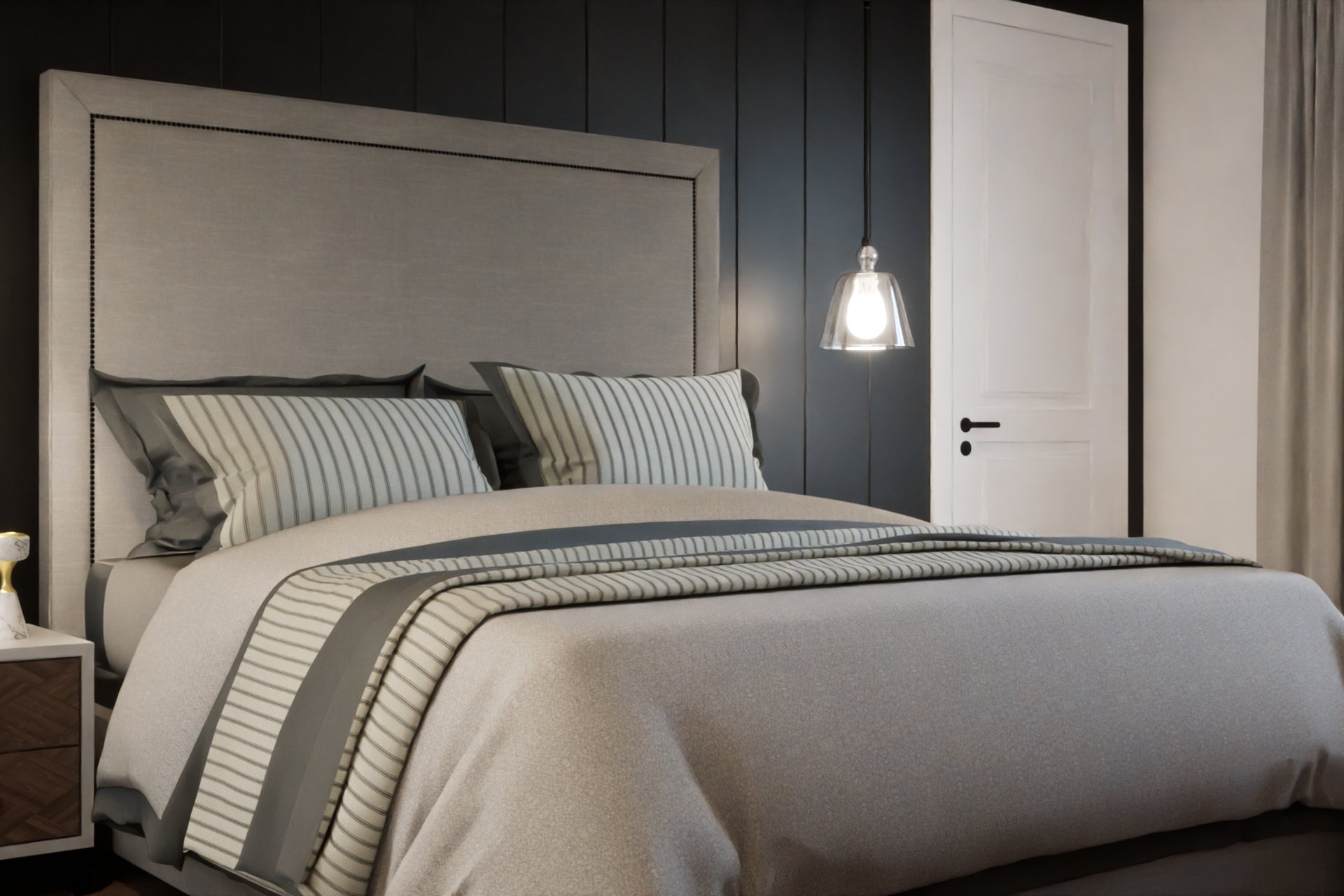
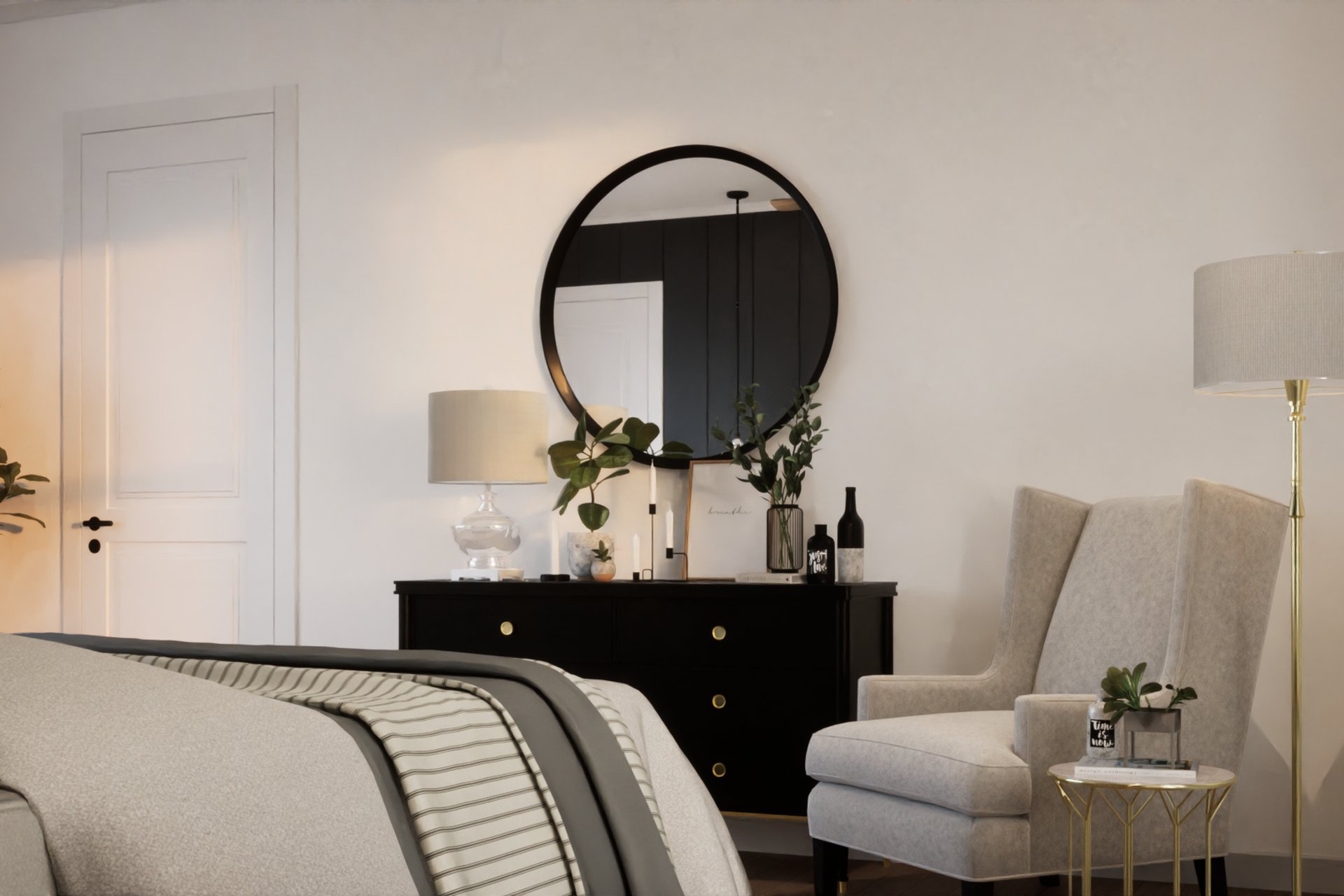
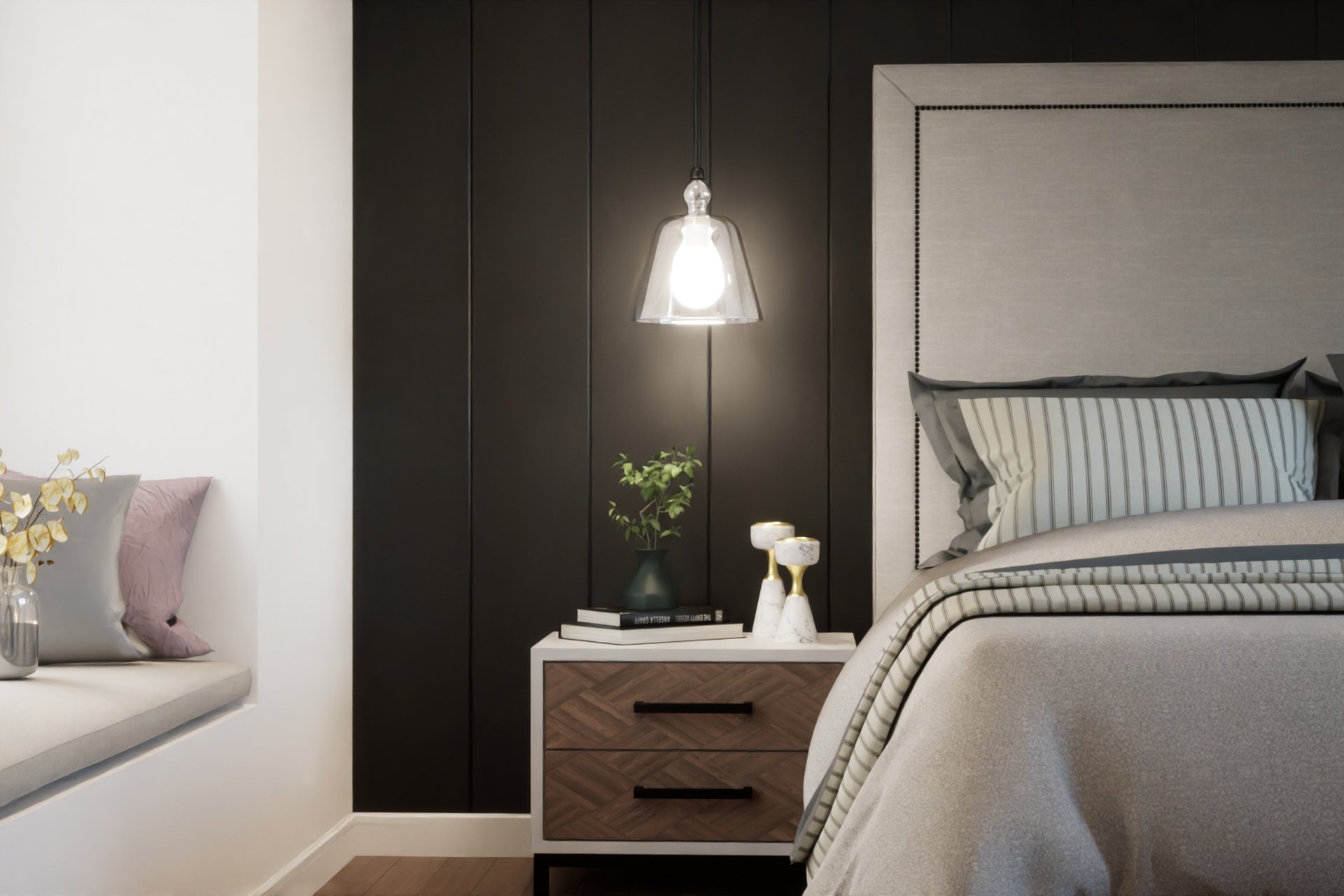
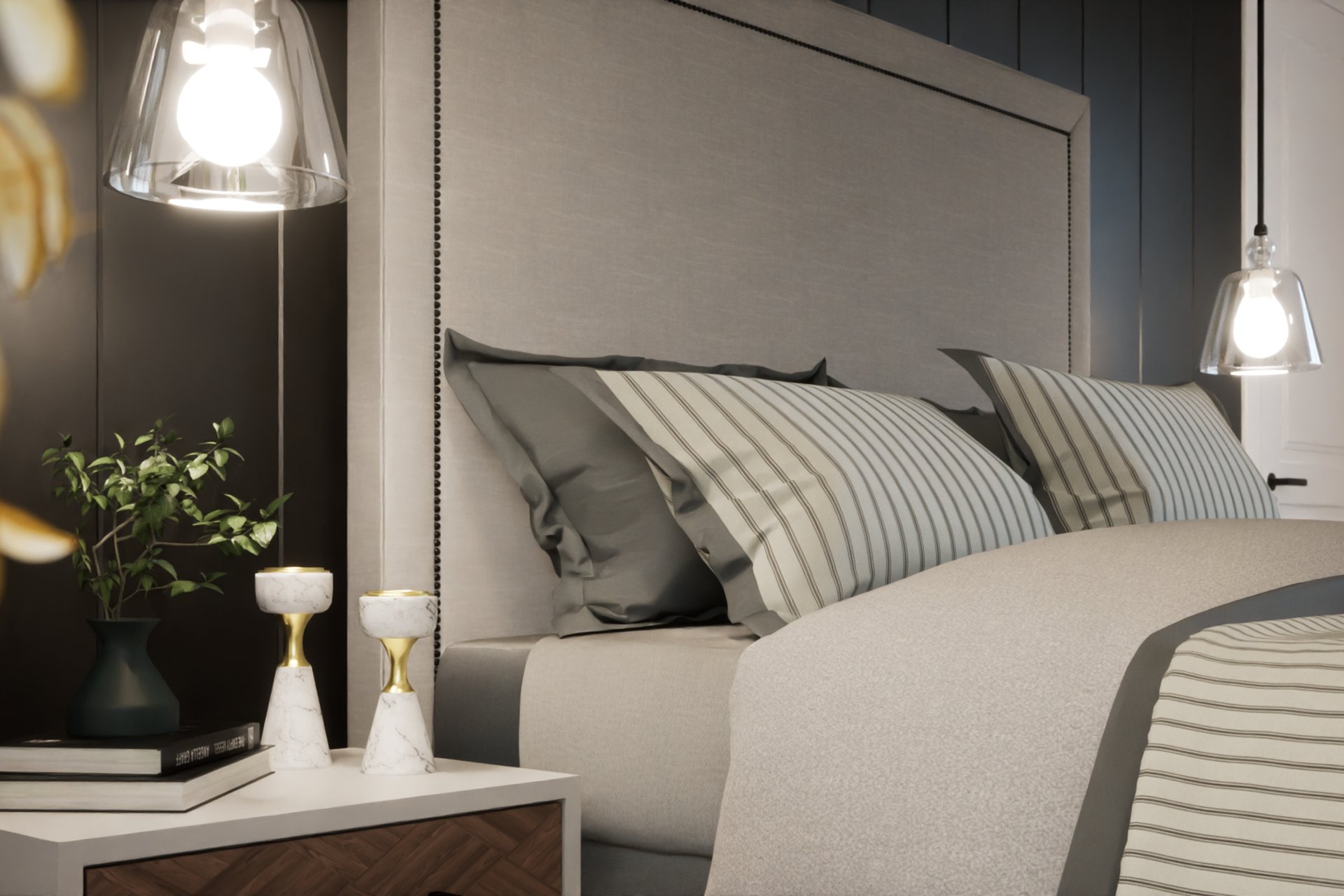
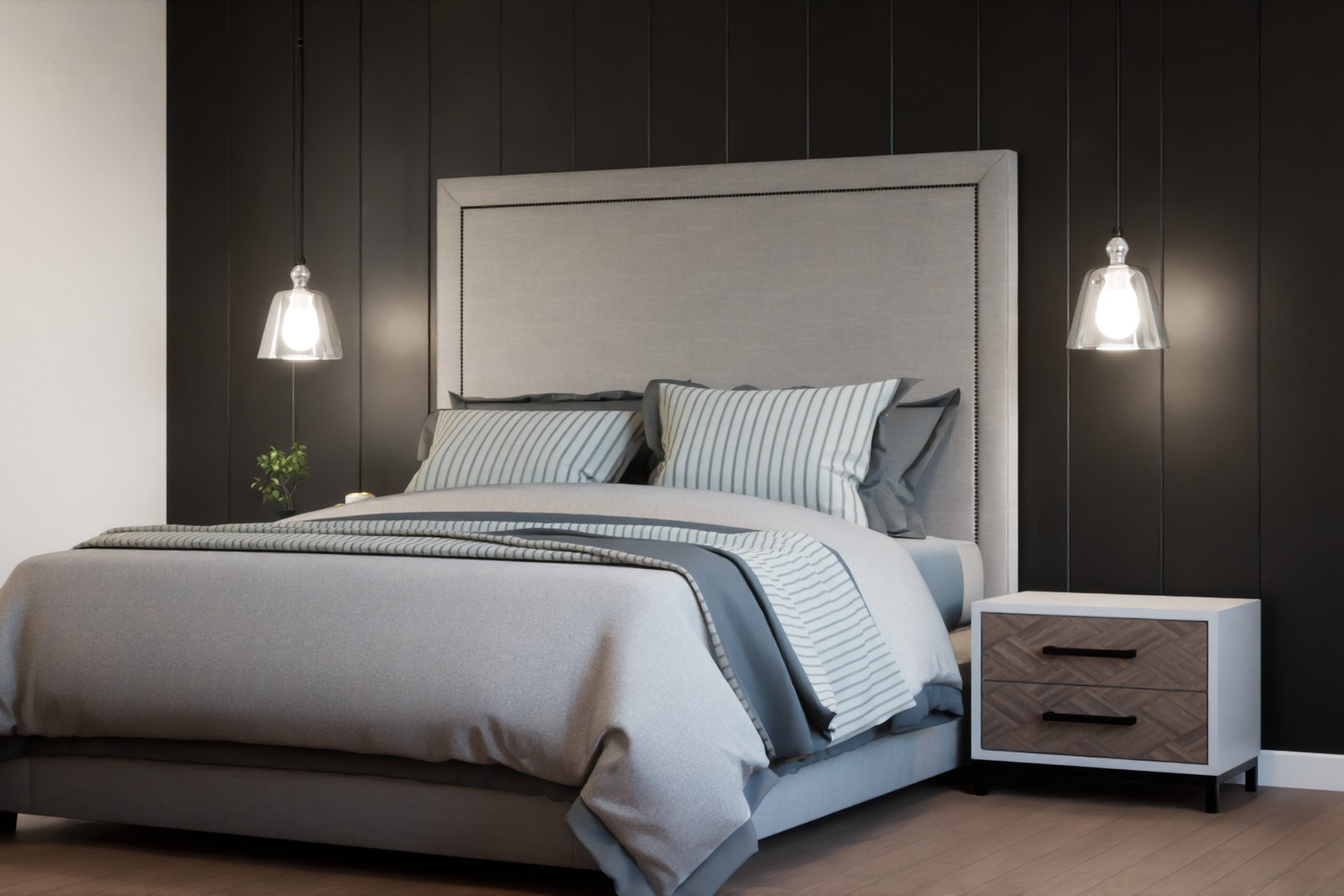
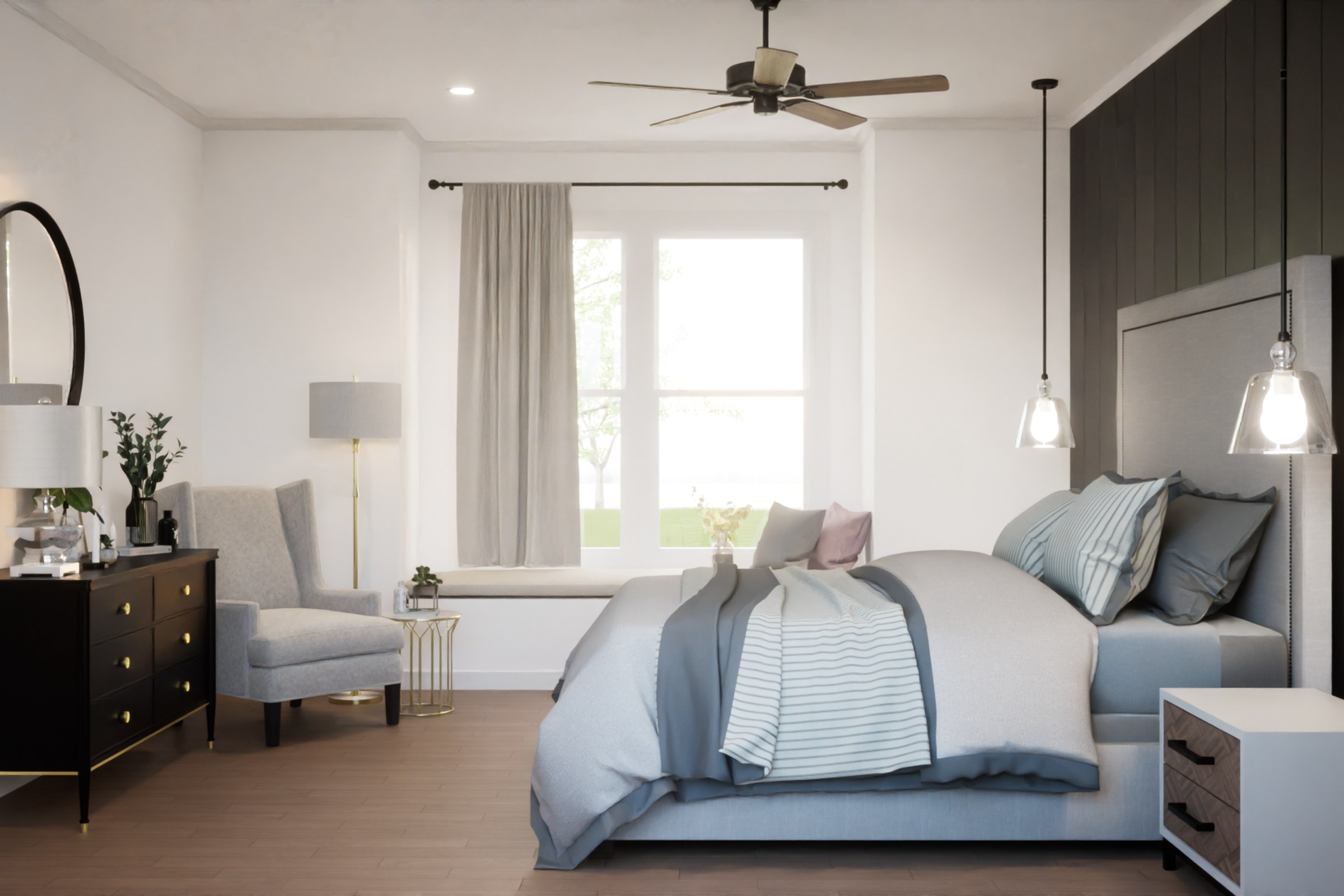
Transitional master bedroom with black paneled accent wall, gray upholstered bed, pendant lights, dark dresser, window seat, ceiling fan, and hardwood flooring.
Client
Kahn Architects
Industry
Residential Interior Design
Objective
Design visualization and marketing collateral for a residential interior design project in San Francisco, CA
Deliverables
7 photorealistic interior renders across eye-level viewpoints
Project Overview
Every project has a moment when it shifts from drawings on a screen to something people can actually react to. For Transitional Master Bedroom Dark Panel, that moment came when we delivered the first hero render and the entire project team’s conversation changed.
The Challenge
What made Transitional Master Bedroom Dark Panel challenging wasn’t any single factor — it was the combination of tight timelines, high fidelity requirements, and multiple deliverable formats that all needed to sing.
Multiple audiences meant multiple priorities. The investor deck needed aspiration. The planning submission needed accuracy. The marketing brochure needed lifestyle. One set of images, three different jobs.
The timeline left no room for extended back-and-forth. We had to get close on the first pass, which meant front-loading our understanding of the design intent before touching a single pixel.
The material palette was specific and unforgiving. Certain finishes — the way light catches a particular stone, how a timber grain reads at different scales — had to be precise or the entire image would feel off to anyone who knows the real thing.
Our Approach
Landscape and context modelling happened in parallel with the architecture. Trees, ground cover, street furniture, and sky were all custom-built for this project’s specific location and character.
We started with an extended briefing — not just the drawings, but the thinking behind them. Understanding why the architect made certain material choices or oriented spaces in a particular way informed every creative decision downstream.
The 3D model was built methodically from architectural plans, elevations, and sections. We cross-referenced everything to catch discrepancies that could show up as visual errors in the final renders.
Camera positions were proposed based on what the architecture does best — the moments where form, material, and light come together most compellingly. We presented grey-shaded compositions for approval before adding materials and entourage.
Lighting studies came early. We rendered quick test frames at multiple times of day and in multiple weather conditions, then presented options to the Kahn Architects so the mood was locked before we invested in final-quality production.
The Result
What started as a visualization brief became the foundation of the project’s brand identity. The renders are the first thing anyone sees when they encounter Transitional Master Bedroom Dark Panel — and they’re designed to make that first impression count.
Working on something similar? Let’s talk about your project — or browse more of our work.
Project Gallery