Sam Final Apartment — Case Study
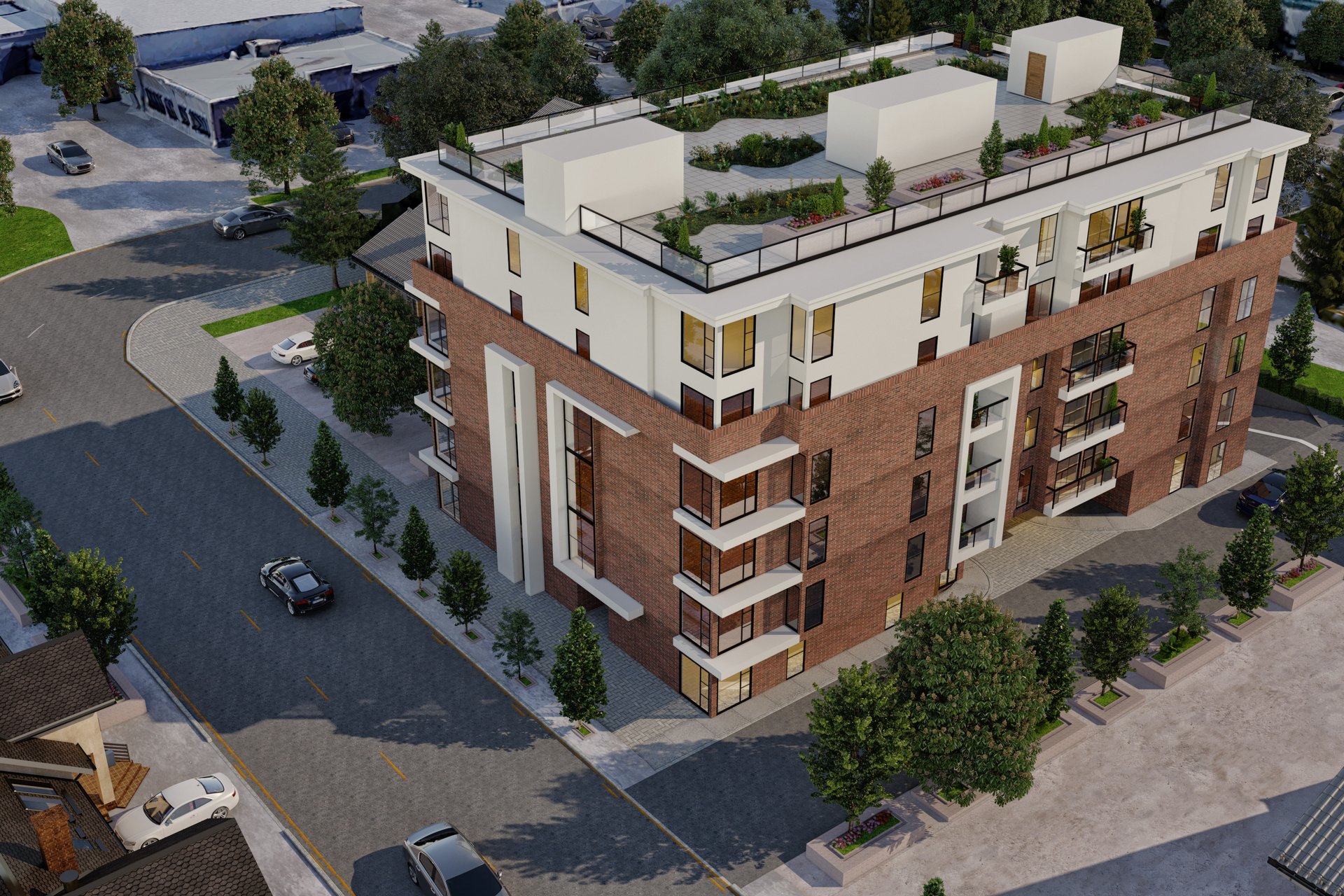
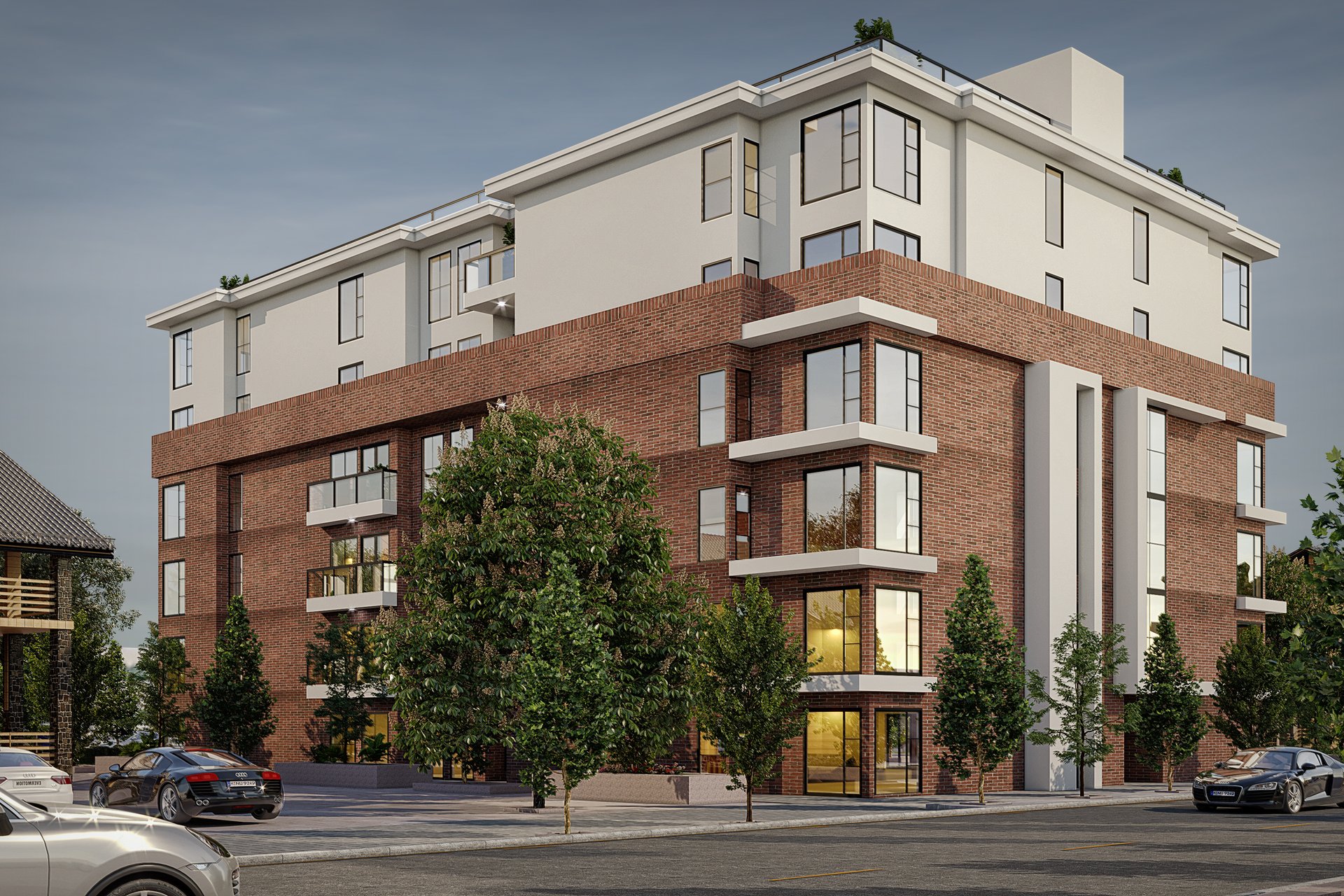
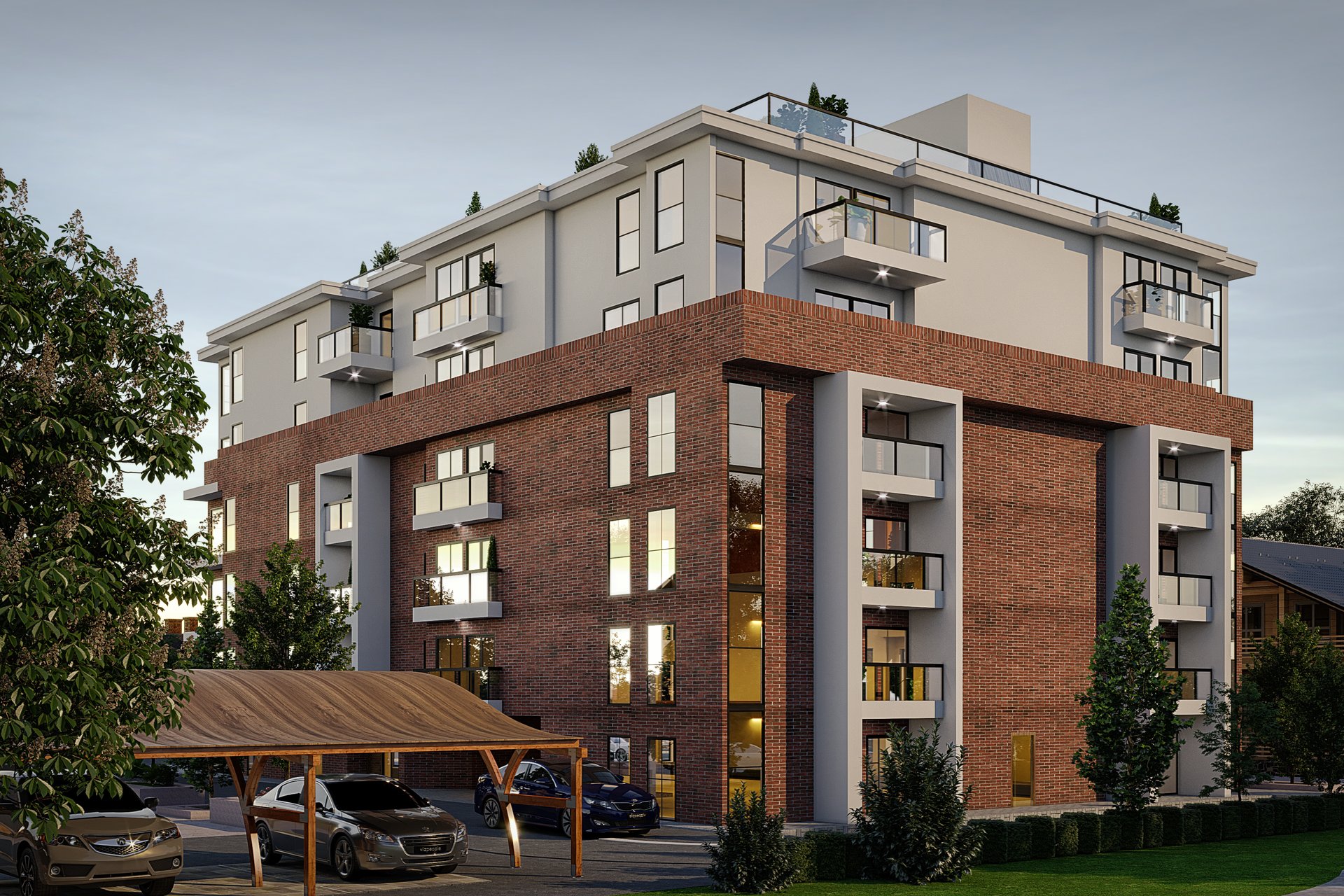
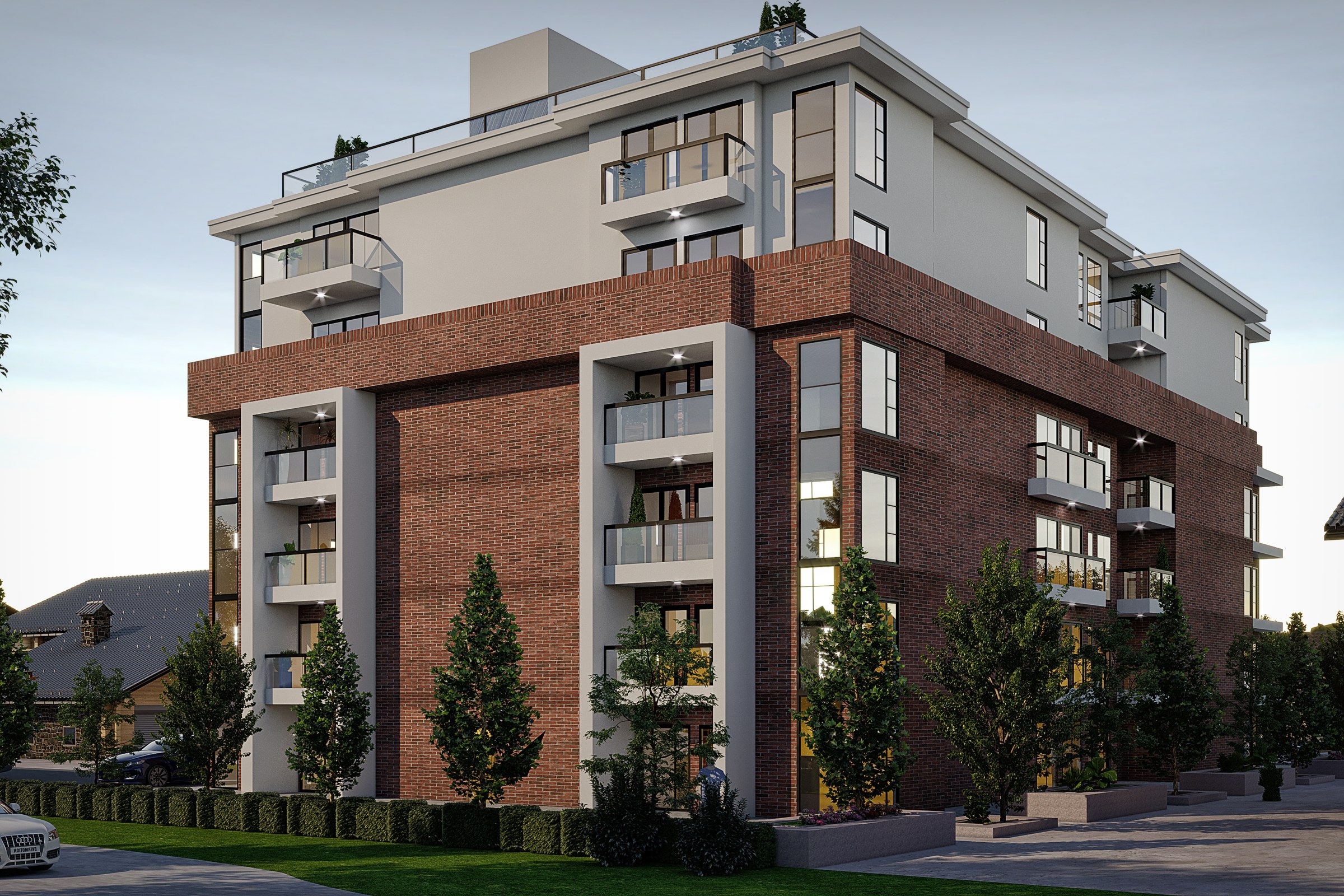
Dusk corner view of a five-story contemporary apartment building with red brick lower floors, white render penthouse level, glass balconies, and rooftop terrace.
Client
Atkins Architects
Industry
Multi-Family Housing
Objective
Design visualization and marketing collateral for a multi-family housing project in Portland, OR
Deliverables
4 photorealistic exterior renders across aerial, corner-view viewpoints
Project Overview
Every project has a moment when it shifts from drawings on a screen to something people can actually react to. For Sam Final Apartment, that moment came when we delivered the first hero render and the entire project team’s conversation changed.
The Challenge
What made Sam Final Apartment challenging wasn’t any single factor — it was the combination of tight timelines, high fidelity requirements, and multiple deliverable formats that all needed to sing.
The design had details that only become visible at close range — joinery, hardware, texture variation. These details are exactly what separates a good render from a great one, and the Atkins Architects knew it.
Environmental context was critical. This project doesn’t exist on a white background — it sits in a real place with real neighbours, real vegetation, real light. Getting that wrong would make even perfect architecture look like a toy model.
Consistency across the full gallery was essential. When someone flips through all the images, they should feel like they’re walking through one coherent place — not looking at renders made by different people on different days.
Our Approach
We started with an extended briefing — not just the drawings, but the thinking behind them. Understanding why the architect made certain material choices or oriented spaces in a particular way informed every creative decision downstream.
The 3D model was built methodically from architectural plans, elevations, and sections. We cross-referenced everything to catch discrepancies that could show up as visual errors in the final renders.
Final delivery was staged. Hero images shipped first for immediate marketing use. The complete gallery followed shortly after, formatted for web, print, and presentation deck use.
Landscape and context modelling happened in parallel with the architecture. Trees, ground cover, street furniture, and sky were all custom-built for this project’s specific location and character.
Post-production was intentional and restrained — subtle atmospheric haze, corrected colour temperature, refined contrast. The goal was always to enhance realism, not to fabricate it.
The Result
The final set of images now anchors the Atkins Architects’s entire communication strategy for this project. From the hero shot on the homepage to the detail views in the brochure, every image has a specific job and does it well.
If this is the kind of quality you’re after, start a conversation with us. Or explore the full portfolio.
Project Gallery