96 Dual Vanity Master Bath — Case Study
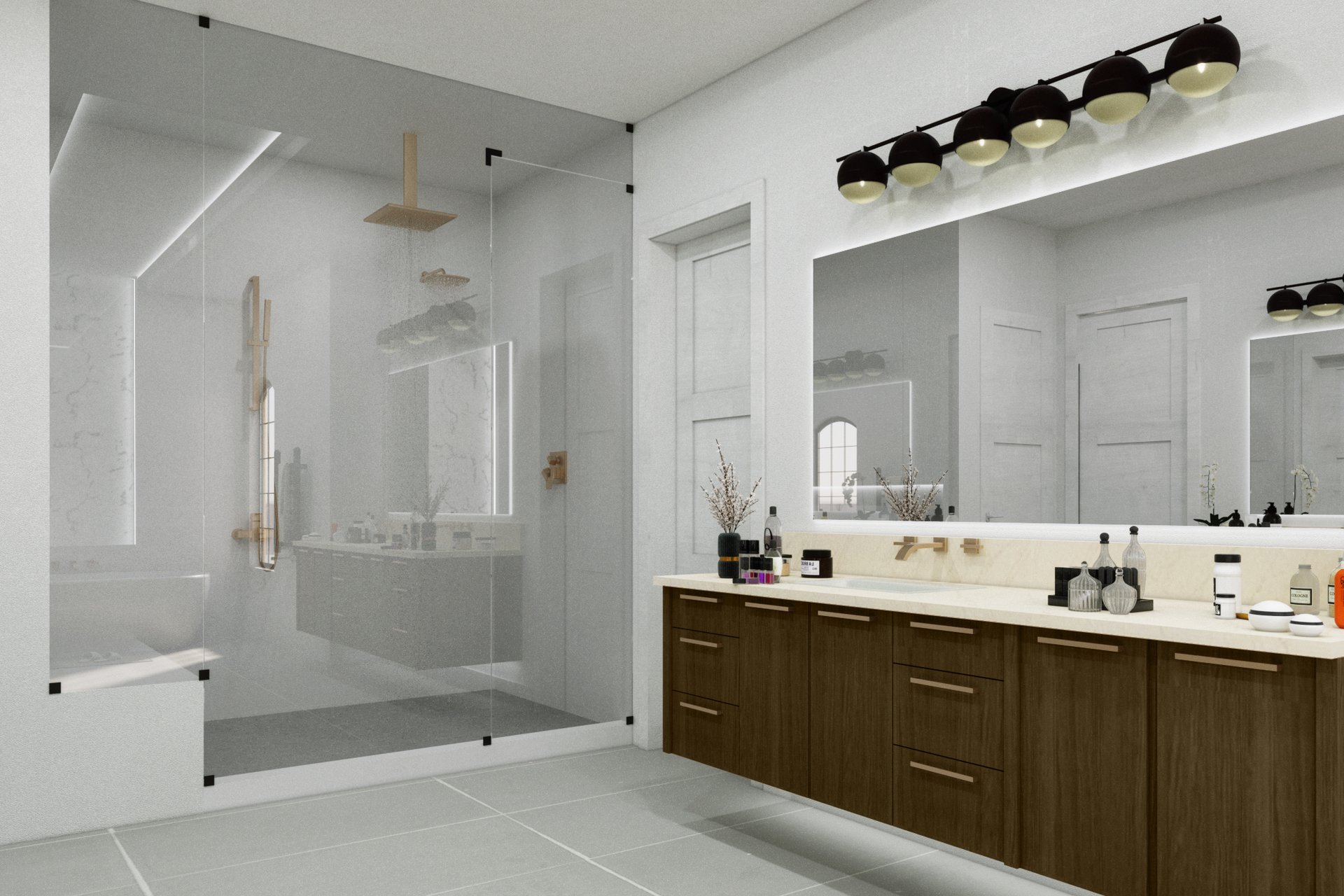
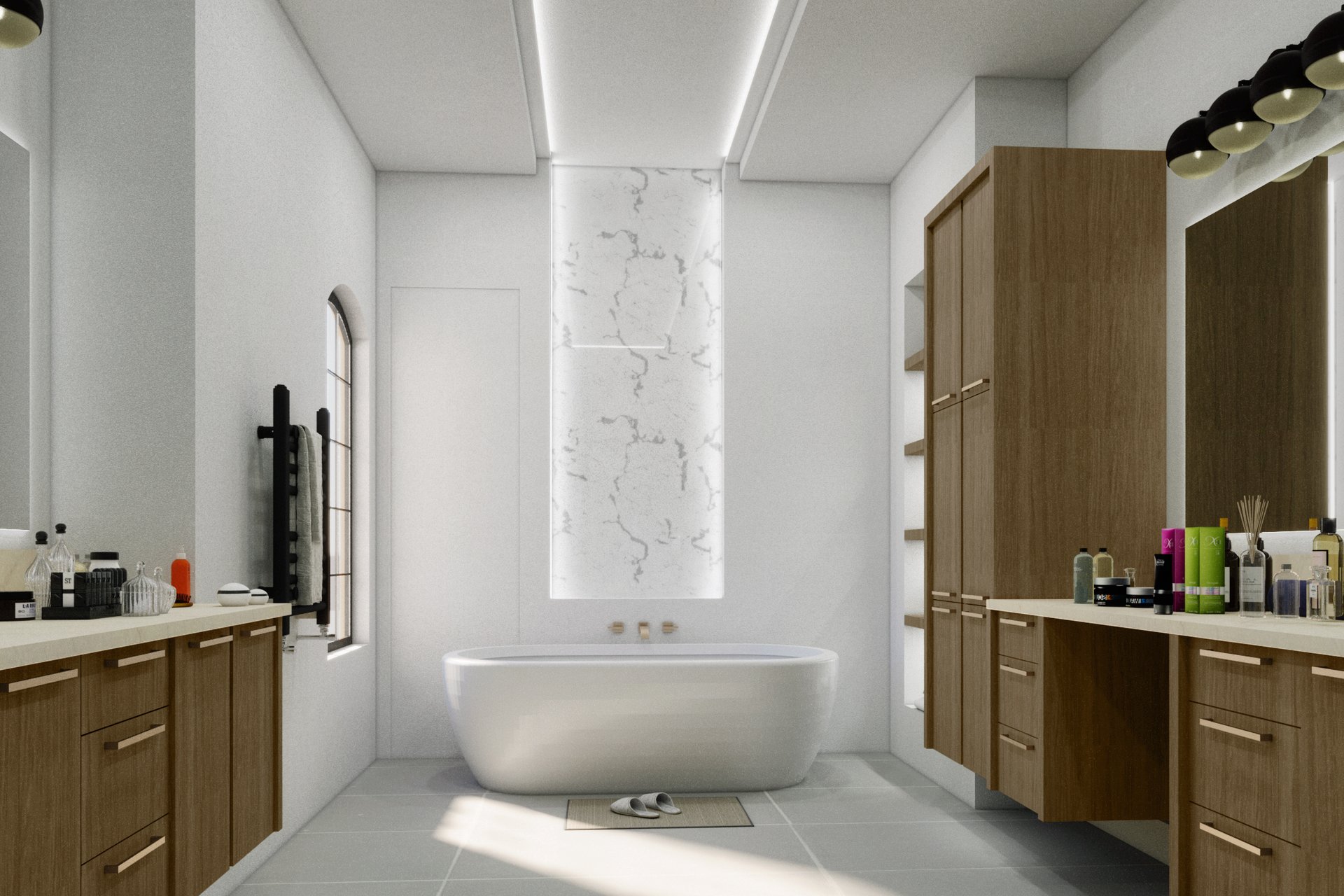
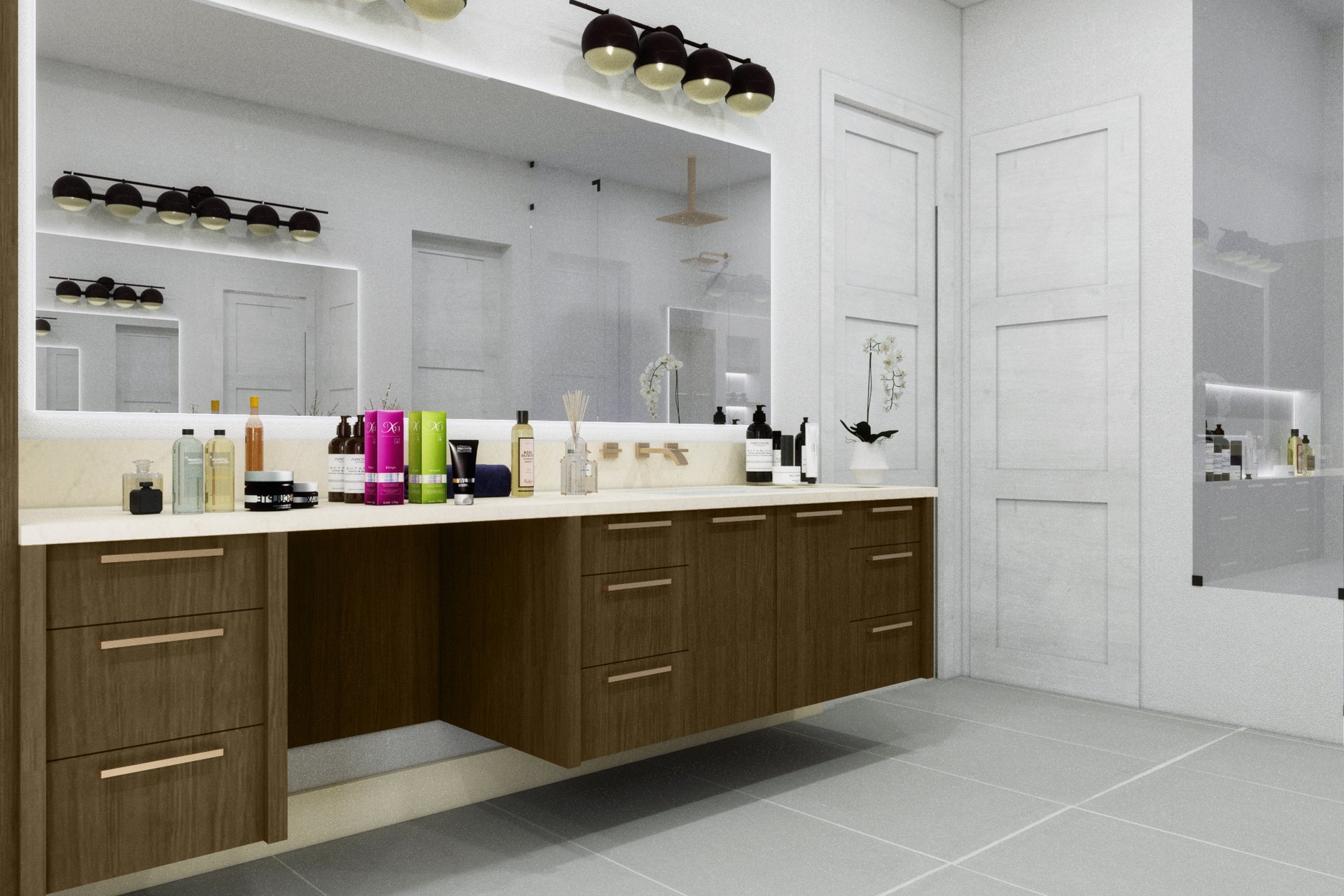
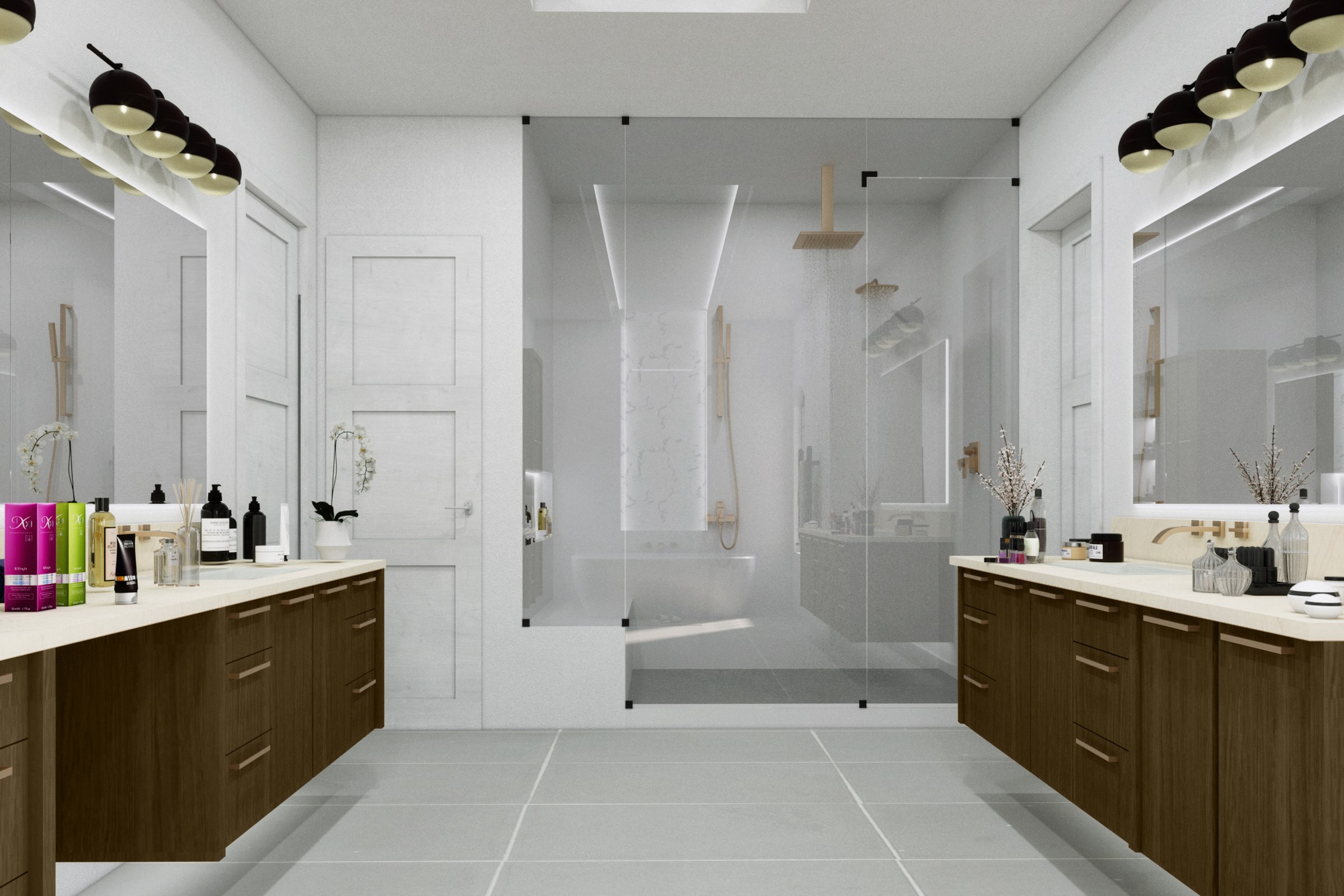
Symmetrical master bathroom with dual walnut wood vanities topped with quartz counters, large illuminated mirrors, black globe vanity lights, and a spacious glass-enclosed shower with gold rain shower
Client
Foster Architects
Industry
Kitchen & Bath Design
Objective
Design visualization and marketing collateral for a kitchen & bath design project in Denver, CO
Deliverables
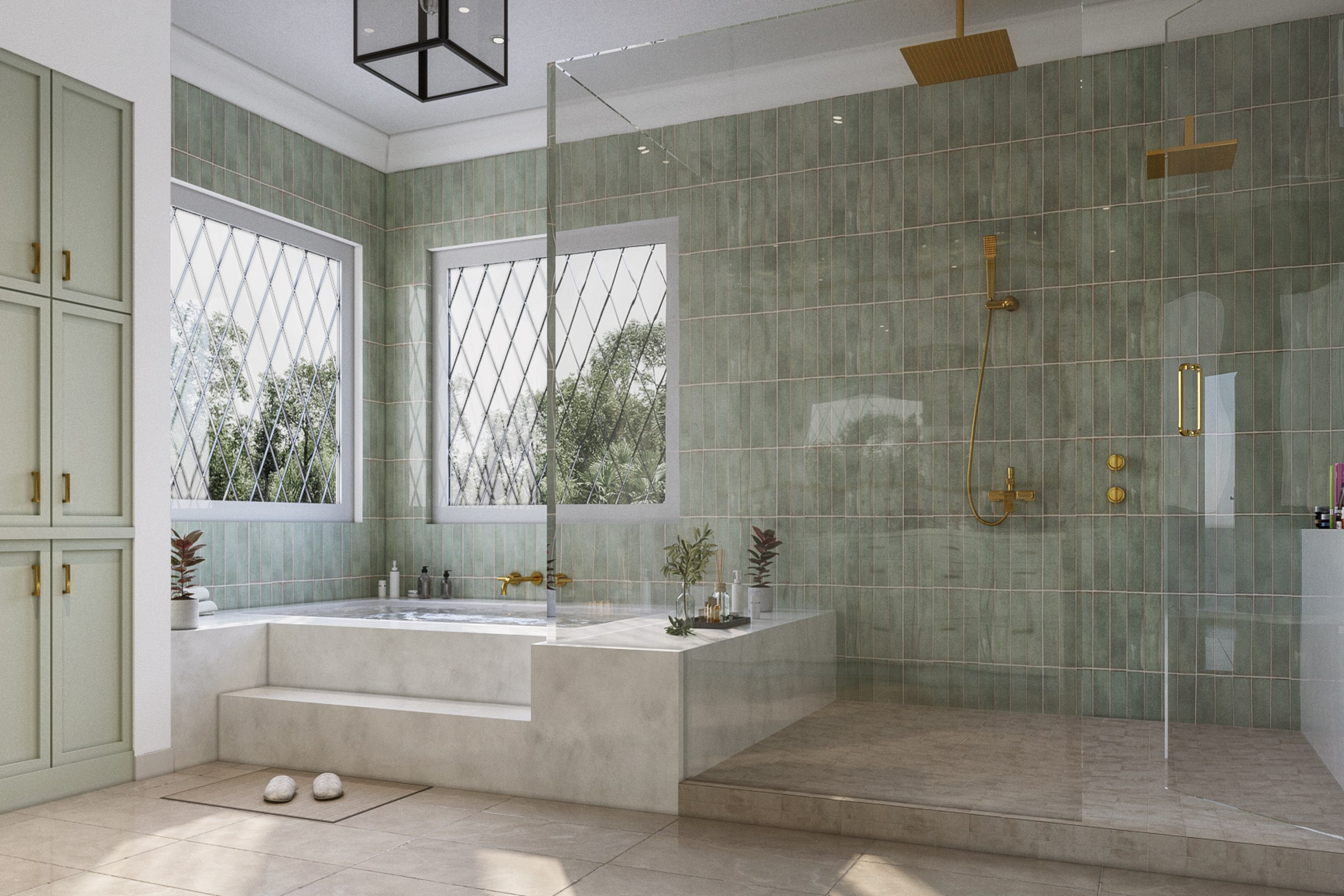
4 photorealistic interior renders across corner-view, eye-level, one-point-perspective viewpoints
Project Overview
We took on 96 Dual Vanity Master Bath knowing it would push our pipeline. A kitchen & bath design project of this scale needed more than pretty pictures — it needed a visual package that could carry the project’s identity across every touchpoint.
The Challenge
The challenges here were layered. Some were technical, some were practical, and some came down to managing expectations across multiple stakeholders who each wanted the renders to do something slightly different.
The material palette was specific and unforgiving. Certain finishes — the way light catches a particular stone, how a timber grain reads at different scales — had to be precise or the entire image would feel off to anyone who knows the real thing.
Scale was deceptive in this project. Spaces that look modest in plan felt expansive in three dimensions, and communicating that spatial quality through a flat image required very deliberate camera work.
Multiple audiences meant multiple priorities. The investor deck needed aspiration. The planning submission needed accuracy. The marketing brochure needed lifestyle. One set of images, three different jobs.
Our Approach
Lighting studies came early. We rendered quick test frames at multiple times of day and in multiple weather conditions, then presented options to the Foster Architects so the mood was locked before we invested in final-quality production.
We started with an extended briefing — not just the drawings, but the thinking behind them. Understanding why the architect made certain material choices or oriented spaces in a particular way informed every creative decision downstream.
Post-production was intentional and restrained — subtle atmospheric haze, corrected colour temperature, refined contrast. The goal was always to enhance realism, not to fabricate it.
We delivered work-in-progress renders at two structured milestones. The first review caught composition and material issues. The second refined atmosphere and detail. By the time we hit final production, there were no surprises.
Landscape and context modelling happened in parallel with the architecture. Trees, ground cover, street furniture, and sky were all custom-built for this project’s specific location and character.
The Result
Since delivery, the renders have done exactly what they were designed to do: move the project forward. They’ve supported planning approvals, buyer confidence, and marketing campaigns — sometimes all in the same week.
Need renders for your own project? Tell us about it — we’d like to hear what you’re working on. Or see more work like this.
Project Gallery