Project 104 Living Hope Church — Case Study
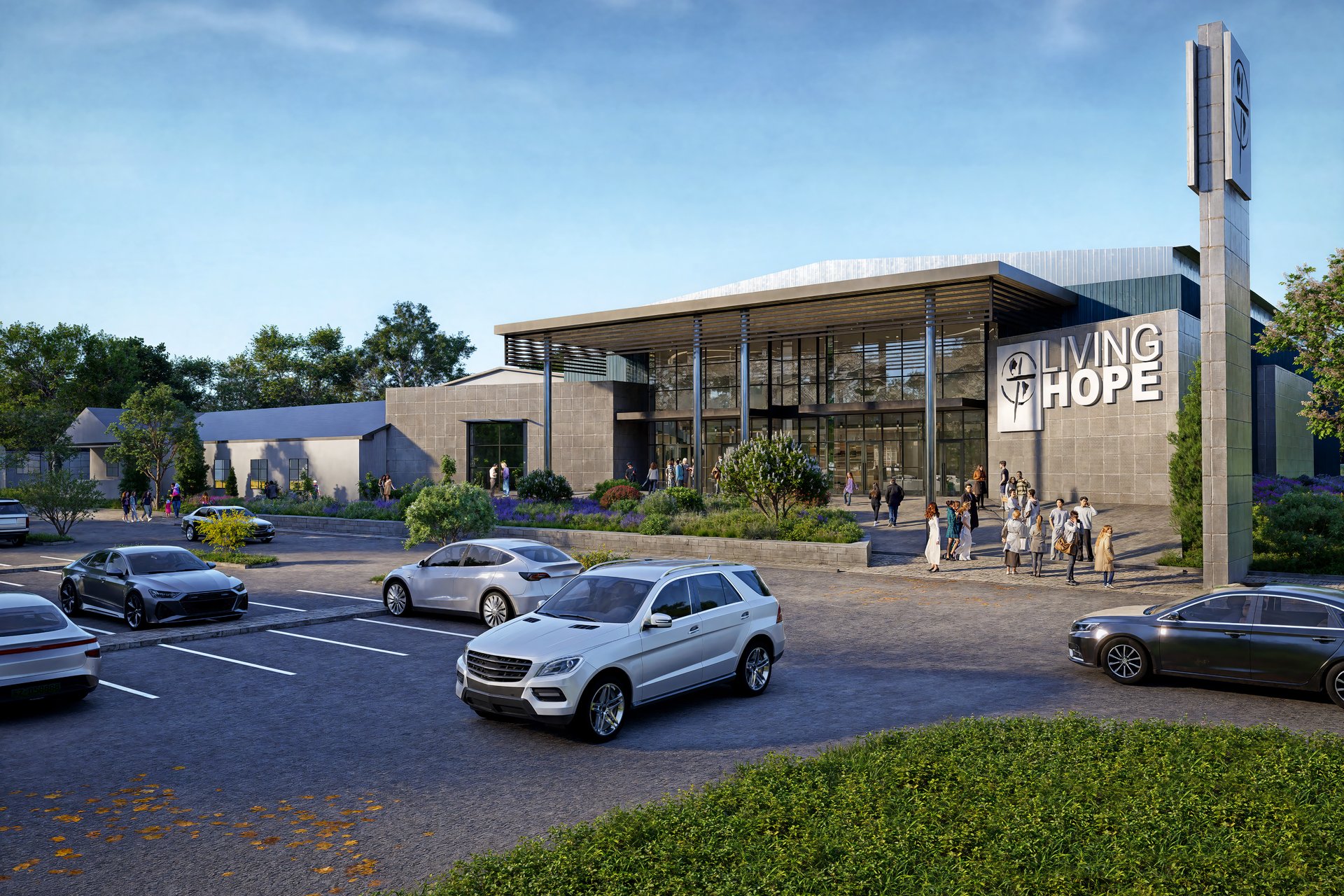
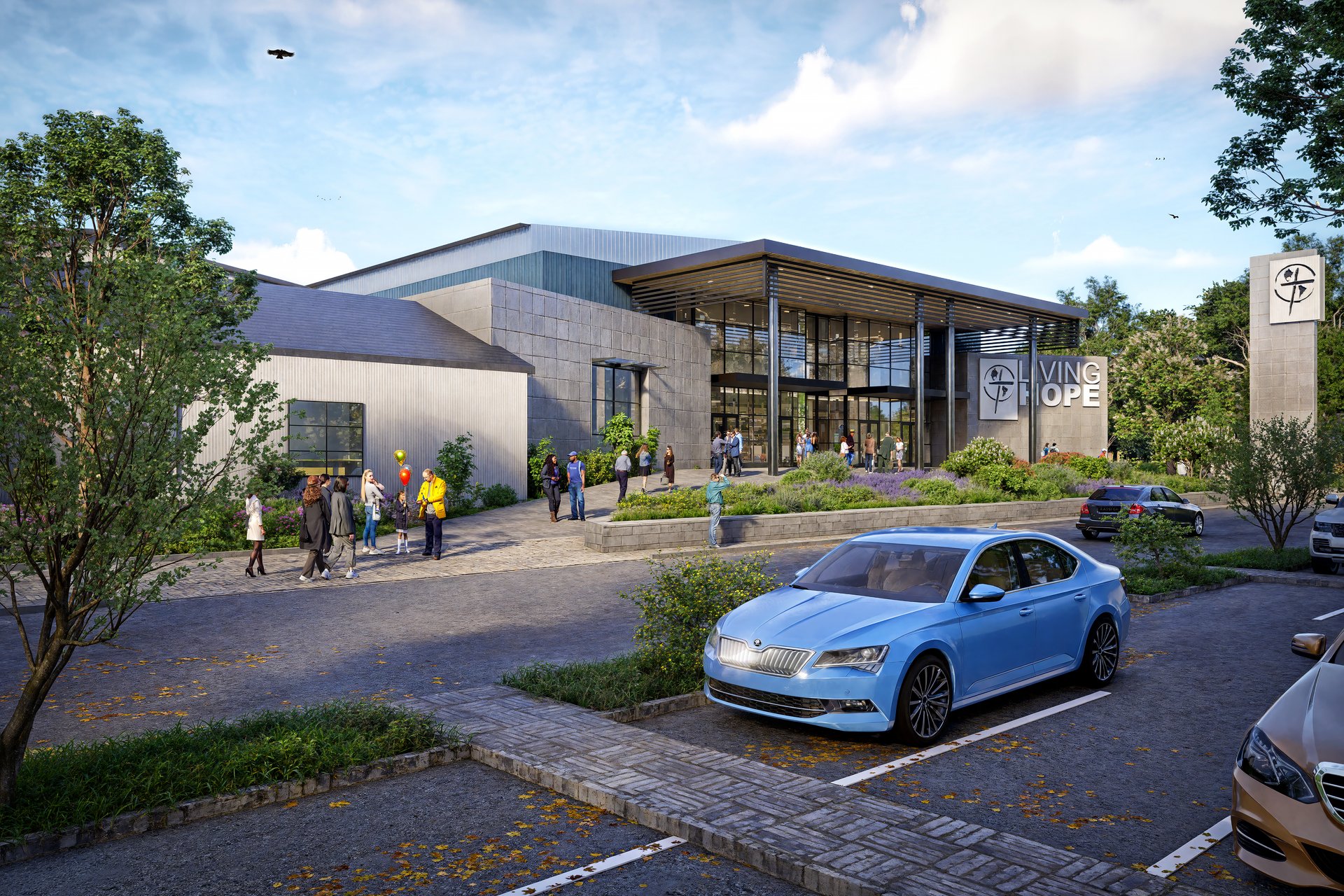
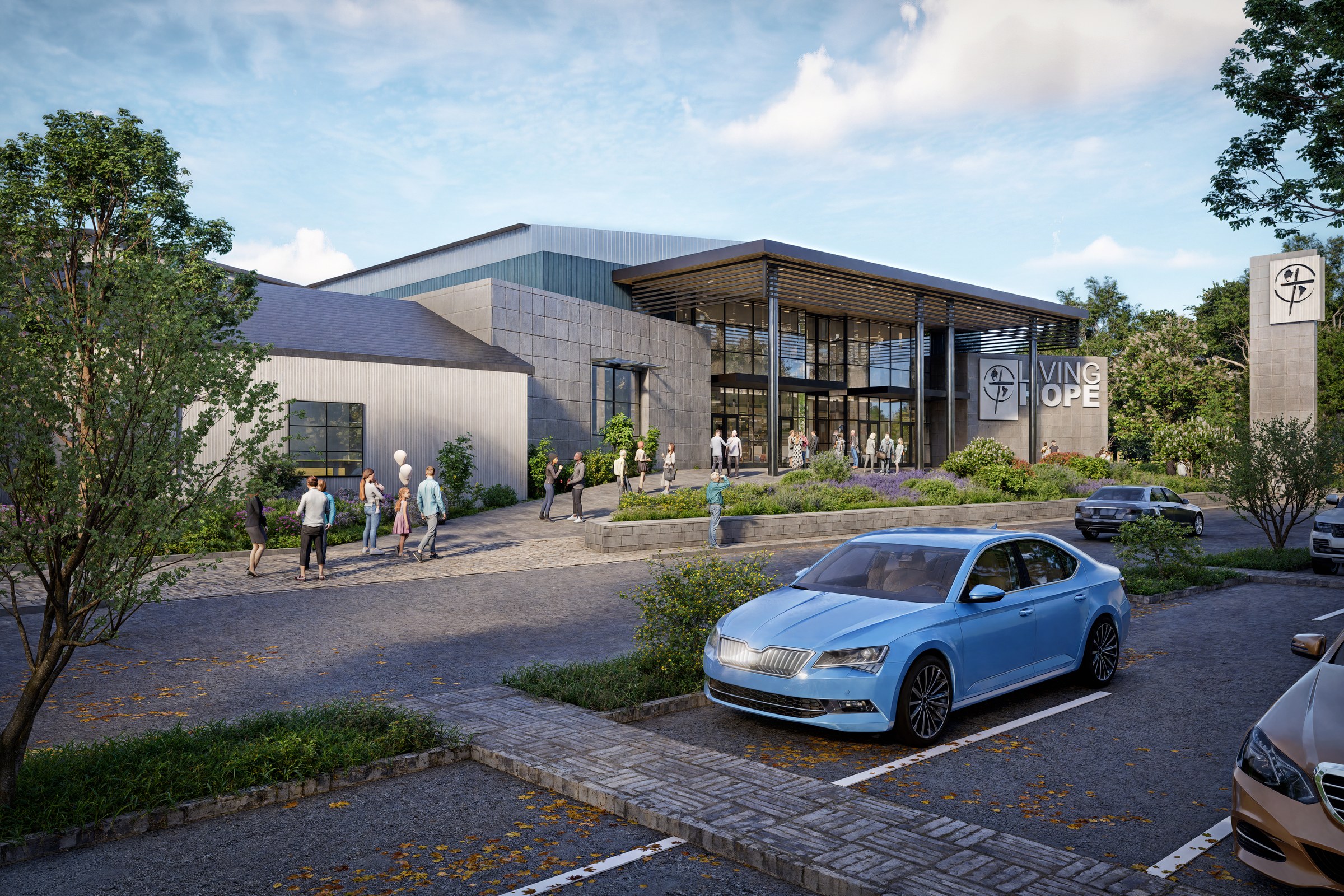
Modern community church with large glass entrance, metal cladding, prominent 'Living Hope' signage with cross logo. Parking lot in foreground with blue car. Well-landscaped entrance with people gather
Client
Mies Design Group
Industry
Institutional Architecture
Objective
Design visualization and marketing collateral for a institutional architecture project in Charleston, SC
Deliverables
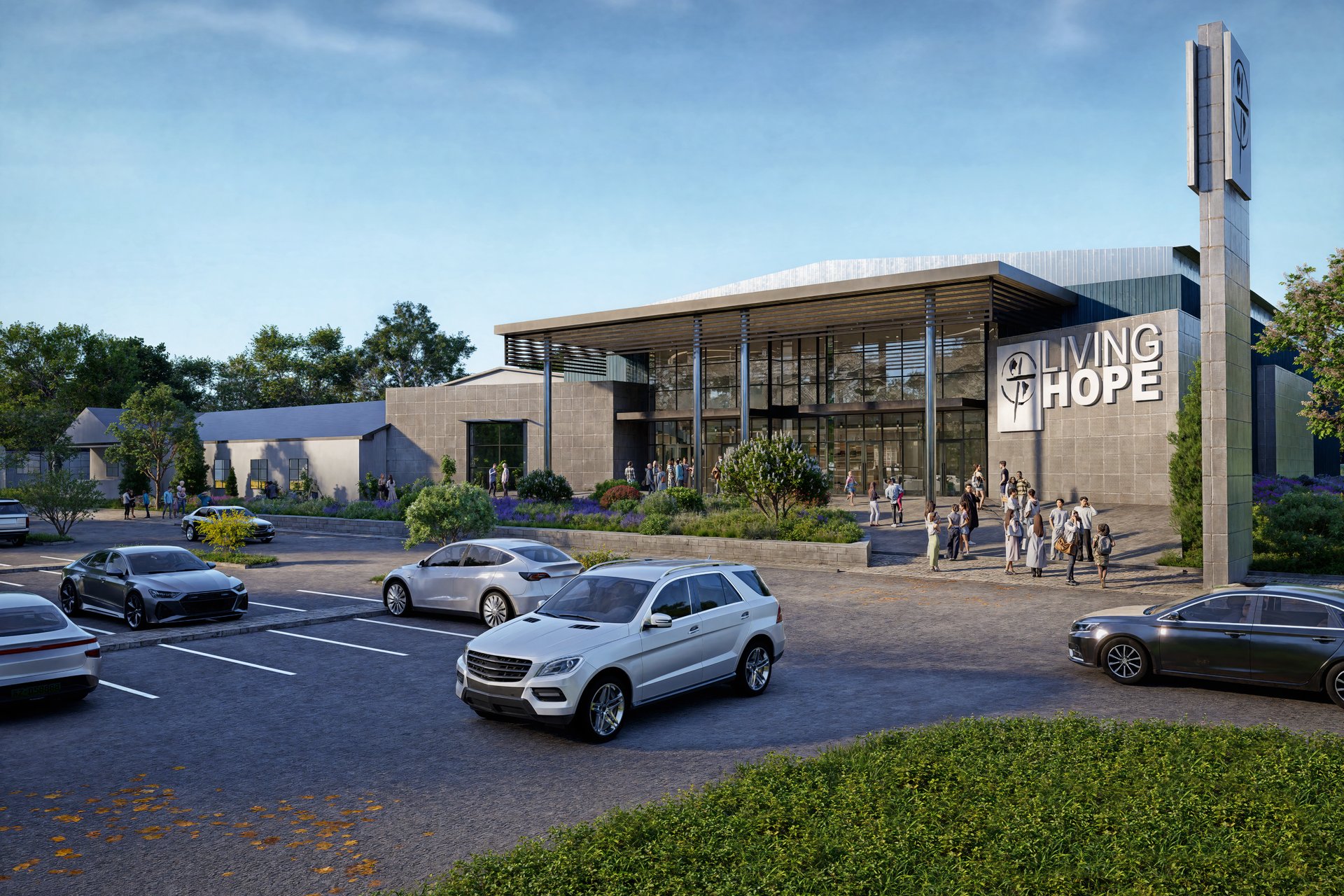
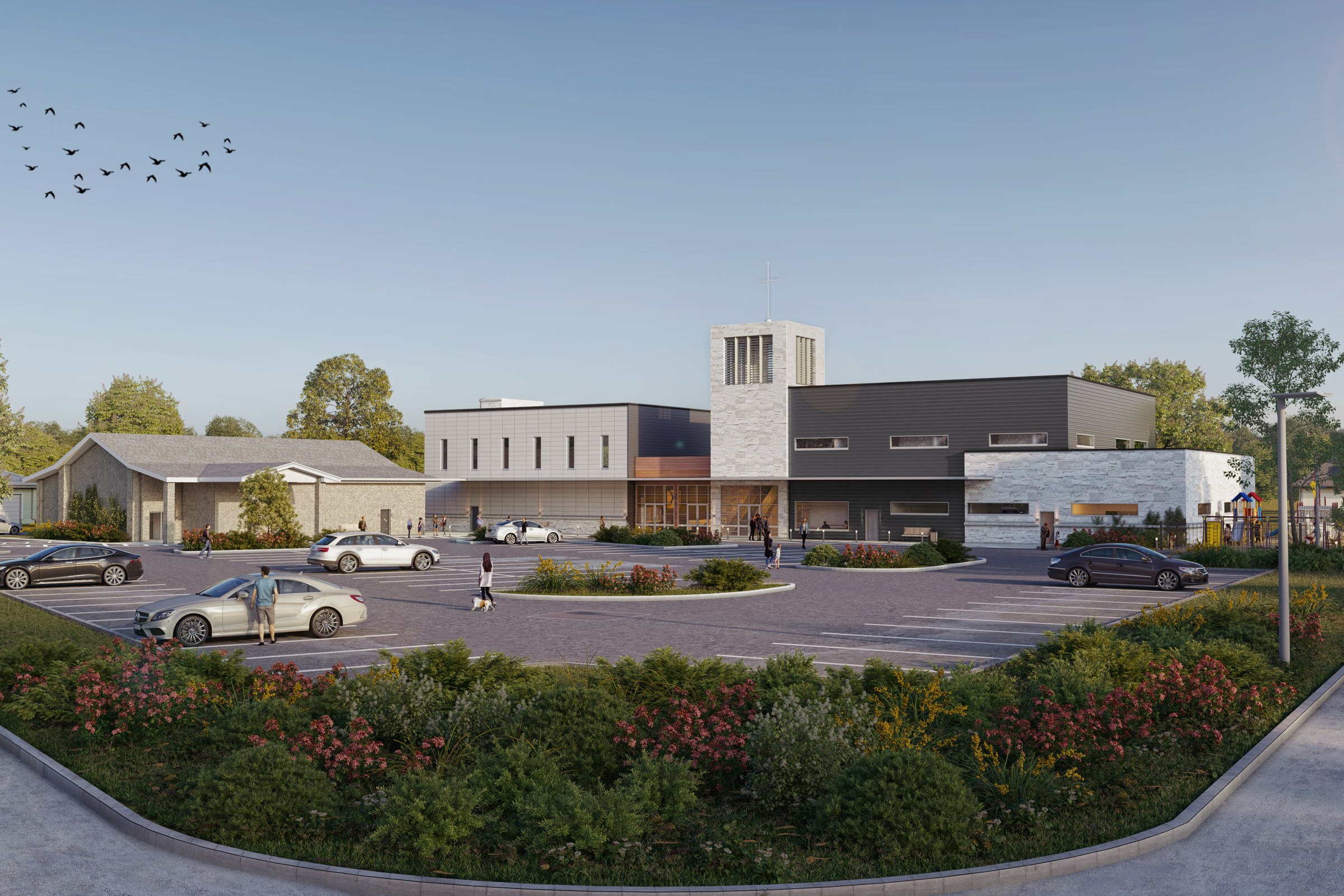
4 photorealistic exterior renders across eye-level viewpoints
Project Overview
This is one of those projects where the visualization had to work as hard as the design itself. Project 104 Living Hope Church came to us when the Mies Design Group needed images that could move a institutional architecture project through approvals, into marketing, and onto investors’ desks — all at once.
The Challenge
Several factors made this project demanding. None of them were insurmountable, but together they required careful planning and constant communication.
The design had details that only become visible at close range — joinery, hardware, texture variation. These details are exactly what separates a good render from a great one, and the Mies Design Group knew it.
Multiple audiences meant multiple priorities. The investor deck needed aspiration. The planning submission needed accuracy. The marketing brochure needed lifestyle. One set of images, three different jobs.
The material palette was specific and unforgiving. Certain finishes — the way light catches a particular stone, how a timber grain reads at different scales — had to be precise or the entire image would feel off to anyone who knows the real thing.
Our Approach
Landscape and context modelling happened in parallel with the architecture. Trees, ground cover, street furniture, and sky were all custom-built for this project’s specific location and character.
Lighting studies came early. We rendered quick test frames at multiple times of day and in multiple weather conditions, then presented options to the Mies Design Group so the mood was locked before we invested in final-quality production.
Camera positions were proposed based on what the architecture does best — the moments where form, material, and light come together most compellingly. We presented grey-shaded compositions for approval before adding materials and entourage.
Material development was a dedicated phase, not an afterthought. We sourced or created every texture to match the specification documents, testing each one under the project’s target lighting conditions before locking it in.
Final delivery was staged. Hero images shipped first for immediate marketing use. The complete gallery followed shortly after, formatted for web, print, and presentation deck use.
The Result
What started as a visualization brief became the foundation of the project’s brand identity. The renders are the first thing anyone sees when they encounter Project 104 Living Hope Church — and they’re designed to make that first impression count.
Got a project that needs this kind of visual clarity? Get in touch or see more examples.
Project Gallery